Quick Verdict
Carvana has come a long way since its near-bankruptcy scare in 2022 and 2023. In 2026 it is a genuinely functional, often impressive online car buying and selling platform that works extremely well for the right type of transaction. The website and app are slick, the 7-day return policy is real and useful, and the no-haggle pricing removes the part of the car-buying process that most people dread. If you are selling a relatively new, low-mileage vehicle or buying one and you value convenience over rock-bottom pricing, Carvana can be a strong choice. The problems, and they are real, cluster around vehicle quality consistency, the SilverRock warranty experience, title transfer issues in some states, and customer support that can be difficult to reach when things go wrong. We rate Carvana 3.5 out of 5 for 2026.
At a Glance: Icon Polls Ratings
Here is how Carvana scored across the key areas we evaluated during our 2026 research:
|
Category |
Stars |
Score |
|
Website and App Experience |
★★★★★ |
4.5/5 |
|
Car Value When Selling |
★★★★☆ |
3.5/5 |
|
Buying Price and Value |
★★★☆☆ |
3/5 |
|
Inventory and Stock |
★★★★☆ |
4/5 |
|
Locations and Accessibility |
★★★★☆ |
3.5/5 |
|
Vehicle Quality Consistency |
★★★☆☆ |
3/5 |
|
Customer Support |
★★★☆☆ |
3/5 |
|
Overall |
★★★★☆ |
3.5/5 |
What Is Carvana?
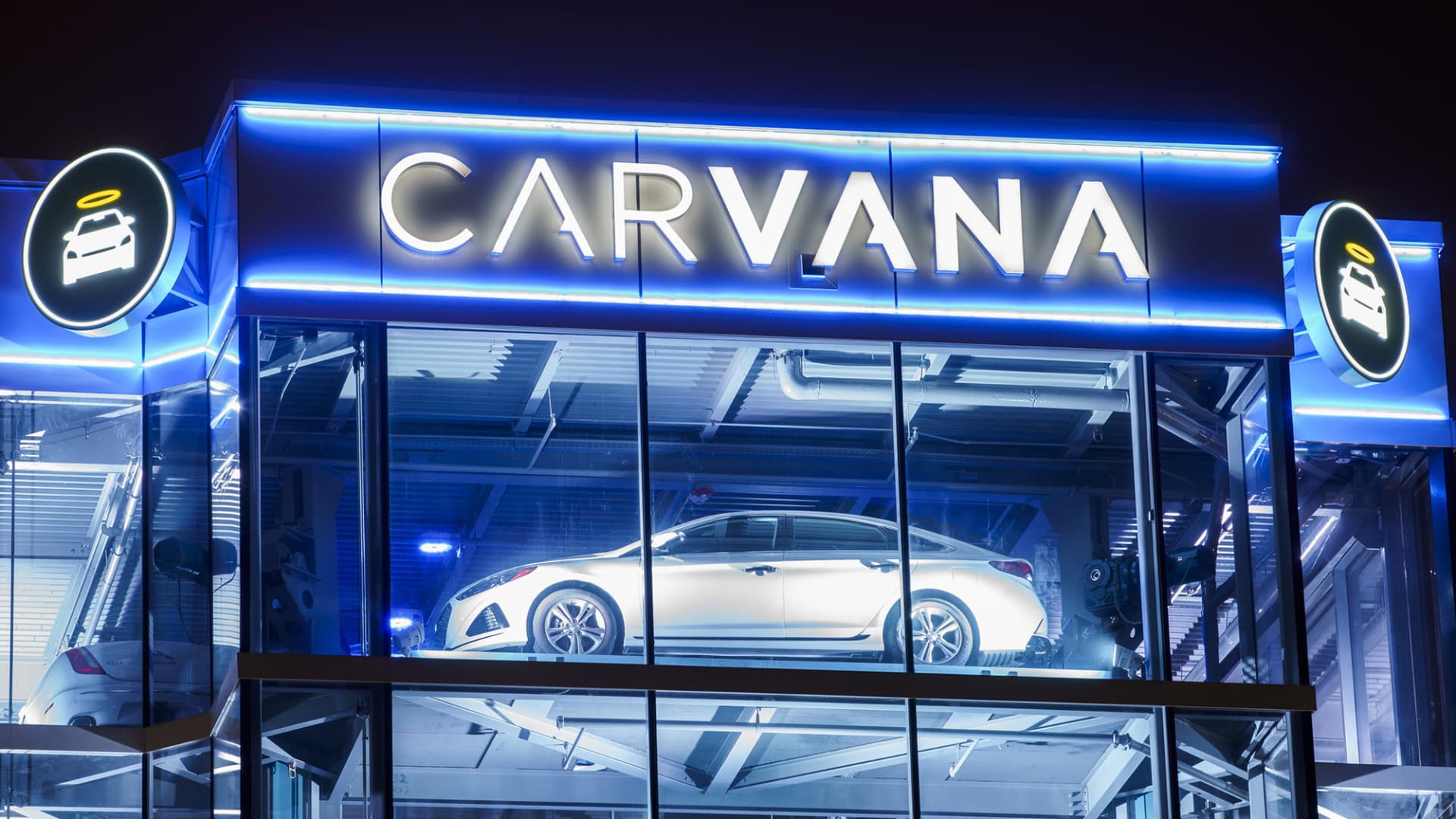
Carvana was founded in 2012 in Tempe, Arizona by Ernest Garcia III, Ryan Keeton, and Ben Huston. The company went public on the New York Stock Exchange in 2017 under the ticker CVNA and spent its early years growing aggressively, becoming known not just for online car sales but for the theatrical multi-story car vending machines it built in select cities across the country.
The core business is straightforward: Carvana buys used cars from private sellers and resells them online to buyers, handling financing, delivery, and paperwork entirely through its digital platform. The company positions itself as the alternative to the traditional dealership experience, offering no haggling, no pushy salespeople, and the ability to complete the entire transaction from your couch.
In 2022 and 2023 Carvana came close to collapse. Rising interest rates, elevated used car prices, and an overextended balance sheet pushed the company to the edge, resulting in massive layoffs and debt restructuring. By 2025 and into 2026, Carvana has executed a genuine operational turnaround. It reported record earnings for fiscal 2025, expanded same-day delivery to new markets including Los Angeles, and grew its vending machine network to over 40 locations. The company now manages a nationwide inventory of over 33,000 vehicles and operates 56 ADESA auction sites acquired in 2022 that help power its vehicle sourcing.
That backstory matters for consumers. The Carvana you are dealing with in 2026 is a stronger and more operationally sound company than the one that made headlines for nearly going bankrupt three years ago. But the consumer experience is still uneven in ways this review will address directly.
The Website and App: Where Carvana Genuinely Excels
If Carvana gets one thing absolutely right, it is the website and mobile app experience. The platform is clean, fast, and designed around the way people actually shop for cars today. You can filter by make, model, year, price, mileage, fuel type, color, transmission, and dozens of other variables. Every listing includes high-definition 360-degree photography, a detailed condition report, a free Carfax vehicle history report, and the results of Carvana's 150-point inspection.
The browsing experience is genuinely better than most traditional dealership websites and competitive with any digital-first car platform on the market. You can get a conditional financing offer in minutes using a soft credit check that does not affect your credit score. Paperwork is handled entirely online and the company claims that once you have selected a vehicle, the purchase process can be completed in as little as ten minutes.
The vehicle history transparency is worth highlighting separately. Most traditional used car dealerships do not make it this easy to understand exactly what you are buying. Carvana puts the Carfax report and inspection details front and center, which builds real trust for buyers who would otherwise be guessing about a vehicle's past.
The app mirrors the website experience well and adds practical functionality like claim filing through SilverRock, payment management, and post-sale account access. For a buying or selling transaction that goes smoothly, the digital experience is among the best in the industry.
Car Value When Selling: Competitive but Not Always Best
One of the most searched questions about Carvana is whether it gives you a good price when selling. The honest answer in 2026 is: sometimes yes, sometimes no, and you should always compare offers before accepting.
Getting a quote from Carvana takes about two minutes. You enter your license plate or VIN, current mileage, a brief condition assessment, and some photos, and the platform generates an offer almost instantly. The offer is valid for seven days. This speed and simplicity is genuinely useful and one of Carvana's most compelling advantages over traditional trade-in negotiations.
The actual numbers tend to be most competitive for vehicles that are relatively recent, under ten years old, lower mileage, and in good condition. For these vehicles, Carvana frequently offers $1,000 to $3,000 more than a dealership trade-in quote and is competitive with other online buyers like CarMax and KBB Instant Cash Offer. The company's offers are driven by a proprietary algorithm that accounts for current market demand, local inventory levels, and recent comparable sales.
For older vehicles, higher-mileage cars, or vehicles with any significant issues, Carvana's offers tend to drop sharply. Sellers in this category often find better offers through private-party sales or even specialist buyers depending on the vehicle type. Carvana has also introduced pickup fees in 2026 that range from $0 to $600 depending on how far you are from their nearest location. Sellers who live close to a vending machine can drop off for free, which eliminates the fee entirely. Sellers in more rural areas may find the pickup fee meaningfully reduces the net value of their offer.
One more thing worth knowing: the initial online offer is conditional. When the Carvana representative arrives or you show up at a vending machine for the final inspection, the offer can be adjusted if the vehicle's condition does not match what was described online. This is standard practice across the industry and most Carvana sellers report the inspection confirms their original offer, but it is worth being accurate in your online description to avoid a last-minute revision.
Buying Price and Value: Convenient but Not the Cheapest
Buying from Carvana means accepting a no-haggle pricing model. The price listed on the website is the price you pay. There is no negotiating, no walking away and coming back with a better number, no comparing dealer add-ons against each other. For many buyers, particularly those who find the traditional dealership negotiation stressful or opaque, this is genuinely appealing.
The trade-off is that Carvana's prices tend to run above the market average for comparable vehicles. Multiple independent analyses have found that Carvana typically prices its inventory at a premium compared to what you might find at a local dealership or through private-party listings for similar vehicles. If you are price-sensitive and willing to spend time searching and negotiating, you can almost certainly find the same car for less somewhere else.
What you are paying for with Carvana is convenience, the inspection and history report, the 7-day return policy, and the ability to complete the entire purchase without setting foot in a dealership. For buyers who place a real value on that experience, the premium is justifiable. For buyers who are purely optimizing for the lowest price, it is not.
Carvana's in-house financing through its affiliate Bridgecrest is available to buyers across a wide range of credit profiles, including fair and poor credit. Approval is based on a soft credit pull initially so you can see your options without affecting your score. Four out of five Carvana buyers use in-house financing. Interest rates for buyers with excellent credit are competitive. Rates for buyers with lower credit scores can be high, as they are with any lender serving that segment of the market. Buyers with good to excellent credit should compare Carvana's rate against their own bank or credit union before committing.
Inventory and Stock: Nationwide Depth with Some Gaps
As of 2026, Carvana maintains a live inventory of approximately 25,000 to 33,000 vehicles nationwide across its website at any given time. The selection spans sedans, SUVs, trucks, minivans, and a growing number of used electric vehicles. The inventory is searchable by an extensive set of filters and vehicle listings are typically detailed and accurate in terms of what is shown.
One of Carvana's structural advantages is that its inventory is national rather than local. When you search on Carvana, you are not limited to what happens to be available within 50 miles of your ZIP code. You can find a specific make, model, trim level, and color from anywhere in the country and have it delivered to you or transferred to your nearest vending machine. For buyers searching for something specific, this national pool is a meaningful benefit that local dealerships simply cannot match.
The depth of the inventory has also improved significantly from the leaner years of 2022 and 2023 when the company was cutting costs aggressively. The ADESA acquisition, which gave Carvana access to 56 auction sites across the country, has improved vehicle sourcing and helped stabilize supply. Analysts project Carvana's total inventory will continue growing through 2026 as the company expands its reconditioning capacity.
The gap in Carvana's inventory is at the lower end of the price range. Very inexpensive vehicles, those under $10,000, are relatively rare in the Carvana catalog. The company's inspection and reconditioning process means it focuses on vehicles that can support a price point where those costs are absorbed. Buyers looking for a basic reliable car under $8,000 to $10,000 will find limited options. This is not a flaw in Carvana's model, it is simply the nature of what the platform is designed for.
Locations: Nationwide Delivery with a Physical Footprint
Carvana is available in all 48 contiguous states, though not in Alaska or Hawaii. For the vast majority of the US population, Carvana can deliver a purchased vehicle to your home address or arrange pickup at one of its vending machine locations. This geographic reach is one of the platform's genuine strengths.
The Vending Machines
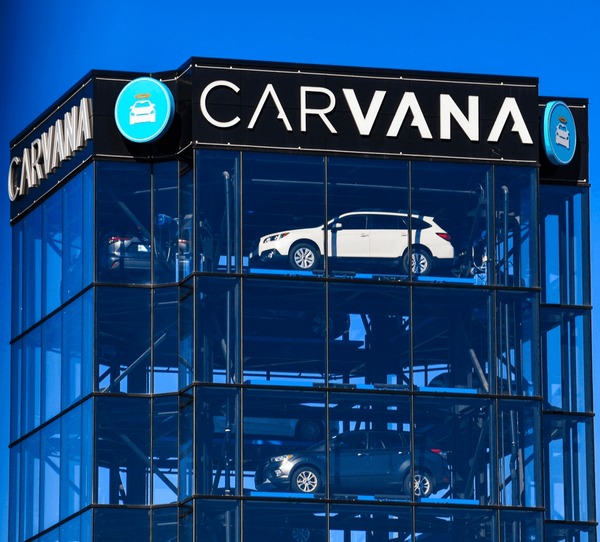
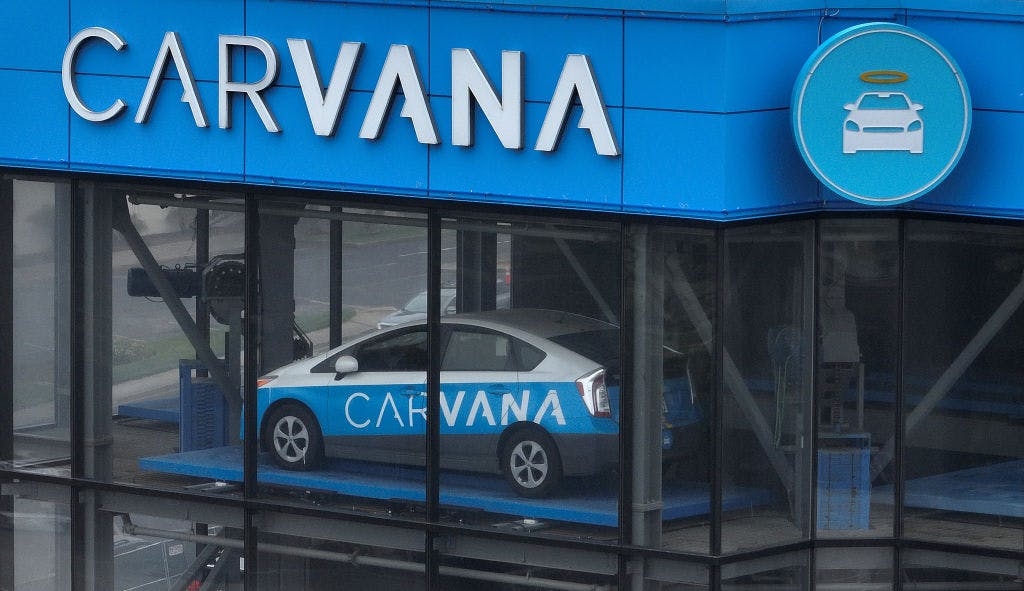
Carvana currently operates over 40 vehicle vending machines across the United States, with newer locations featuring multi-story towers that serve as both high-capacity fulfillment hubs and visually distinctive marketing landmarks. When you pick up a car at a vending machine, you deposit a Carvana-branded token into a slot, and an automated platform retrieves your vehicle from the tower and delivers it to a ground-level bay where a Carvana delivery advocate is waiting to hand over the keys.
The vending machine pickup is entirely optional. Choosing it gives you a memorable experience that, frankly, most buyers remember and talk about. It also means your vehicle is available immediately rather than waiting for a delivery window. Vending machine cities as of 2026 include Nashville, Atlanta, Charlotte, Dallas, Houston, Denver, Phoenix, San Antonio, and several dozen other major metros. Dropping a vehicle off at a vending machine when selling is also free, which eliminates the potential pickup fee for sellers who live nearby.
Home Delivery and Same-Day Service
For buyers who do not live near a vending machine, home delivery is the standard option. Carvana uses its own branded logistics network, with uniformed employees arriving in single-car haulers, which is a more professional experience than outsourcing delivery to a third party. Delivery timelines have generally improved in 2026, though customers in more remote areas can still experience windows of several days.
Same-day delivery is available in select markets as of 2026, including parts of Los Angeles, San Diego, Seattle, and several other cities where Carvana has expanded the service. For sellers, same-day pickup is also available in some markets. This is a new development for 2026 and represents a meaningful upgrade in speed for customers in covered areas.
User Experience: Genuinely Good Until It Is Not
Reading through Carvana customer reviews in 2026 produces a clear pattern. When a Carvana transaction goes well, which is the majority of the time based on review volume, customers are often enthusiastic about the experience. The combination of a slick website, no dealership pressure, home delivery, and the novelty of the vending machine creates genuine delight for many buyers and sellers.
The reviews that go negative tend to fall into a few distinct categories, and understanding those categories matters before you use the platform.
Vehicle Quality Inconsistency
Carvana certifies all of its vehicles through a 150-point inspection process and provides each buyer with a Carfax report. The inspection covers mechanical components, safety systems, and cosmetic condition. In many cases this process delivers exactly what it promises, and buyers receive vehicles that match their expectations closely.
In a meaningful minority of cases, though, buyers have reported receiving vehicles with issues that were not flagged in the inspection report. Cosmetic problems that were not noted in the listing, mechanical issues that became apparent shortly after delivery, and in some cases more serious problems that emerged within the first few weeks of ownership have all been documented in customer complaints across the BBB, Trustpilot, and Consumer Affairs. Carvana's 7-day return policy exists to address exactly this scenario, and buyers who discover significant issues quickly do have a recourse. The challenge is that seven days is a limited window for identifying all potential mechanical issues in a used vehicle.
The SilverRock Warranty Experience
Carvana comes with a 100-day or 4,189-mile limited warranty on every vehicle, administered through SilverRock. Buyers can also purchase additional coverage through CarvanaCare, also underwritten by SilverRock. The warranty coverage, on paper, covers a significant range of mechanical and electrical components.
In practice, the SilverRock experience has been one of the most consistently criticized aspects of the Carvana ownership journey. Multiple customers report that when they attempted to use the warranty, they encountered claim denials for components they believed were covered, difficulty finding approved repair shops, delays in getting authorization for repairs, and a circular problem where Carvana tells them to contact SilverRock and SilverRock tells them to contact Carvana. Buyers considering the extended CarvanaCare warranty should read the contract terms carefully and research SilverRock reviews independently before purchasing.
Title Transfers and Paperwork Delays
Title transfer issues have been a documented problem for Carvana at various points in its history, most notably in 2022 when the state of Illinois temporarily suspended the company's business license over failures to provide buyers with titles within the legally required timeframe. The company has worked to modernize its title processing systems since then.
In 2026 the title transfer experience is improved but not entirely consistent. Most buyers receive their title and registration within the expected window. A minority of buyers report delays, particularly in states with more complex registration requirements. Sellers who have an existing loan on the vehicle they are selling to Carvana should confirm in writing when their lender will receive the payoff funds and follow up until the title transfer is confirmed complete.
Customer Support
Carvana offers customer support seven days a week by phone, chat, and email. Response times during business hours are generally reasonable. The problem, consistently noted in reviews, is that customer support quality drops noticeably when a transaction involves a complication. Representatives handling standard inquiries tend to be helpful. Representatives handling escalated issues around claims, warranty disputes, or title problems often struggle to resolve the issue or give conflicting guidance. For straightforward transactions this is not a problem. For transactions that encounter complications, the support experience can be genuinely frustrating.
Pros and Cons
What Carvana Does Well
Best-in-class website and mobile app for browsing and purchasing used vehicles
Transparent pricing with full Carfax reports and 150-point inspection details on every listing
No-haggle pricing removes the most stressful part of car buying for many people
7-day return policy provides genuine buyer protection and real peace of mind
National inventory of 25,000 to 33,000 vehicles available for delivery across all 48 contiguous states
Home delivery by Carvana's own uniformed team rather than third-party logistics
Same-day delivery and pickup available in select markets in 2026
Financing available for a wide range of credit profiles with pre-qualification via soft credit check
Vending machine pickup is a genuinely memorable and enjoyable experience
Competitive selling offers for newer, lower-mileage vehicles, often above dealership trade-in values
Handles loan payoffs directly if you are selling a vehicle with an existing lien
What Needs Improvement
Buying prices run above average market value because the no-haggle model removes the ability to negotiate
Vehicle quality consistency is uneven and a minority of buyers receive cars with undisclosed issues
The SilverRock warranty administration has been a consistent source of frustration for customers with claims
Pickup fees of $0 to $600 for sellers in markets far from a vending machine can reduce net proceeds
Title transfer delays still occur in some states and for some transaction types
Customer support quality drops significantly for escalated or complicated issues
Inventory is thin below the $10,000 price range, limiting options for budget buyers
Not available in Alaska or Hawaii
Selling offers drop sharply for older, high-mileage, or imperfect vehicles
How Carvana Compares to the Competition in 2026
Carvana vs CarMax: CarMax remains the largest used car retailer in the United States by total volume and offers both physical dealership locations and an online platform. CarMax's physical presence means you can test drive a vehicle before buying, which Carvana cannot offer. Prices at CarMax and Carvana are broadly similar, both running above private-party market value. CarMax has a stronger reputation for consistent vehicle quality and a more straightforward customer service experience. Carvana has the better digital platform and more flexible delivery options. Both have their strengths and neither is definitively the right choice for every buyer.
Carvana vs Vroom: Vroom was Carvana's most direct digital competitor but has pulled back significantly from retail operations in recent years. In 2026 Carvana has effectively won the online-only used car retail race among major players, with Vroom no longer a like-for-like alternative for most buyers.
Carvana vs Traditional Dealerships: Traditional dealerships can often beat Carvana on price for buyers willing to negotiate, and they offer the ability to see and test drive the actual vehicle before purchasing. The trade-off is the negotiation process, dealer fees, and the time investment required. For buyers who value convenience, transparency, and a defined return policy above all else, Carvana wins. For buyers who are comfortable negotiating and want to minimize cost, a traditional dealership is worth the extra effort.
Frequently Asked Questions About Carvana (2026)
These are the questions people are searching most often about Carvana in 2026, answered based on our research and real customer experiences.
1. Is Carvana a legitimate company in 2026?
Yes, Carvana is a fully legitimate, publicly traded company on the New York Stock Exchange under the ticker CVNA. It has been operating since 2012 and has completed millions of car transactions. The company went through a serious financial restructuring in 2022 and 2023 but has emerged from that period in a significantly stronger operational position. Concerns about Carvana's survival are largely settled at this point. In early 2026 a short-seller report alleged some accounting irregularities, which Carvana has denied, and a stock split is pending shareholder approval. None of this affects the day-to-day consumer experience of buying or selling a vehicle through the platform. Carvana is a real company with real locations, real inventory, and real transactions happening every day.
2. Does Carvana give a good price when you sell your car?
It depends on your vehicle. For newer cars, say 2018 and later, with under 80,000 miles and in good condition, Carvana tends to offer competitive prices that are often comparable to or slightly above a dealership trade-in and competitive with other online buyers like CarMax and KBB Instant Cash Offer. For older vehicles, high-mileage cars, or those with visible cosmetic or mechanical issues, Carvana's offers tend to be lower. The most important thing you can do before accepting a Carvana offer is to get at least one competing offer from another buyer, whether that is CarMax, a local dealer, or another platform like AutoNation or Shift. Carvana does not negotiate on its offers, so if you want a better number, you need a competing bid to inform your decision.
3. How does Carvana's 7-day return policy work?
Carvana's 7-day return policy allows you to return a purchased vehicle for any reason within seven days of delivery, provided the vehicle has not been driven more than 400 miles and has not sustained any new damage during that period. You initiate the return online or by calling customer support, and Carvana arranges to pick up the vehicle. The refund is typically processed within 7 to 15 business days. If you financed through Carvana, the financing is unwound as part of the return. The policy is genuine and functional, and multiple customers have successfully used it. The main limitation is the seven-day window itself. For identifying major mechanical issues that might only surface with extended driving, a week is a fairly short testing period.
4. How many Carvana locations are there in 2026?
Carvana operates primarily as a digital platform, meaning it is accessible across all 48 contiguous states regardless of physical location. For physical pickup, Carvana has over 40 vehicle vending machine locations in major cities across the US, with cities including Nashville, Atlanta, Dallas, Houston, Denver, Phoenix, Charlotte, San Antonio, and many others covered. In addition, Carvana operates 56 ADESA auction sites that support its vehicle sourcing and reconditioning operations but are not customer-facing pickup locations. You do not need to live near a vending machine to use Carvana. Home delivery is available throughout the contiguous US, with same-day service expanding to new markets in 2026.
5. Is it better to buy from Carvana or a traditional dealership?
It depends on what you prioritize. Carvana wins on convenience, transparency of vehicle history, the digital browsing experience, the 7-day return policy, and the ability to complete the purchase entirely from home. Traditional dealerships win on price in many cases, the ability to physically inspect and test drive the specific vehicle before buying, and in-person service relationships. If you are a confident negotiator and want the best possible price, a traditional dealership is worth the extra time and friction. If you would rather pay a modest premium to avoid the dealership process entirely and want the security of a clearly defined return window, Carvana is a genuinely solid choice for the right type of vehicle.
6. Can I negotiate the price with Carvana?
No. Carvana uses a fixed, no-haggle pricing model on all of its vehicles. The price listed on the website is the price you pay. There is no ability to counter-offer, no room to negotiate based on comparable listings, and no manager to speak with about a better deal. This is by design. Many buyers genuinely prefer the no-pressure, no-negotiation approach. The flip side is that Carvana's prices tend to be set at a premium to the broader used car market, knowing that buyers who choose the platform are trading price optimization for convenience. If getting the absolute best price is your top priority, Carvana is probably not the right platform for you.
7. What is the SilverRock warranty and is it worth buying?
SilverRock administers Carvana's included 100-day or 4,189-mile limited warranty and the optional extended CarvanaCare coverage that buyers can purchase. The included warranty covers major mechanical and electrical components and is automatically included with every Carvana purchase at no additional cost. The extended CarvanaCare coverage can add several more months or years of protection. Whether it is worth purchasing depends on the vehicle age, mileage, and your personal risk tolerance. The honest caveat is that SilverRock's claims administration has generated a consistent stream of complaints from customers who found coverage more limited than expected or encountered difficulty getting claims processed. Before purchasing extended CarvanaCare, read the contract terms carefully, understand exactly what is and is not covered, and research SilverRock independently.
8. Does Carvana work with bad credit?
Yes, Carvana accepts financing applications from buyers across a wide range of credit profiles, including fair and poor credit. Approval is available even for buyers with credit scores below 600 in many cases. The initial pre-qualification uses a soft credit pull so checking your options does not affect your score. The catch is that buyers with lower credit scores will pay significantly higher interest rates, which is consistent across all auto lending in this credit tier. A buyer with a 580 credit score financing a $20,000 vehicle through Carvana may pay a monthly payment that looks manageable but carries a total interest cost that substantially exceeds the vehicle's value over the loan term. If your credit is less than ideal, compare Carvana's financing terms against those of your local credit union or a specialist bad-credit auto lender before accepting any offer.
9. How long does it take to get a car from Carvana?
Delivery timelines vary depending on your location and the vehicle's origin. In markets with same-day delivery service, which expanded to include Los Angeles, San Diego, Seattle, and other cities in 2026, you can receive your vehicle on the same day as your purchase in some cases. In most markets, standard delivery takes between two and seven business days. Buyers who pick up at a vending machine typically receive their vehicle within a day or two of confirming their purchase. The delivery estimate is shown during the purchase process so you know what to expect before committing. Occasional weather-related or logistical delays do happen, and a handful of customer reviews describe deliveries that ran later than the original estimate.
10. How do I sell my car to Carvana in 2026?
The process is straightforward. Visit carvana.com or open the Carvana app and enter your vehicle's license plate or VIN along with current mileage, condition details, and a few photos. Carvana generates an offer within about two minutes. If you accept the offer, you schedule either a home pickup or a drop-off at a nearby vending machine. Home pickup is free in some markets and can cost up to $600 in others depending on distance from a Carvana location. Drop-off at a vending machine is always free. On pickup or drop-off day, a Carvana representative inspects the vehicle to confirm it matches the description you provided. Assuming everything checks out, payment is typically deposited directly to your bank account within one to two business days. If your vehicle has an existing loan, Carvana handles the payoff directly with your lender.
Icon polls Verdict
Carvana in 2026 is a platform that works very well for a specific type of transaction and a specific type of buyer. If you are selling a relatively recent, clean vehicle and you want speed, simplicity, and a competitive offer without setting foot in a dealership, Carvana is among the best options available. If you are buying a vehicle and you place real value on convenience, transparent history reporting, and a genuine return policy, Carvana earns its premium pricing for many buyers.
The 3.5 out of 5 rating reflects a platform that has gotten meaningfully better over the past two years, operationally and from a customer experience standpoint, but still has notable rough edges. Vehicle quality consistency across a massive national inventory is genuinely difficult to guarantee, and Carvana has not fully solved it. The SilverRock warranty administration remains a persistent friction point. Title transfer delays, while less common than they once were, still happen. Customer support in complicated situations is not as reliable as the rest of the experience.
For the right buyer or seller, Carvana is an excellent tool. Go in with realistic expectations about pricing, read your warranty contract carefully, and use the 7-day return window if anything feels off about the vehicle you receive. If you approach it that way, the chances of a positive experience are genuinely high.