|
Profile Detail |
Information |
|
Company Name |
Cekura (formerly Vocera) |
|
Founded |
2024 |
|
Founders |
Tarush Agarwal (CEO), Shashij Gupta (CTO), Sidhant Kabra (President) |
|
Headquarters |
San Francisco / Sunnyvale, California, USA |
|
Industry |
AI Voice Agent Testing and Observability |
|
Backed By |
Y Combinator (F24 batch) |
|
Total Funding |
$2.4 Million (Seed Round) |
|
Lead Investor |
Y Combinator |
|
Other Investors |
Flex Capital, Hike Ventures, Pioneer Fund, Decacorn |
|
Team Size |
Approximately 6 to 10 employees |
|
Website |
www.cekura.ai |
|
Target Market |
Healthcare, Finance, Legal, BFSI, Customer Service |
|
Core Product |
Automated QA for Voice and Chat AI Agents |
|
ICON POLLS Rating |
3.0 out of 5.0 |
Cekura Founders: Who Built This Platform

Cekura was started in 2024 by three co-founders who met during their undergraduate years at IIT Bombay, one of India's most respected engineering schools. The team brings together a mix of quantitative finance, NLP research, and consulting experience that you do not typically see in early-stage AI startups.
Cekura Login and Account Setup
Getting into Cekura is straightforward. The login is handled directly through the official site at cekura.ai, where there is a sign-in option in the top right of the homepage. New users can request a demo or sign up for the platform from the landing page itself.
Cekura uses standard SSO for authentication, which means you can sign in using your Google Workspace account or set up email and password credentials. There is no separate mobile app, and the platform is fully web-based, so login works from any modern browser. Once inside, you land on the dashboard which gives you access to test simulations, observability data, and your agent integrations.
One thing we noticed is that the platform is geared toward teams, not individual users. The signup flow assumes you are bringing in an existing voice or chat agent, so casual users looking to just poke around will hit a wall fairly quickly without an actual agent to test.
Cekura Review: What the Platform Actually Does
Cekura, which was originally launched as Vocera before rebranding in March 2025, is built around one core idea: testing and monitoring conversational AI agents. The pitch is that most teams shipping voice agents and chatbots have no proper way to know if their agent is behaving correctly in production. Manual testing is slow, expensive, and misses edge cases.
Cekura tries to fix this by simulating thousands of conversations against your agent before it goes live, then watching every real conversation in production once it is deployed. The platform handles things like latency tracking, interruption detection, gibberish detection, and sentiment analysis automatically on every call.
The company has positioned itself heavily around regulated industries. Healthcare, finance, legal, and BFSI are all mentioned repeatedly in their materials, and the platform supports compliance focused testing for things like mandatory disclaimers and audit trails. This is a smart play because these are exactly the industries where deploying an unreliable AI agent has real consequences.
They have also rolled out a Red Teaming feature aimed at stress testing agents for jailbreaks, bias, and toxicity. This is becoming standard for enterprise AI deployments and Cekura is on top of that trend.
Cekura AI Agents: A Closer Look
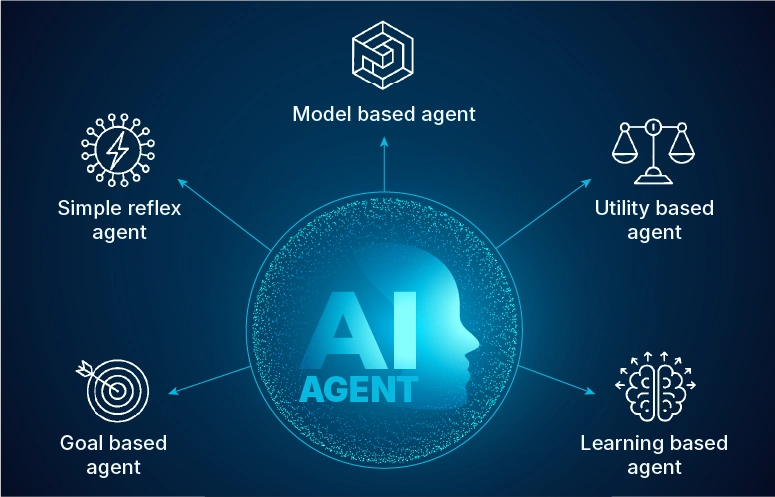
The AI agents inside Cekura are not the kind that hold conversations with end users. Instead, they are testing agents that simulate users so your real agent has something to be evaluated against. Here is what stands out.
Persona simulation: Cekura generates synthetic users with different personalities, accents, languages, and behaviors to stress test how your agent handles diversity. They claim coverage across more than 30 languages and regional accents.
Scenario library: There is a built-in library of thousands of pre-built test scenarios covering things like cancellations, reschedules, follow-up calls, and off-script user behavior. Custom scenarios can be added too.
Voice-specific signals: Most testing tools rely on a simple LLM judge. Cekura goes further with heuristic and statistical models that detect things an LLM cannot easily catch, like crunchy audio quality, barge-in timing, or pitch issues.
Knowledge base sync: There is a connector system that automatically scrapes your documentation on a schedule and keeps your agent's knowledge base updated.
Self-improving feedback loop: Production conversations that fail metrics can be turned into reusable test cases, which then get added to a regression suite. This closes the loop between live failures and testing.
The agents are competent and the feature set is strong on paper. The real question is whether teams use all of these features or just a slice of them, and that depends heavily on how mature your AI agent operations already are.
Cekura Github Presence
This is where we must be honest. As of 2026 Cekura doesn’t appear to have a strong public Github presence. We did not find any visible open-source SDK, public repositories or an active community of contributors.
Cekura does, however, integrate cleanly with Github for dev workflows. Their platform integrates with Github Actions to allow conversational test suites to run automatically against pull requests, commits or merges. Test results are still tied to individual commits, which makes it much easier to track regressions. They also support Jenkins for teams that use that instead.
So you will not find Cekura’s source code on Github, but you can absolutely use Github as part of your CI/CD pipeline with Cekura. For developers who are used to public SDKs and example repos from voice AI tooling companies, not having an open source footprint is a big gap. “That’s something we hope they invest in as they grow.”
Cekura User Experience
The experience is a bit more technical based on the aggregated reviews we’ve seen, the feedback from Product Hunt and the demo materials the platform itself has provided. This is a tool for AI engineers, QA leads, product managers in AI-focused companies and SREs. It is not something for non-technical users to just grab.
The dashboard is clean, the metrics are well organized, and the conversation replay feature is actually useful on the positive side. Being able to replay a failed conversation against an updated version of your agent and confirm that the fix worked is the kind of thing teams have been hacking together internally for years. Cekura just makes it normal.”
The downside is that there is a significant learning curve. If you are new to agent testing, the concepts of personas, scenarios, evaluators and metrics can be daunting on day one. Documentation has been improving, but not as thorough as some of the competition. The site also isn’t transparent about pricing, which is frustrating when you’re trying to compare options without booking a demo call.
Product Hunt users generally have good things to say about customer support, noting that the team is responsive and engaged. That's what you'd expect from a YC company in the early stages and it's a real advantage while it lasts.
ICON POLLS Verdict and Rating: 3.0 out of 5.0
Cekura is doing real work in a space that really needs better tools. The founding team is technically strong, the YC backing is substantial and the product solves a real problem for teams running conversational AI in production.
So why only a 3.0? A couple reasons. First, the product is still new; the company itself is not even two years old. 2. Pricing is not publicly available and difficult for teams to assess without a sales call. Third, the lack of a public Github presence and limited open developer ecosystem are gaps when compared to more established voice AI platforms. Fourth, the platform is heavily weighted towards enterprise and regulated industries which may mean that smaller teams or solo devs may not get as much value.
If you are building a serious voice AI deployment in healthcare, finance or another regulated space, Cekura is worth a real look. If you are in the early stages or just experimenting, the platform might be overbuilt for you. We will update this rating as the company progresses.
Frequently Asked Questions About Cekura
1. What is Cekura and what does it do?
Cekura is an AI testing and observability platform that helps teams check the quality and reliability of their voice and chat AI agents. It runs simulated conversations before launch and monitors every real conversation in production.
2. Who founded Cekura?
Cekura was founded in 2024 by three IIT Bombay alumni: Tarush Agarwal as CEO, Shashij Gupta as CTO, and Sidhant Kabra as President. The team has backgrounds in quantitative finance, NLP research, and consulting.
3. Is Cekura the same as Vocera?
Yes. Cekura was originally launched as Vocera in late 2024 and rebranded to Cekura in March 2025. The product, team, and mission have stayed the same.
4. How much funding has Cekura raised?
Cekura raised $2.4 million in seed funding in mid 2025. The round was led by Y Combinator with participation from Flex Capital, Hike Ventures, Pioneer Fund, Decacorn, and several angel investors including Kulveer Taggar and Ooshma Garg.
5. Does Cekura have a free trial or free tier?
Cekura does not openly advertise a free tier on the public website. Most users access the platform through a demo request or by going through the sales onboarding flow. Pricing is custom and depends on usage volume and enterprise needs.
6. Is Cekura available on Github?
Cekura does not currently maintain a major public Github presence with open-source code. However, the platform integrates with Github Actions and Jenkins for CI/CD workflows, so you can wire conversational tests into your existing Github development cycle.
7. What industries is Cekura best suited for?
Cekura is built especially for regulated industries. Healthcare, financial services, legal, BFSI, and enterprise customer service are the main verticals. Any team where AI agent failures have compliance, safety, or financial consequences is a strong fit.
8. Who are Cekura's main competitors?
Cekura competes with other Y Combinator backed AI testing startups like Coval and Hamming, along with broader players like UiPath and Character.ai. ElevenLabs is sometimes mentioned as adjacent, though Cekura actually integrates on top of ElevenLabs rather than replacing it.
9. Is Cekura safe to use with sensitive data?
Cekura targets HIPAA-eligible deployments and signed Business Associate Agreements for healthcare clients, and supports audit trails for regulated environments. As with any AI platform handling sensitive data, you should still review their security documentation and run an internal compliance check before deployment.
10. How does Cekura compare to building testing in-house?
Most teams that try to build agent testing in-house end up with fragile scripts and partial coverage. Cekura provides a managed platform with persona simulation, voice-specific quality signals, and automated regression testing that would take significant engineering time to replicate. For teams without dedicated AI QA engineers, the build versus buy math typically favors a tool like Cekura.