What Is Gemini 3.1 Pro?
Gemini 3.1 Pro is Google DeepMind's most capable reasoning model in the Gemini 3 family as of early 2026. The official model name on the API is gemini-3.1-pro-preview, with a separate gemini-3.1-pro-preview-customtools endpoint built specifically for agentic workflows that lean on bash and custom tooling. The branding shift from the older 0.5 increment style to a tighter 0.1 step is deliberate. Google is signalling that this is a targeted upgrade focused on reasoning depth, agentic behaviour and token efficiency rather than a full architecture overhaul.
The model is multimodal in the full sense of that word. It accepts text, images, audio, video, PDFs and entire code repositories within a single one million token input window. It outputs text, but the new ceiling of around 65,000 output tokens means it can finally produce long technical manuals or refactor extensive codebases in one go, fixing one of the most common complaints we heard about Gemini 3 Pro from our developer community.
|
Attribute |
Details |
|
Model Name |
Gemini 3.1 Pro (gemini-3.1-pro-preview) |
|
Developer |
Google DeepMind |
|
Release Date |
February 19, 2026 (Preview) |
|
Model Type |
Multimodal reasoning model (Mixture-of-Experts) |
|
Input Context Window |
1,048,576 tokens (1M) |
|
Output Capacity |
Up to 65,536 tokens per response |
|
Supported Inputs |
Text, images, audio, video, PDFs, code repositories |
|
Thinking Levels |
Minimal, Low, Medium, High |
|
API Pricing (Input) |
$2.00 per 1M tokens (under 200k context) |
|
API Pricing (Output) |
$12.00 per 1M tokens (under 200k context) |
|
Long Context Pricing |
$4 input / $18 output per 1M tokens (over 200k) |
|
Speed |
Around 104 to 116 tokens per second |
|
Availability |
Gemini app, AI Studio, Vertex AI, NotebookLM, Gemini CLI, Antigravity, Android Studio |
|
Subscription Plans |
Google AI Pro and Google AI Ultra (consumer access) |
|
ICON POLLS Rating |
3.1 / 5 |
Release Date
Google DeepMind officially launched Gemini 3.1 Pro on February 19, 2026. The release came roughly three months after Gemini 3 Pro debuted in November 2025, which by frontier model standards is a fast turnaround. Google has been clear that this is a preview release, with broader general availability expected later in the year. From our timeline, Gemini 3 Pro on Vertex AI was actually discontinued on March 26, 2026, which essentially forces existing enterprise customers onto the 3.1 Pro track.
On May 4, 2026, Google rolled the model out more aggressively to consumers in the Gemini app, expanding limits for Google AI Pro and Ultra subscribers. NotebookLM also picked up Gemini 3.1 Pro for its paid users around the same time. So while February was the developer launch, the real consumer rollout has been a staggered process running through the spring.
Price and Plans
Pricing is one of the more interesting angles on this release because Google held the line. For developers using the API, Gemini 3.1 Pro costs $2.00 per million input tokens and $12.00 per million output tokens for prompts under 200,000 tokens. For long context prompts above that 200k threshold, pricing scales to $4 per million input tokens and $18 per million output tokens.
That is identical to what Gemini 3 Pro cost. In a market where new flagship models usually arrive with a price hike, keeping the same rates while delivering a measurable jump in capability is, in our view, one of the strongest selling points of this release.
On the consumer side, Gemini 3.1 Pro is bundled inside Google AI Pro and Google AI Ultra. Pro subscribers get higher usage limits in the Gemini app and access through NotebookLM, while Ultra subscribers get the highest ceilings and earliest access to new features. Pricing for these consumer plans varies by region and frequently changes with Google's promotions, so anyone considering a subscription should check their local Google One pricing page directly.
Benchmarks
This is where Gemini 3.1 Pro looks dominant on paper. Across the 18 to 19 benchmarks Google published with the launch, the model led on more of them than any other frontier model available at the time, including Claude Opus 4.6, Claude Sonnet 4.6, GPT-5.2 and GPT-5.3-Codex.
The headline result is on ARC-AGI-2, a benchmark designed to test novel problem solving rather than memorised patterns. Gemini 3.1 Pro scored 77.1 percent compared to 31.1 percent for Gemini 3 Pro. That is more than a doubling of performance in a single release, and it is the largest single generation reasoning gain seen in any frontier model family so far. Whether ARC-AGI-2 fully captures real world reasoning is a fair debate, but the jump is hard to ignore.
|
Benchmark |
Gemini 3.1 Pro |
Gemini 3 Pro |
|
ARC-AGI-2 (novel reasoning) |
77.1% |
31.1% |
|
LiveCodeBench Pro (Elo) |
2887 |
2439 |
|
SWE-Bench Verified |
80.6% |
Lower |
|
GPQA Diamond (PhD science) |
94.1 to 94.3% |
Lower |
|
MCP Atlas (tool coordination) |
69.2% |
Lower |
|
Artificial Analysis Intelligence Index |
57 |
Lower |
On Artificial Analysis, the model scored 57 on the Intelligence Index, placing it first among 116 evaluated models at publication. Output speed measured around 104 to 116 tokens per second, which is fast for a reasoning model of this class. Vals.ai reported an average accuracy of 72.72 percent across their proprietary suites.
Where it does not win outright, the gap is small. Claude Opus 4.6 still edges ahead on certain expert office tasks and computer use evaluations, while GPT-5.3-Codex remains the leader on some specialised coding benchmarks. No frontier model wins on every test in 2026, and that is genuinely good news for users who can now pick a model based on the work in front of them.
User Experience
This is where our editorial team had to hold two ideas at once. On benchmarks, Gemini 3.1 Pro is exceptional. In daily use, the experience can be uneven, and the gap between the two is what most of our review hours went into understanding.
What Works Well
Long document handling is a real strength. When fed 20 to 30 pages of notes and asked for a structured report draft with sections, citation placeholders and an open questions list, the model stays on task and avoids the rambling filler that plagues smaller models.
Multimodal reasoning genuinely earns its place. Asking it to describe a diagram, infer the implied process and produce a step by step procedure produced clean, usable output in our tests.
The expanded 65,000 output token ceiling is a quiet but significant win. Refactoring a multi file project no longer requires stitching together half a dozen continuation prompts.
Token efficiency is improved. JetBrains' AI director publicly reported up to 15 percent improvement in evaluation runs versus the best Gemini 3 Pro previews, and confirmed the model uses fewer output tokens to reach reliable answers.
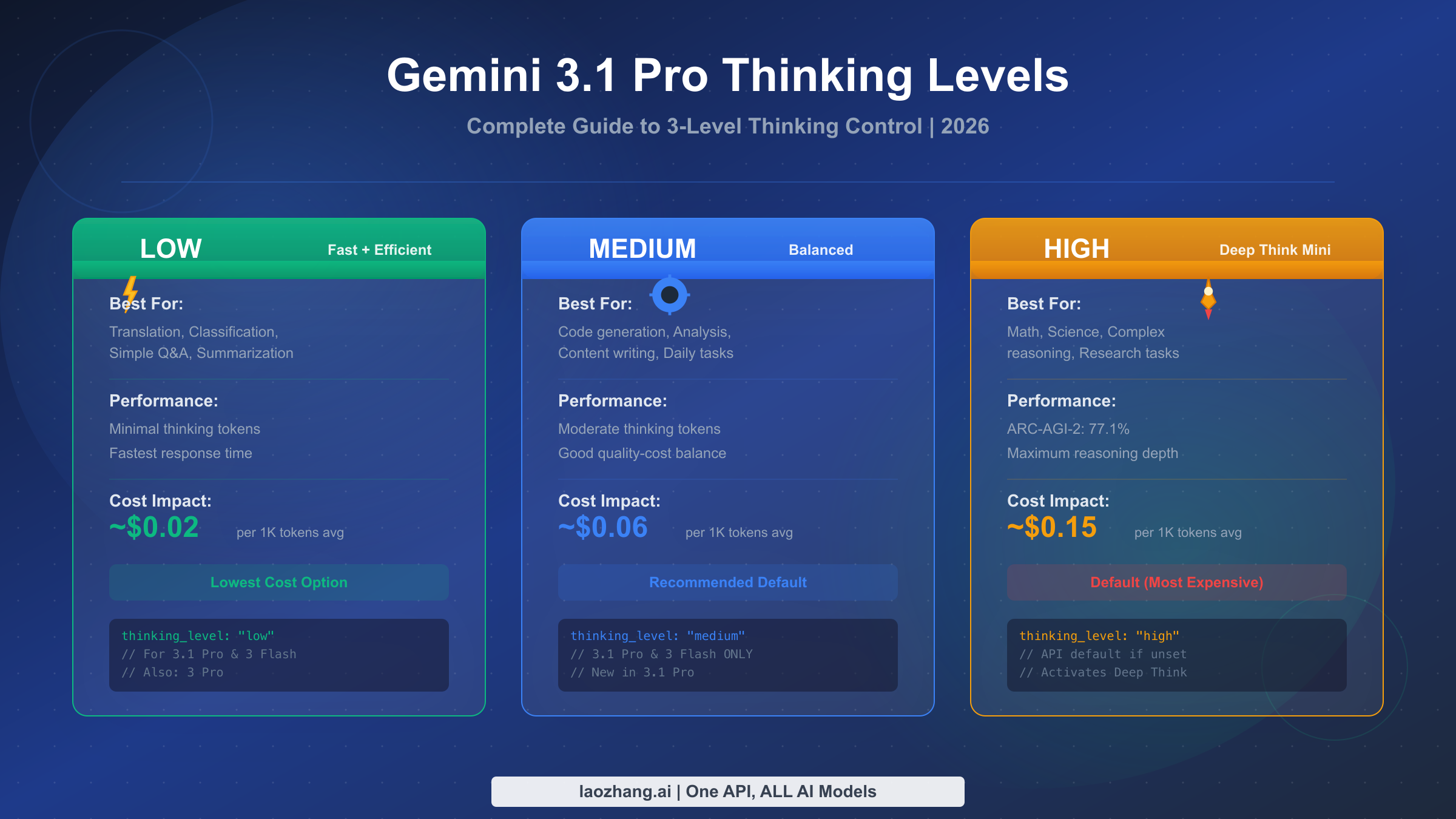
The new four tier thinking levels (Minimal, Low, Medium, High) give developers granular control over latency and cost, which production teams have been asking for since the Gemini 2 era.
Where It Falls Short
In long, iterative coding sessions, multiple developer communities have reported state degradation. The most worrying examples involve the Gemini CLI inadvertently deleting functional code chunks during file modifications. The raw reasoning may be top tier, but the trust boundary around autonomous file work is still fragile.
Inside coding harnesses like Cursor or third party agents, Gemini models reportedly need more guardrails and helper layers than Anthropic's Claude or OpenAI's models. Some testers have noted the model occasionally injecting non Latin characters mid output or printing internal thinking blocks where it should not.
Conversational warmth has dropped compared to Gemini 3 Pro. Several testers and users on Reddit and Hacker News describe the new persona as more sanitised and less creatively flexible. If you liked the previous tone, the change is noticeable.
On the consumer side, Gemini's wider product surface still draws complaints. Trustpilot and other public review platforms show ongoing user frustration with memory limitations, server connectivity in the mobile app, and what some users describe as overly restrictive refusals on simple queries. These are platform issues rather than 3.1 Pro itself, but they shape the overall user experience.
The free tier story is unclear. There is no straightforward free forever option for casual users who just want a few prompts to evaluate the model, which is a barrier compared with how some competitors handle trials.
Who Should Actually Use It
Based on our testing and community polling, Gemini 3.1 Pro is the strongest pick when your work involves long context synthesis, large multimodal inputs, agentic tooling that benefits from custom endpoints, or research style outputs that need structure. It is less obviously the right choice if you mainly want a polished conversational assistant, a smooth coding partner inside a third party harness, or a casual free tier to play with.
ICON POLLS Verdict
Gemini 3.1 Pro is, on paper, the most capable Google model we have ever reviewed. The benchmark gains are real, the price is unchanged, and the architectural refinements address genuine pain points from the previous release. If we were rating it purely on raw capability, it would score much higher.
But our 3.1 out of 5 rating reflects the full picture our community kept surfacing. The model can be brilliant and frustrating in the same session. Code deletion bugs in agentic workflows, a more clinical conversational tone, uneven behaviour inside third party harnesses, and the broader ecosystem complaints all pull the score down from where the benchmarks alone would put it. For our enterprise and developer readers who can work around these rough edges, the value is hard to argue with. For everyday users, the experience does not yet match the headline numbers.
This is a model worth testing for almost any serious AI workflow in 2026, but not yet a model we would tell every reader to switch to without a careful trial first.
Frequently Asked Questions
1. When was Gemini 3.1 Pro released?
Google DeepMind launched Gemini 3.1 Pro on February 19, 2026 as a preview release. It is still in preview as of May 2026, with general availability expected later in the year. The Vertex AI predecessor (Gemini 3 Pro) was discontinued on March 26, 2026, pushing enterprise users toward the 3.1 Pro track.
2. How much does Gemini 3.1 Pro cost to use?
API pricing is $2.00 per million input tokens and $12.00 per million output tokens for prompts under 200,000 tokens. For longer prompts, the rate scales to $4 per million input and $18 per million output. Consumer access is bundled into Google AI Pro and Google AI Ultra subscriptions, with prices varying by region.
3. What is the official model name and API identifier?
The model is officially called Gemini 3.1 Pro. On the API, its identifier is gemini-3.1-pro-preview. There is also a specialised endpoint, gemini-3.1-pro-preview-customtools, optimised for agentic workflows that use bash and custom tooling such as view_file or search_code.
4. Is Gemini 3.1 Pro better than Claude Opus 4.6 or GPT-5.3-Codex?
It depends on the task. Gemini 3.1 Pro leads on more general benchmarks than any other frontier model in early 2026, including a record 77.1 percent on ARC-AGI-2. However, Claude Opus 4.6 still edges ahead on some expert office and computer use tasks, and GPT-5.3-Codex remains stronger on certain specialised coding benchmarks. Most developers in our community now use more than one model depending on the workload.
5. What can Gemini 3.1 Pro actually do that earlier models could not?
Three things stand out. The reasoning jump on novel problems is real and measurable. The 65,000 output token ceiling means it can produce full multi module applications, long technical manuals or large refactors in a single response. And the new four tier thinking system (Minimal, Low, Medium, High) gives developers fine grained control over the trade off between cost, speed and reasoning depth.
6. How do I access Gemini 3.1 Pro?
Consumers access it through the Gemini app and NotebookLM with a Google AI Pro or Ultra subscription. Developers and enterprises can use it through the Gemini API via Google AI Studio, Vertex AI, Gemini Enterprise, the Gemini CLI, Antigravity and Android Studio. All channels run the preview build at the moment.
7. Is Gemini 3.1 Pro safe for production agentic workflows?
Use it carefully. The model is excellent at one shot task completion and large reasoning jobs, but multiple developer reports describe state degradation during long iterative sessions, including instances of the Gemini CLI deleting functional code during file modifications. For production agents that touch the file system, we recommend additional guardrails, version control safety nets and human review checkpoints until Google reaches general availability.
8. Does Gemini 3.1 Pro support multimodal input like video and audio?
Yes. The model accepts text, images, audio, video, PDFs and entire code repositories within its 1 million token input window. It can process up to 900 individual images per prompt, around 8.4 hours of audio or up to one hour of video without accompanying audio. Output is text only.
9. What is the context window size, and can it really handle a million tokens?
The input context window is 1,048,576 tokens, around one million. In our testing it does handle very long inputs, though we recommend breaking truly massive prompts into structured sections with clear headings rather than dumping raw text, since structure noticeably improves the quality of the response on long context tasks.
10. Is there a free version of Gemini 3.1 Pro?
There is no straightforward free forever tier specifically for Gemini 3.1 Pro. Google offers a student trial in some regions, and developers can experiment with a small free quota inside Google AI Studio, but sustained use requires either a Google AI Pro or Ultra subscription on the consumer side, or paid API usage on the developer side.