Quick Verdict
Glassdoor was once one of the most valuable tools a job seeker had: a place to read honest, anonymous reviews of what it was really like to work somewhere, look up salary ranges before an interview, and get a sense of a company from the inside before accepting an offer. In 2026, that promise has badly broken down, and our assessment lands at 1.0 out of 5 because the core things that made Glassdoor useful have been undermined at the same time. The anonymity that was the entire foundation of the platform is no longer something users can rely on. Glassdoor has moved to a model where a connected job-search login is required for full access, tying the review identity to a job-seeking identity in ways that make many users deeply uncomfortable. There have been widely circulated accounts of real names being added to profiles without clear consent. The review quality has been visibly degraded by what looks like systematic gaming, with struggling companies somehow accumulating streams of glowing, suspiciously uniform five-star reviews while genuine critical reviews are harder to trust because the signal is buried in noise. The platform pressures users to post a review or share information of their own before they can read what others have written, which corrupts the very data it is selling. And the company behind it has gone through repeated rounds of layoffs and consolidation that have left the product feeling neglected. Glassdoor still has historical data and brand recognition, and a few genuine reviews remain, but as a trustworthy tool for making real career decisions in 2026, it has lost the trust that was its only real asset. We cannot recommend relying on it.
At a Glance: Icon Polls Ratings
Here is how Glassdoor scored across the areas we assessed in our 2026 research:
|
Category |
Stars |
Score |
|
Review Authenticity and Trust |
★☆☆☆☆ |
1/5 |
|
Anonymity and Privacy |
★☆☆☆☆ |
1/5 |
|
Forced Login and Account Friction |
★☆☆☆☆ |
1/5 |
|
Salary Data Usefulness |
★★☆☆☆ |
2/5 |
|
App and Website Experience |
★★☆☆☆ |
1.5/5 |
|
Content Access (Read Wall) |
★☆☆☆☆ |
1/5 |
|
Platform Direction and Stability |
★☆☆☆☆ |
1/5 |
|
Overall |
★☆☆☆☆ |
1/5 |
What Is Glassdoor?
Glassdoor is a career and workplace platform best known for letting employees and former employees post anonymous reviews of the companies they have worked for, along with salary information, interview experiences, and ratings of management and leadership. For years it filled a genuine gap. Before Glassdoor, a job seeker deciding whether to accept an offer had almost no way to learn what a company was really like from the inside, and Glassdoor offered exactly that: candid, anonymous insight from people who had actually worked there.
The platform also hosts company ratings on a five-star scale, CEO approval ratings, salary ranges submitted by employees, interview question reports, and job listings. It built a large database over more than a decade and became a routine stop for candidates researching potential employers and for employees benchmarking their pay. At its best, it gave individuals a small amount of leverage and information in a process where employers normally hold all the advantage.
In recent years Glassdoor has changed substantially in ways that go to the heart of whether it can still be trusted. It absorbed an anonymous professional networking community, which introduced identity-verification requirements that sat uneasily with Glassdoor's original anonymous model. More significantly, Glassdoor now operates as part of the same corporate family as a major job-search platform, and the two have been progressively merged at the level of accounts, logins, and user data. This consolidation is the single most important fact about Glassdoor in 2026, because it has reshaped how the platform handles identity, and identity is the thing the entire value proposition depends on.
The result is a platform caught between what it used to be and what its owner is turning it into. The historical promise was anonymous honesty. The current direction is a unified identity tied to a job-search profile. Those two things are in direct tension, and the way that tension has been resolved, in favor of consolidation and against anonymity, is why our assessment is so low. Glassdoor in 2026 is not the tool it was, and the changes are not improvements from the user's point of view.
The Forced Login Change Is the Core Problem
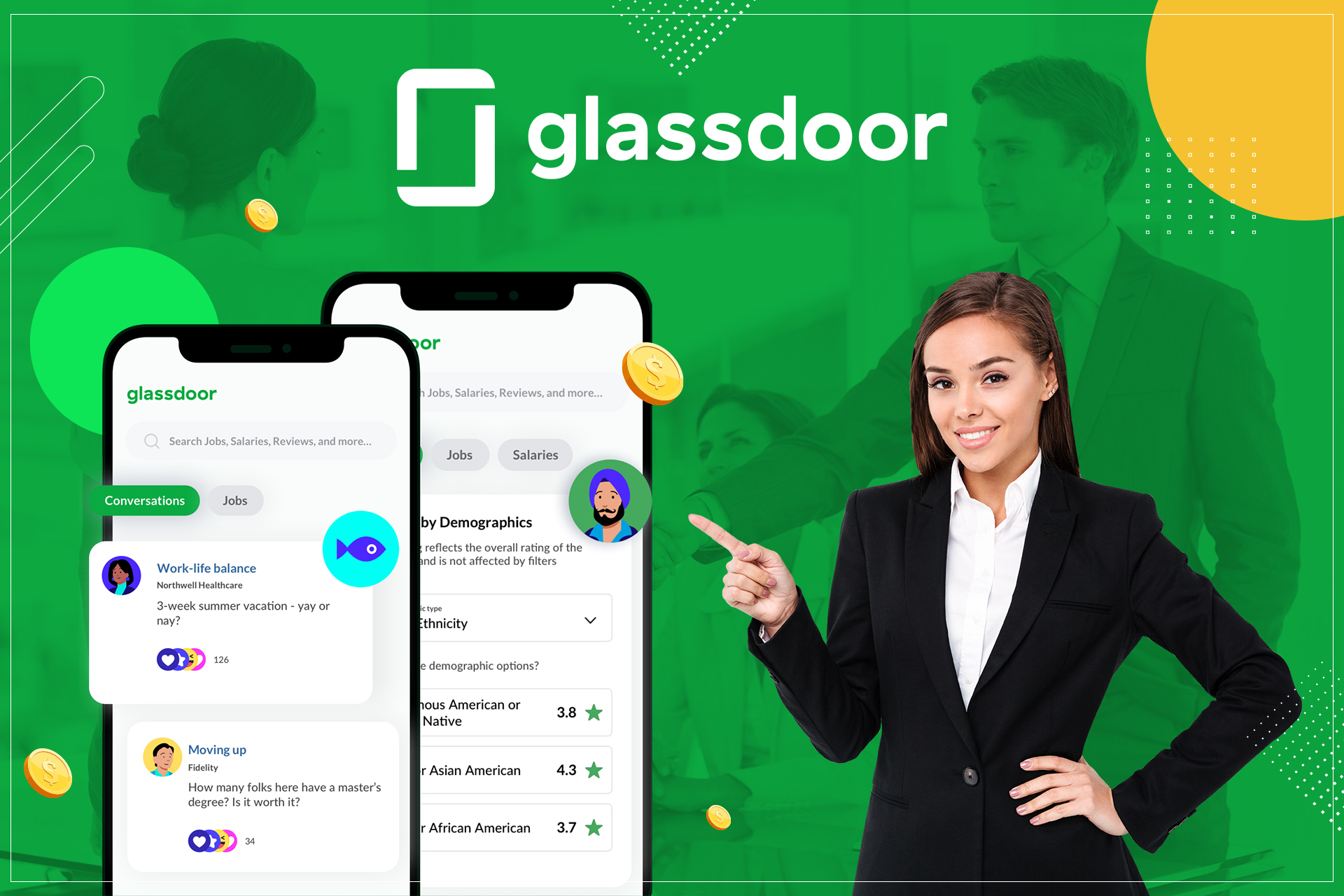
The most consequential change to Glassdoor, and the one that most directly damages its usefulness, is the move to require a connected job-search login for full access. As of 2026, new users are required to sign up through the linked job-search platform's login system, and existing users have been pushed to connect their accounts, with a hard deadline after which the old standalone login is no longer sufficient for full access.
This matters enormously because of what Glassdoor was supposed to be. The entire point of the platform was that you could anonymously read and write reviews of employers without that activity being tied to your job-search identity. An employee leaving an honest negative review of a current employer was protected by the separation between their review activity and their real, job-seeking self. By forcing a connected login that synchronizes profile information, including name, email, and resume data, between the review platform and the job-search platform, that separation has been collapsed. Your review identity and your job-search identity are now linked in a unified profile.
The company states that reviews and posts remain anonymous even under the connected login. But the platform's own privacy language acknowledges that it cannot guarantee anonymity, conceding that depending on the circumstances and the information disclosed, someone may be able to identify a user or narrow their identity down to a small group. When the platform that promises anonymity also admits it cannot guarantee it, and simultaneously links your review activity to a profile containing your real name, email, and resume, the protection that made honest reviews possible is no longer something a reasonable person should rely on. For a current employee considering an honest critical review, that is a serious risk, and the rational response is to either not post or to self-censor, which degrades the honesty of the entire review pool.
There are also genuine questions about whether this data-linking approach is compatible with privacy regulations in regions that have strong data-protection laws, which adds legal uncertainty on top of the trust problem. From the user's perspective, though, the bottom line is simple: the wall between anonymous reviewing and identified job-seeking has been removed, and that wall was the whole point.
The Anonymity and Real-Name Controversy
Compounding the forced-login problem is a well-publicized pattern of concerns about real names being attached to user profiles without clear, affirmative consent. There have been widely shared accounts of users who never provided their real name during sign-up discovering that their name was added to their profile after the fact, in at least one circulated case apparently extracted from the signature or sender information of an email the user sent to customer support.
In the accounts that have spread among users, when people objected and asked for the name to be removed, they were told the information was required and that it would not compromise the anonymity of their past reviews, and that the only way to remove the information entirely was to delete the account. For a platform whose value rests entirely on anonymous honesty, the perception that it will attach your real identity to your profile when it learns it, and that your only recourse is deletion, is corrosive to trust in a way that is very hard to recover from.
The deeper concern that users have raised is what happens to that linked identity data in the event of a security breach, a lawsuit, or a legal demand for user data. An anonymous review is only protected as long as the identity behind it genuinely cannot be retrieved. Once a real name, email, and resume are linked to the account that posted the review, that protection depends entirely on the company never being breached and never being compelled to disclose, which is not a guarantee anyone can make. The practical effect is that users who specifically valued Glassdoor because it was separate from their identified self have lost the one thing they came for, and many have responded by deleting their accounts and warning others to do the same.
Assessing Review Authenticity: The Fake Review Problem
Beyond the privacy and login issues, the quality and trustworthiness of the reviews themselves has visibly deteriorated, which strikes at the platform's core function. The pattern that users increasingly report is a surge of fake positivity, where companies appear to have learned how to game the review system far more easily than in the past.
The tell-tale signs that users describe are consistent and recognizable. A struggling company, sometimes one widely understood to be in financial trouble or known internally to be a difficult place to work, somehow accumulates a steady stream of glowing five-star reviews. The reviews share an oddly uniform voice, with fawning language, flawless grammar, no spelling errors, and the same tone repeated across many entries, which is not how genuine, independently written employee reviews actually read. Over a period of months, a company's rating drifts upward from a believable mid-range score to an implausibly high one, without any corresponding change in the actual employee experience.
This gaming corrupts the central value of the platform. The entire reason to consult employer reviews is to get an honest signal about what a company is really like. When that signal is polluted by what appears to be coordinated or incentivized positive reviewing, a job seeker can no longer trust a high rating to mean the company is genuinely good. Worse, the noise makes genuine reviews harder to interpret, because a real critical review sits among manufactured praise and can look like an outlier or a disgruntled exception when it may in fact be the accurate account. A review platform that cannot be trusted to reflect reality is not performing its one essential job, and our assessment reflects that this failure is fundamental rather than peripheral.
There is a structural problem underneath this as well. Because the platform serves both the people writing reviews and the employers being reviewed, and because employers are the paying customers for recruiting and branding products, there is an inherent tension between keeping reviews brutally honest and keeping paying employer customers satisfied. That tension does not prove any specific manipulation, but it is the backdrop against which the visible decline in review authenticity has to be understood, and it gives users good reason to be skeptical rather than trusting.
The Read Wall: Forced Contribution to See Content
A long-standing and widely disliked aspect of Glassdoor that remains in force is the requirement to contribute your own content before you can freely read what others have posted. To unlock full access to reviews and salary data, the platform pushes you to submit a review of a former employer, share a salary, or provide an interview report of your own. This is the give-to-get model, and it actively damages the quality of the data.
The problem is straightforward. When people are required to post a review in order to read reviews, a meaningful share of the reviews being submitted are not motivated by a genuine desire to share an honest experience. They are submitted reluctantly, quickly, and only to get past the wall. Users openly discuss writing low-effort or padded reviews simply to satisfy the requirement, which means a portion of the content on the platform exists only because the wall forced it into being, not because anyone wanted to share it. Data created under compulsion is lower quality than data shared voluntarily, and the give-to-get wall guarantees a steady supply of exactly that lower-quality, compulsion-driven content.
It also creates friction and frustration for the job seeker who simply wants to research a company before an interview and is instead forced to either surrender their own information or abandon the search. Combined with the forced connected login, the read wall means that getting useful information out of Glassdoor in 2026 requires giving up both your identity and your own data, for a payoff of reviews whose authenticity you cannot trust. That is a poor exchange, and it is a large part of why the platform's usefulness has collapsed.
The App and Website Experience
The Glassdoor app is available for both major mobile platforms, and the website is accessible through any browser. Mechanically, both function, in the sense that pages load, searches return results, and the app can be downloaded and installed without difficulty. If the only question were whether the software runs, it would pass. But the experience of actually using it in 2026 is dominated by the problems described throughout this assessment rather than by the basic mechanics.
Downloading the app and creating an account now funnels you into the connected-login system, so the very first thing the app does is push you toward linking a job-search identity, with the account creation flow building the unified profile that ties your activity together. The sign-up process prompts for an email, sends a verification code, and offers passkey-based sign-in, and then steers you to connect the two accounts and synchronize your profile information between them. For a user who came specifically for anonymous research, the onboarding itself signals that anonymity is no longer the priority.
Within the app and site, the give-to-get wall interrupts the experience, the review content carries the authenticity problems already described, and the overall sense is of a product that has not received meaningful positive investment in some time. After repeated rounds of cost-cutting and consolidation at the company level, the platform feels maintained rather than improved, with its energy directed at merging it into the job-search ecosystem rather than at making it a better, more trustworthy place to research employers. The reasonable conclusion is that the app and website are not where the problems live or where they will be fixed. The problems are in the platform's fundamental direction, and a polished interface cannot compensate for data you cannot trust and anonymity you no longer have.
Salary Data: The One Area With Residual Value
In fairness, the one part of Glassdoor that retains some residual usefulness in 2026 is the salary data. Years of accumulated salary submissions across many companies and roles still provide a rough sense of pay ranges, which can be a useful starting reference point when you are trying to understand what a particular role might pay or preparing for a compensation conversation. This is why the salary category in our ratings scores slightly higher than the rest, though still below the midpoint.
Even here, though, the value is limited and declining. Salary submissions can be outdated, self-reported figures are inconsistent and unverified, and the same give-to-get wall and login friction that affect the reviews also gate the salary data. The data is a rough guide at best, not a reliable benchmark, and it should be treated as one weak input among several rather than as an authoritative source. The broader erosion of trust in the platform also spills over onto the salary information, because a user who cannot trust the reviews has little reason to place strong confidence in the pay figures either.
The honest assessment is that the salary data is the least broken part of a broadly broken product. It is not a reason to rely on Glassdoor, and it is not enough to lift the overall assessment, but it is the one area where a user might still extract a small amount of value, with appropriate caution about its accuracy and age.
Platform Direction and Company Stability
Underlying all of the specific problems is a broader story about the direction and stability of the company behind Glassdoor, which helps explain why the platform has declined rather than improved. Glassdoor has been folded operationally into its sibling job-search platform under their shared parent, with combined leadership changes and significant workforce reductions affecting both brands. The consolidation that produced the forced connected login is part of this larger merging of the two products into a single ecosystem.
For users, the practical consequence of this corporate direction is a product that is being changed primarily to serve the parent company's strategy of unifying its job-search and employer-review properties, rather than being improved to better serve the people who post and read reviews. The changes that have most damaged the user experience, the forced login, the identity linking, the consolidation of data, all flow from this strategy. They are not accidents or oversights. They are the intended direction, and that direction runs against the interests of users who valued anonymity and independence.
Repeated layoffs also signal a product under cost pressure rather than one being actively developed and improved. When a platform whose entire value depends on trust is simultaneously cutting staff, merging into another product, weakening anonymity, and allowing review quality to degrade, the trajectory is clear. The reasonable expectation for 2026 and beyond is not that these problems will be fixed, but that the merging will continue and the distinct identity and value of Glassdoor as an independent, anonymous employer-review platform will continue to erode.
Pros and Cons
The Limited Remaining Strengths
A large historical database of reviews and salary data accumulated over more than a decade still exists and can provide a rough, cautious starting reference for researching a company or a pay range
Brand recognition means most companies have some presence on the platform, so there is usually at least some information available for a given employer
Salary range data, while unverified and sometimes outdated, retains modest usefulness as one weak input among several when researching compensation
A portion of genuine, honest reviews still exists within the platform, particularly older ones, even though they are increasingly difficult to distinguish from manufactured content
The app and website are mechanically functional, loading and running without technical difficulty for basic browsing and searching
The Serious Problems
The forced connected login ties review activity to a job-search identity, collapsing the separation between anonymous reviewing and identified job-seeking that was the platform's entire foundation
The platform's own privacy language concedes it cannot guarantee anonymity, while simultaneously linking real names, emails, and resumes to the accounts that post reviews
Widely circulated accounts describe real names being added to profiles without clear consent, with account deletion presented as the only way to remove the information
Review authenticity has visibly deteriorated, with struggling companies accumulating streams of uniform, fawning five-star reviews that appear to be gamed
The give-to-get read wall forces users to contribute their own review, salary, or interview data before reading others, which generates low-quality compulsion-driven content and frustrates legitimate research
The structural tension between serving anonymous reviewers and serving paying employer customers gives users good reason to doubt that reviews remain brutally honest
Repeated layoffs and the merging of the platform into a job-search ecosystem signal a product being consolidated rather than improved, with anonymity and independence eroding as the intended direction
Questions exist about whether the data-linking practices are compatible with strong data-protection regulations in some regions, adding legal uncertainty to the trust problem
Frequently Asked Questions About Glassdoor (2026)
1. Is Glassdoor still anonymous in 2026?
Not in the way it used to be, and this is the single most important thing to understand. Glassdoor now requires a connected job-search login for full access, which links your review activity to a unified profile containing your real name, email, and resume data. The company states that reviews and posts remain anonymous, but its own privacy language concedes that it cannot guarantee anonymity, acknowledging that depending on the circumstances someone may be able to identify a user or narrow their identity to a small group. On top of this, there have been widely circulated accounts of real names being added to user profiles without clear consent. The practical reality is that the strong separation between your review activity and your real identity, which was the entire foundation of the platform, no longer reliably exists. If you are a current employee considering posting an honest critical review of your employer, you should assume that the anonymity protection is weaker than it appears and weigh the risk accordingly. For many users, the rational response to this change is to not post critical reviews at all, which is itself a sign of how much the platform's core promise has broken down.
2. Why does Glassdoor make me sign in with another account now?
Glassdoor has been merged operationally with a sibling job-search platform under their shared parent company, and as part of that consolidation, the two services now use a connected login system. As of 2026, new users must sign up through the linked platform's login, and existing users have been pushed to connect their accounts by a deadline after which the old standalone login is no longer sufficient for full access. When you connect, your profile information, including your name, email, and resume, is synchronized between the two platforms into a unified profile. The company presents this as a convenience that lets you use one login across both services. From a user perspective, though, the effect is that your anonymous employer-review identity is now tied to your identified job-search identity, which undermines the separation that made anonymous reviewing safe. This change is the result of the parent company's strategy to unify its job-search and employer-review properties, and it is the central reason our assessment of Glassdoor in 2026 is so low.
3. How do I download and sign up for Glassdoor?
The Glassdoor app is available from the major mobile app stores, and the website works in any browser. Downloading the app and installing it is straightforward. However, signing up now routes you into the connected-login system. The sign-up flow asks for an email address, sends a verification code, offers a passkey-based sign-in option, and then prompts you to connect your Glassdoor account with the sibling job-search platform, synchronizing your profile information between them. A job-search account is created automatically during sign-up if you do not already have one. This means that creating a Glassdoor account in 2026 also means creating or linking a job-search identity, and building the unified profile that ties your activity together. Before signing up, it is worth understanding that you are not creating a standalone anonymous account the way you could in the past, you are creating a connected identity across two platforms. If preserving separation between your review activity and your job-search identity matters to you, this onboarding process is exactly the thing to be cautious about.
4. Are Glassdoor reviews fake or trustworthy in 2026?
Glassdoor reviews should be treated with significant skepticism in 2026. Users increasingly report a surge of fake positivity, where companies appear to have found ways to game the review system. The recognizable signs include a struggling or troubled company somehow accumulating a steady stream of glowing five-star reviews, reviews that share an oddly uniform voice with fawning language and flawless grammar, and a company's rating drifting upward over months from a believable score to an implausibly high one without any real change in the employee experience. This gaming corrupts the central purpose of the platform, because a high rating can no longer be trusted to mean a company is genuinely a good place to work. It also makes genuine reviews harder to interpret, since an accurate critical review can be buried among manufactured praise. There is also a structural tension worth understanding: the platform serves both the people writing reviews and the employers being reviewed, and employers are the paying customers for its recruiting and branding products. That tension gives users a legitimate reason to be skeptical rather than trusting. Some genuine reviews do still exist, particularly older ones, but you cannot reliably tell them apart from manufactured content, so you should not make important career decisions based on Glassdoor ratings alone.
5. Why does Glassdoor make me write a review before I can read others?
This is the give-to-get model, and it is a long-standing feature of the platform that remains in force. To unlock full access to reviews and salary data, Glassdoor pushes you to contribute your own content first, whether that is a review of a former employer, a salary submission, or an interview report. The stated rationale is that requiring contribution keeps the database growing and ensures everyone gives as well as takes. The problem is that requiring people to post a review in order to read reviews produces a lot of low-quality content, because a meaningful share of those reviews are written reluctantly and quickly just to get past the wall, not out of a genuine desire to share an honest experience. This degrades the very data the platform is built on. It also frustrates legitimate users who simply want to research a company before an interview and are instead forced to either surrender their own information or give up. Combined with the forced connected login, the read wall means getting information out of Glassdoor now requires giving up both your identity and your own data, in exchange for reviews whose authenticity you cannot fully trust, which is a poor trade.
6. Did Glassdoor really add people's real names without consent?
There have been widely circulated and widely discussed accounts describing exactly this. In the accounts that spread among users, people who never provided their real name during sign-up found that their name had been added to their profile afterward, in at least one well-known case apparently taken from the sender information of an email the user had sent to customer support. When users objected and asked for the name to be removed, the accounts describe them being told the information was required, that it would not compromise the anonymity of their past reviews, and that the only way to remove the information entirely was to delete the account. Whether or not every detail of every account is fully verified, the pattern was shared widely enough, and resonated with enough users, that it caused real damage to trust in the platform and prompted many people to delete their accounts. For a service whose entire value depends on anonymous honesty, even the credible perception that it will attach your real identity to your profile when it learns it, with deletion as your only recourse, is deeply damaging. It is one of the reasons our assessment treats the anonymity and privacy of the platform as fundamentally compromised.
7. Is the Glassdoor salary data still useful?
The salary data is the one part of Glassdoor that retains some modest residual usefulness in 2026, which is why it scores slightly higher than the rest of the platform in our assessment, though still below the midpoint. Years of accumulated salary submissions across many companies and roles can provide a rough sense of pay ranges, which can be a useful starting reference when you are trying to understand what a role might pay or preparing for a compensation discussion. However, the value is limited and declining. The submissions are self-reported and unverified, they can be outdated, and they are inconsistent in how they are entered. The same give-to-get wall and connected-login friction that affect the reviews also gate the salary data. And the broad erosion of trust in the platform spills over onto the salary figures, since a user who cannot trust the reviews has little reason to place strong confidence in the pay data either. Treat the salary information as a rough, cautious guide and one weak input among several, not as an authoritative benchmark. It is the least broken part of a broadly broken product, but it is not a reason to rely on the platform overall.
8. Should I delete my Glassdoor account?
This is a personal decision, but there are legitimate reasons many users have chosen to delete their accounts in 2026, and the considerations are worth understanding. The main concern is that the forced connected login links your review activity to a unified profile containing your real name, email, and resume, which collapses the separation between anonymous reviewing and identified job-seeking. If you posted reviews in the past on the understanding that they were anonymous and separate from your job-search identity, the consolidation changes the terms under which you contributed that content. The accounts of real names being added without consent have led some users to conclude they no longer trust the platform with their data. If you decide to delete, be aware that because of the consolidation, deleting one account may not automatically delete the other linked account, so to remove all your data you generally need to request deletion through Glassdoor specifically rather than assuming that deleting the connected job-search account covers it. Before deleting, you may want to confirm the current deletion process so that all of your data is actually removed. If you choose to keep your account, the practical advice is to be cautious about posting new critical reviews under the current identity-linking model and to avoid sharing more personal information than necessary.
9. Can I trust a company's Glassdoor rating when researching a job?
You should not rely on a Glassdoor rating as a primary basis for a career decision in 2026. The rating can be undermined in both directions. On the positive side, the visible fake-positivity problem means a high rating may reflect gamed reviews rather than a genuinely good workplace, so an impressive score is not trustworthy on its own. On the negative side, the forced identity-linking discourages current employees from posting honest critical reviews, which can leave real problems underreported. Together these mean the rating may be inflated by manufactured praise and deflated in honesty by self-censorship at the same time. The data is also gated behind the give-to-get wall and the connected login, adding friction to even accessing it. The reasonable approach is to treat any Glassdoor rating as one weak and questionable data point, not as a verdict. If you are researching an employer, look at the substance and specificity of individual reviews rather than the headline star rating, be especially wary of clusters of uniform glowing reviews, weigh older reviews that predate the worst of the gaming differently from recent ones, and seek out information from multiple independent places rather than relying on any single platform. A company's rating on Glassdoor in 2026 simply does not carry the reliability it once did.
10. What happened to Glassdoor and why has it gotten worse?
Glassdoor has declined because of a combination of corporate consolidation and the erosion of the things that made it valuable. The company has been merged operationally into a sibling job-search platform under their shared parent, with combined leadership changes and significant workforce reductions across both brands. This consolidation produced the forced connected login that ties review identities to job-search identities, which undermines the anonymity that was the platform's foundation. At the same time, review authenticity has visibly degraded through apparent gaming of the rating system, the long-standing give-to-get wall continues to generate low-quality compulsion-driven content, and accounts of real names being added without consent have damaged trust further. The underlying issue is that the changes most harmful to users are not accidents but the intended direction: the parent company is unifying its job-search and employer-review properties into one ecosystem, and that strategy runs against the interests of users who valued anonymity and independence. Repeated layoffs signal a product under cost pressure and being consolidated rather than actively improved. The reasonable expectation is that this direction will continue, and that Glassdoor's distinct value as an independent, anonymous, trustworthy employer-review platform will keep eroding rather than recover. That trajectory, more than any single feature, is why our assessment is a 1.0.
Icon polls Verdict
Glassdoor earns a 1.0 out of 5 from Icon Polls in 2026. This is a low score for what was once a genuinely useful tool, and it reflects the fact that the things that made Glassdoor valuable have been undermined at the same time, leaving a platform that can no longer be trusted to do its one essential job.
The case against relying on Glassdoor in 2026 is straightforward and serious. The anonymity that was the entire foundation of the platform has been compromised by a forced connected login that ties your review activity to a job-search identity containing your real name, email, and resume, with the platform itself conceding it cannot guarantee anonymity. Widely circulated accounts of real names being added without consent have deepened the distrust. The review data has been visibly degraded by apparent gaming, so a high rating can no longer be trusted to mean a company is a good place to work. The give-to-get wall forces low-quality content into the system and frustrates legitimate research. And the company behind it is consolidating and cutting rather than improving, with the most user-harmful changes being the intended direction rather than fixable mistakes.
There is a small amount of residual value left. The historical database still exists, the salary data retains modest usefulness as a rough reference, and some genuine reviews remain among the noise. But none of this is enough to make Glassdoor a tool you should rely on for real career decisions, because the core problem is trust, and trust is precisely what the platform has lost. A workplace-review platform that cannot be trusted to reflect reality, and that cannot protect the anonymity that honest reviews depend on, has lost its only real asset.
The practical guidance from Icon Polls: do not base a career decision on Glassdoor in 2026. If you use it at all, treat everything on it with heavy skepticism, read individual reviews for specific substance rather than trusting star ratings, be especially wary of clusters of uniform glowing reviews, and never assume that posting a review under the current identity-linking model is truly anonymous. Most importantly, gather information about a potential employer from several independent places rather than relying on any single platform, and weigh what you find on Glassdoor as one weak and questionable input among many. The Glassdoor that was genuinely useful to job seekers has been consolidated and compromised into something far less trustworthy, and our 1.0 assessment reflects that honest reality.