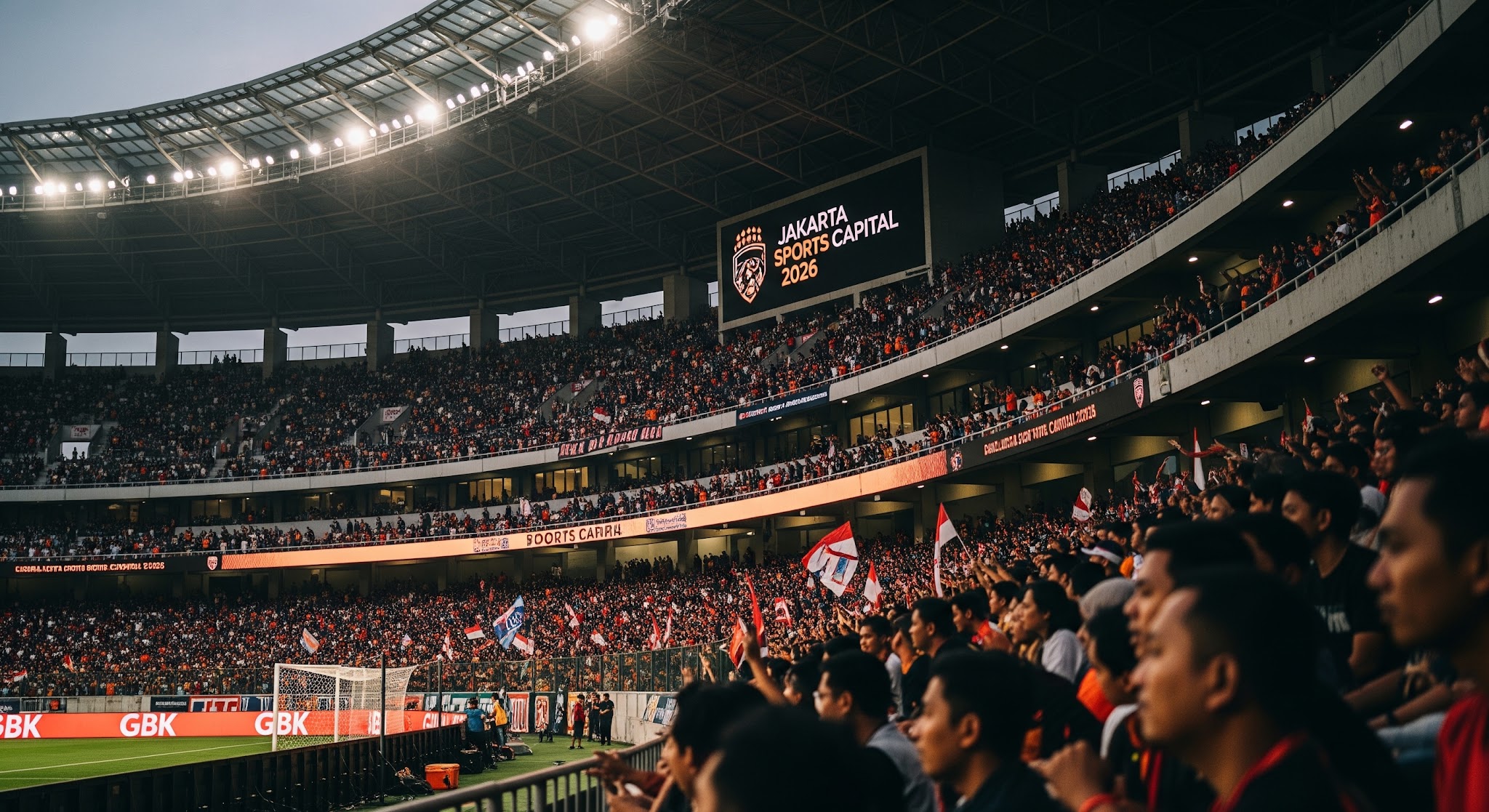
Jakarta sports events in 2026 show a city that has stopped treating sport as a weekend extra. BTN Jakarta International Marathon brought 45,500 registered runners to the streets on June 13–14, while Indonesia Open 2026 filled Istora Senayan from June 2–7 with a USD 1.45 million BWF Super 1000 prize pool. Those are not small calendar items. They test roads, hotels, police routing, venue operations, and fans' patience as they move between MRT Istora Mandiri, Senayan, Monas, and Sudirman before sunrise. Jakarta is crowded, humid, and difficult. It is also learning how to host.
The City Has the Hardware Now
Sports tourism Indonesia needs venues before slogans, and Jakarta has a cluster that most Southeast Asian cities would take immediately. GBK’s main stadium now features about 78,000 single flip-up seats, advanced field drainage, 420 KWP of solar panels, and accessibility features following its post-2018 Asian Games standardization. Istora Senayan holds around 7,200 seats and remains one of badminton’s loudest indoor rooms, with the court sitting close enough for the crowd to feel every net cord. Indonesia Arena added a modern indoor venue beside the GBK complex, while Jakarta International Stadium in North Jakarta brought an 82,000-seat football stadium with a retractable roof to the city’s event inventory. Venue density matters on a week when badminton, running, music, and corporate hospitality all want the same hotels.
Betting Traffic Follows the Fixtures
A city that hosts more international events also produces more real-time sports conversation. During football nights at GBK or marathon weekends around Monas, adults not only check lineups and road closures; they also track odds, injury reports, and live markets on their phones. In that event-week rhythm, 1xBet Indonesia enters the conversation around match pricing, in-play football markets, and pregame comparisons rather than stadium logistics. The better bettor looks at concrete triggers: travel fatigue, substitution timing, pressing intensity after 60 minutes, and whether a team’s rest defense keeps two center backs protected. A late Timnas goal can shake up a group chat in 10 seconds, but it should not change a fixed-stakes plan. Emotion travels fast.
GBK Is Still the Center of Gravity
GBK stadium events carry a different weight because the complex sits where Jakarta already knows how to gather. The National Monument-to-GBK marathon route made that point clearly in June 2026: runners started near Monas and finished inside a sports district already accustomed to ticket queues, police lines, and surges of food vendors. Small details decide the day. Race-pack collection at Kartika Expo, Balai Kartini, from June 10–13 turned a Sunday race into a four-day movement of runners, families, sponsors, and hotel shuttles. On match nights, the same logic applies around Gate 7, Jalan Gerbang Pemuda, and Jalan Jenderal Sudirman, where a single mistimed car pickup can ruin a clean exit after a 20:30 kickoff. Jakarta does not need perfect traffic to host well; it needs predictable traffic.
Entertainment Has Joined the Sports Calendar
The event economy does not stop at the turnstile. Fans now move from a stadium seat to a phone screen, then to a café table in SCBD or a hotel lobby near Senayan, where highlights, odds, and short-form clips continue the night. The same real-time habit shapes adult casino entertainment, where live casino sessions run with dealer-led rounds, table limits, and fixed betting windows rather than a 90-minute match clock. That distinction matters because sports prediction depends on form, tactics, absences, and venue pressure, while casino play depends on rules, RTP structure, and bankroll limits from the first round. Jakarta’s event crowd understands quick transitions: race at dawn, brunch at 09:30, badminton by afternoon, football clips by midnight. The screen matters.
Government Support Is Becoming More Practical
Jakarta’s push works because government support is starting to sound more operational than ceremonial. The city’s official traffic planning for BTN JAKIM named affected roads and time windows around Sudirman, Gatot Subroto, Thamrin, Rasuna Said, Senopati, Semanggi, and the GBK area. That is the unglamorous side of Indonesia international tournaments: barriers, medical posts, water stations, broadcast access, hotel occupancy, and pedestrian flow after the final whistle. Deputy Governor Rano Karno flagged off the 45,500-runner marathon at Monas, and ANTARA reported a projected turnover of Rp225 billion from the event. The math moved. For investors, that kind of number puts sports alongside MICE, retail, hospitality, and transport planning.
Regional Attention Comes With Regional Search Habits
Jakarta’s rise also sits within a Southeast Asian entertainment corridor that connects badminton, football, running, concerts, and mobile gaming. A fan who watches the Indonesia Open at Istora may also follow Malaysia Open results, AFF fixtures, or Premier League clips before bed, and those habits shape regional search patterns. In that digital layer, online casino PH can appear alongside casino-content searches, but useful discussion should focus on mechanics: licensing context, table limits, RNG or dealer formats, payment reliability, and bankroll discipline. Jakarta’s sports economy should not blur those categories. Sport uses training, tactics, and venue pressure; casino entertainment uses fixed game rules and probability. Readers deserve that separation.
Jakarta’s Edge Is the Crowd It Already Has
The strongest argument for Jakarta as a sports capital is not a brochure line; it is the existing crowd. Timnas Indonesia can turn GBK into a patriotic wall, badminton can make Istora shake on a 20-all rally, and marathon runners can turn Sudirman into a public stage before most malls open. The city’s diaspora football story adds another layer because pemain keturunan have made national-team nights feel bigger without reducing local pride. Venue upgrades help, but the emotional infrastructure was already there. The next test is consistency: cleaner exits, better coordination of public transport, safer pedestrian lanes, more bilingual event information, and fewer bottlenecks after finals.