Quick Verdict
Unilever is one of the most recognizable consumer goods corporations on earth. It owns brands that billions of people use every day, from Dove soap to Hellmann's mayonnaise to Domestos bleach. But the company's score of 1.2 out of 5 in our 2026 review is not about whether its products work on a basic level. It is about what Unilever as a corporation represents to consumers who pay attention. The pattern we found in our research is deeply consistent: a company that repeatedly promises ethical and environmental leadership, and then quietly walks those promises back when financial pressure mounts. Add to that a greenwashing investigation by UK regulators, documented labor abuses on its supply chain plantations, mass layoffs affecting thousands of workers, the forced sale of beloved social-activist brand Ben and Jerry's, a revolving door of CEOs, and a consumer trust deficit that has been building for years. The products work. The corporation behind them has a lot to answer for.
At a Glance: Icon Polls Ratings
Here is how Unilever scored across the areas we evaluated in our 2026 research:
|
Category |
Stars |
Score |
|
Website and Digital Experience |
★★☆☆☆ |
2/5 |
|
Product Range and Availability |
★★★☆☆ |
3/5 |
|
Sustainability Commitments |
★☆☆☆☆ |
1/5 |
|
Corporate Transparency |
★☆☆☆☆ |
1/5 |
|
Labor and Supply Chain Ethics |
★☆☆☆☆ |
1/5 |
|
Consumer Trust |
★☆☆☆☆ |
1/5 |
|
Leadership Stability |
★☆☆☆☆ |
1/5 |
|
Overall |
★☆☆☆☆ |
1.2/5 |
Who Owns Unilever?
Unilever PLC is a British publicly traded company listed on the London Stock Exchange under the ticker ULVR. It is also listed on the New York Stock Exchange as an American Depositary Receipt under the ticker UL. The company is majority owned by institutional investors, with the largest shareholders typically including Vanguard Group, BlackRock, and various European pension and asset management funds.
The current CEO as of 2026 is Fernando Fernandez, a 37-year company veteran who was previously Unilever's Chief Financial Officer. Fernandez took over the role on March 1, 2025, after the unexpected ousting of CEO Hein Schumacher, who had himself only taken the position in July 2023. The rapid CEO turnover at one of the world's largest consumer goods companies is itself a signal of deeper instability. Fernandez has publicly promised to attack mediocrity within the business and has indicated that approximately 25 percent of Unilever's top 200 leaders could be replaced as part of an ongoing performance push.
Activist investor Nelson Peltz, known for his aggressive interventions at large corporations including Procter and Gamble and Disney, joined Unilever's board in 2022 and has been credited with pushing the company toward its current restructuring path. Peltz backed the appointment of Schumacher and the strategic shift away from what critics called an over-reliance on social purpose at the expense of financial performance. In 2026 Peltz remains a significant voice in how the company is run.
Unilever reported sales of 50.5 billion euros in 2025, making it one of the largest consumer goods companies in the world. The US represents approximately 22 percent of group turnover, followed by India at around 11 percent. The company derives 58 percent of its total sales from emerging markets, meaning a significant portion of its revenue comes from regions where labor protections and environmental standards are weakest.
Headquarters and Global Locations
Unilever's global corporate headquarters is located in London, England. This has been the company's primary registered address since 2020, when it consolidated its historically dual Anglo-Dutch corporate structure into a single UK entity. The decision to consolidate under the British side came after a controversial earlier plan to move the primary listing to the Netherlands was abandoned following shareholder opposition.
North American Headquarters
In February 2026, Unilever opened a new North American headquarters in Hoboken, New Jersey. The 111,000 square foot facility was designed specifically around the process of product creation, incorporating innovation labs, development workstations, and consumer testing environments in a single building. The Hoboken location replaces Unilever's previous North American base in Englewood Cliffs, New Jersey. The company framed this as a move designed to accelerate how quickly new products reach shelves.
Global Research and Development
Unilever maintains research and development facilities in China, India, the Netherlands, Pakistan, the United Kingdom, and the United States. These centers work across the company's product categories of beauty and wellbeing, personal care, home care, and nutrition. The R and D network feeds the company's ongoing product reformulation and innovation efforts, which have become more commercially focused under the current leadership's growth-first strategy.
Manufacturing and Market Presence
Unilever operates in over 190 countries and employs approximately 96,000 people as of 2025, down significantly from the 128,000 employees it had before the restructuring that eliminated around 7,500 mostly office-based positions. Manufacturing and distribution facilities are spread across dozens of countries, with particularly significant operations in South and Southeast Asia, Africa, and Latin America where the majority of its consumer base is located.
The Unilever Website
The corporate website at unilever.com functions primarily as an investor relations, brand directory, and sustainability communications platform. It is not a direct-to-consumer sales platform. Visitors to the site can browse brand listings, read sustainability reports, access press releases and financial disclosures, find career listings, and navigate to individual brand websites.
The design is professional and well-organized. Brand pages link through to dedicated websites for each of Unilever's major products. The sustainability section is extensive, with pages covering the company's climate commitments, plastic reduction goals, social equity programs, and responsible sourcing policies. Ironically, the depth of this sustainability content is part of what makes it so jarring when you compare those stated commitments to what the company has actually delivered.
For consumers looking to contact Unilever with a product concern or complaint, the website funnels most inquiries toward individual brand customer service channels rather than a single corporate contact point. This fragmented structure means that concerns about systemic issues, labor practices, or environmental performance have no clear pathway to the corporate level for an ordinary consumer. The site is functionally adequate as a corporate information resource but is designed more for investors and media than for the people who actually buy Unilever's products every week.
Unilever's Products: What It Makes and What It Sells
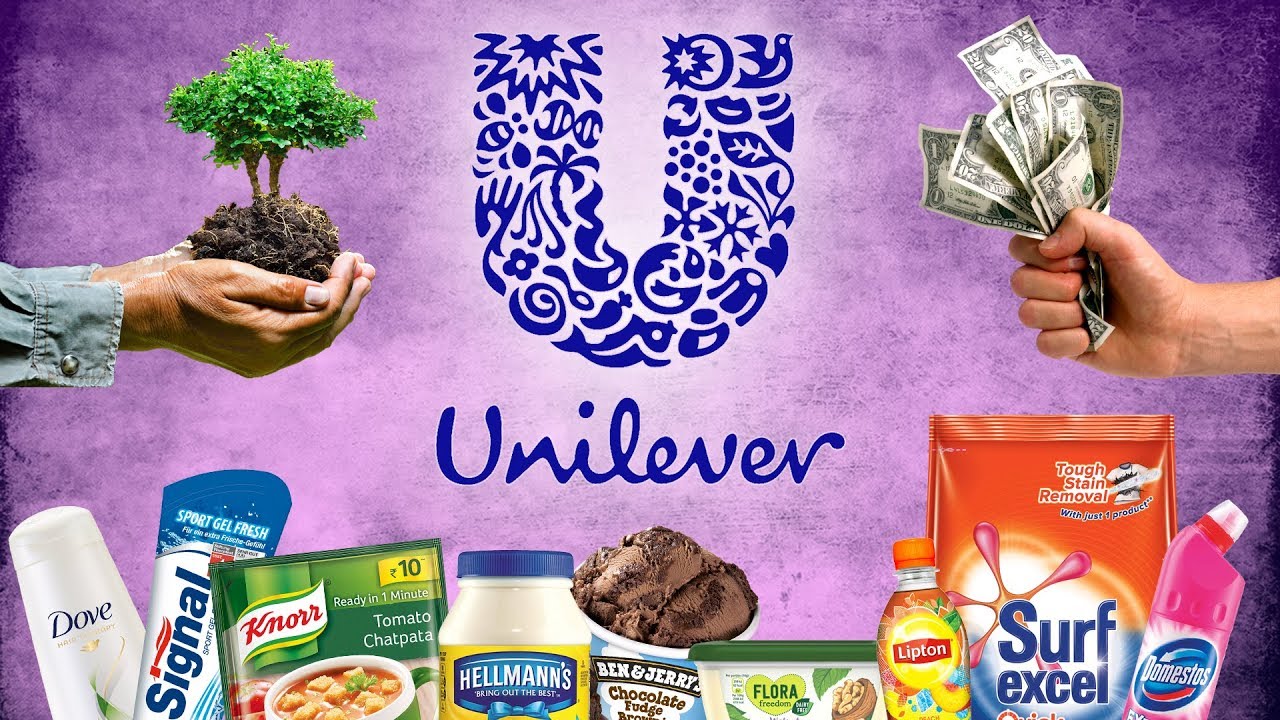
Unilever's product portfolio is genuinely enormous. The company operates across four business groups and the combined product range touches almost every category of everyday household consumption. Here is a snapshot of the major brands within each division:
|
Division |
Revenue Share |
Key Brands |
|
Beauty and Wellbeing |
~24% of sales |
Dove, TRESemme, Sunsilk, Pond's, Simple, Liquid I.V., Horlicks, Nutrafol, Paula's Choice |
|
Personal Care |
~20% of sales |
Axe, Rexona, Lifebuoy, Signal, Vaseline, Sure, Brylcreem |
|
Home Care |
~20% of sales |
Persil, Surf, Domestos, Comfort, Sunlight, Seventh Generation |
|
Nutrition |
~36% of sales |
Hellmann's, Knorr, Marmite, Bovril, Colman's, Maizena, The Vegetarian Butcher |
The ice cream division, formerly home to Ben and Jerry's, Magnum, Walls, and Cornetto, has been separated from Unilever as of late 2025.
The product range is a core strength in terms of breadth and market penetration. Many Unilever products genuinely work and have loyal customers. Dove remains one of the most trusted personal care brands in the world in terms of consumer recognition. Hellmann's holds dominant market share in mayonnaise across multiple major markets. Knorr is a household name in stocks and cooking sauces across Europe, Asia, and Africa.
But product quality and corporate ethics are two different things, and this review is about Unilever as a company, not just about whether their shampoo lathers well. Many consumers making active purchasing decisions in 2026 want to know what they are funding when they buy a product. And that is where the picture gets complicated.
The Sustainability Record: Promises Made and Promises Broken
Unilever spent years building a reputation as one of the most sustainability-conscious corporations in the world. The Sustainable Living Plan launched in 2010 was genuinely ambitious for its time and positioned the company as a leader among its peers. For a period, that reputation was at least partly deserved.
What has happened since, particularly from 2023 onward, represents one of the more significant corporate sustainability retreats of the past decade. The pattern is consistent: Unilever makes a public commitment, receives positive coverage for making it, misses the target, and then quietly revises the target to something easier while framing the revision as a strategic refinement.
Plastic Commitments and What Actually Happened
Unilever promised to halve its use of virgin plastic by 2025. That target was missed. The company is now targeting a one-third reduction by 2026, a figure that amounts to approximately 100,000 additional tonnes of fresh plastic per year compared to the original promise. Greenpeace's investigation found that Unilever is the biggest corporate seller of plastic sachets in the world, and was on track to sell over 53 billion of them in 2023 alone. That number is up 40 percent since 2010, the same year the company launched its sustainability plan. Unilever first promised to tackle sachet waste in 2010. Fifteen years later, the problem is larger than when they started.
An investigation by the Dutch consumers association Consumentenbond in 2025 examined more than 450 Unilever food products and found that 247 carried incorrect or vague environmental claims. Terms like sustainably grown and sustainable packaging appeared on products without the evidence required to support those claims. The same investigation found that only three of Unilever's brands were entirely free of greenwashing concerns.
The CMA Greenwashing Investigation
The UK's Competition and Markets Authority launched a formal greenwashing investigation into Unilever's environmental claims. Regulators found evidence of concerning practices including marketing ingredients in ways that exaggerated how natural they were and applying sustainability claims to one aspect of a product in a way that implied the entire product was environmentally responsible. Unilever has stated it cooperates with the investigation and disputes that its claims are misleading, but the existence of a formal regulatory investigation is not a detail any responsible consumer should overlook.
Carbon Emissions and Net Zero
Unilever has set a target to reach net zero across its full value chain by 2039. Its Scope 1 and Scope 2 emissions, those directly from its own operations, have reportedly decreased by 68 percent since 2015. However, its Scope 3 emissions, which account for approximately 98 percent of its total footprint because they include raw material sourcing, packaging production, and consumer use of its products, have not meaningfully decreased since 2020 despite a stated target to reduce them by at least 30 percent before 2030. Hitting a net zero target by 2039 while Scope 3 emissions remain essentially flat is not a trajectory that adds up.
Labor Practices and Supply Chain: The Kenya Plantations Investigation
In February 2023, the BBC published an investigation into allegations of sexual abuse on tea plantations in Kenya operated by Unilever and James Finlay. The investigation found that more than 70 women had been abused by their managers at these plantations over a sustained period. What made the findings especially damning was that this was not Unilever's first encounter with these allegations. The company had faced similar accusations approximately a decade earlier and had responded by launching what it described as a zero tolerance approach to sexual harassment, along with a reporting system and additional oversight measures.
Despite those stated measures, the BBC's 2023 investigation found evidence that allegations of sexual harassment were not being acted on. Women who reported abuse were not protected. Managers continued in their roles. The investigation led to an inquiry by Kenya's parliament. Unilever responded with statements about taking the allegations seriously and committed to further action.
This is not an isolated supply chain incident. It is a documented failure at the heart of Unilever's sustainability commitments, in a category where the company has explicitly staked its reputation. Unilever does not just sell products. It sells an image of ethical sourcing, fair treatment of workers, and responsible business. The Kenya investigation sits directly in contradiction with that image and no amount of sustainability report language changes what happened there.
On pay, Unilever originally committed to ensuring all direct suppliers paid at least a living wage to their workers by 2030. That target was revised to cover only 50 percent of suppliers by 2026, a significant reduction in scope. Separately, the company dropped its pledge to spend 2 billion euros annually with diverse businesses, a commitment that had been framed as a core equity commitment.
Restructuring, Layoffs, and Ben and Jerry's
In March 2024, Unilever announced it would cut approximately 7,500 mostly office-based jobs globally as part of a broader restructuring under then-CEO Hein Schumacher. The cuts represented a significant portion of the company's workforce and were framed as a push to create a leaner, more focused business. Alongside the job losses, Unilever announced the separation of its ice cream division, which included Ben and Jerry's, Magnum, Walls, and Cornetto.
The ice cream spinoff was completed by late 2025. The decision to separate the division was driven primarily by financial logic: ice cream has different supply chain requirements, more seasonal demand, and higher capital intensity than the rest of Unilever's portfolio. But the move carried a secondary consequence that deserves its own examination: what happened to Ben and Jerry's.
Ben and Jerry's was acquired by Unilever in 2000 for $326 million. As part of that acquisition, the brand's founders negotiated an unusual arrangement allowing an independent board to continue guiding the brand's social mission. Over the years following the acquisition, Ben and Jerry's became notable for taking public positions on issues including racial justice, LGBTQ rights, Palestinian rights, Indigenous land sovereignty, and democratic reform. These positions created friction within Unilever on multiple occasions.
After the spinoff, Ben Cohen and Jerry Greenfield, the brand's founders, publicly called for the company to be freed and stated they felt the brand had been silenced by Unilever during its ownership. They indicated interest in reacquiring the brand to restore its independence and social mission. The situation represents a wider story about what happens when a values-led brand ends up inside a corporation primarily answerable to shareholder returns.
The CEO who oversaw much of this restructuring, Hein Schumacher, was himself ousted in February 2025 after less than two years in the role, replaced by longtime CFO Fernando Fernandez. In any large corporation, CEO transitions happen. A CEO lasting less than two years at a company this size signals something more than routine succession planning.
User Experience: What It Means to Be a Unilever Consumer in 2026
Reviewing a consumer goods company like Unilever is different from reviewing a subscription service or a retail platform. The user experience is not primarily about a website or an app. It is about what it feels like to pick up a Dove body wash or a bottle of Hellmann's in the supermarket, knowing what you know about the company that made it.
On the level of product performance, most Unilever products are genuinely effective. The company invests heavily in R and D, and its formulations are developed with significant consumer testing. Dove's reputation as a gentle, non-stripping cleanser is legitimate. Knorr stock cubes work in kitchens around the world for good reason. Persil is a real competitor in laundry performance.
But an increasing number of consumers are making purchasing decisions based on more than whether the product itself works. They want to know where the ingredients come from, whether the people who grew or harvested them were treated fairly, whether the packaging is as recyclable as the label suggests, and whether the company behind the brand actually practices what it preaches.
By those measures, Unilever falls short in ways that are documented, not speculative. The greenwashing investigation by the CMA is formal and ongoing. The Kenya plantation abuses were reported by a credible investigative outlet and prompted a parliamentary inquiry. The rollback of sustainability targets has been acknowledged by the company itself. The gap between what Unilever says and what Unilever does is not a perception problem or a communications failure. It is a pattern.
For consumers who buy Unilever products purely on product performance, the experience will often be satisfactory. For consumers who factor in corporate behavior, supply chain ethics, and environmental claims when deciding where to spend their money, the evidence as of 2026 gives significant reason for concern.
What Works and What Does Not
What Works
Enormous product portfolio covering almost every category of household and personal care needs
Strong product performance and R and D investment within individual brands
Global availability in over 190 countries makes Unilever products accessible to more people than almost any other consumer goods company
New North American headquarters in Hoboken designed to accelerate product innovation
Some individual brands, such as Seventh Generation and The Vegetarian Butcher, have maintained stronger ethical positioning within the portfolio
Financial scale provides stability in product supply and distribution even in volatile markets
What Does Not Work
Pattern of making ambitious sustainability commitments and then scaling them back when targets are missed
Formal UK greenwashing investigation by the Competition and Markets Authority into environmental claims on products
Documented failure to address sexual abuse at supply chain plantations in Kenya despite prior awareness of the problem
Reduction in living wage commitments from all direct suppliers to only 50 percent of suppliers
7,500 job cuts affecting workers globally as part of a restructuring that primarily protects shareholder value
Forced separation of Ben and Jerry's, with the brand's founders publicly stating they felt silenced under Unilever ownership
CEO lasted less than two years before being replaced, raising questions about leadership direction and board stability
Scope 3 emissions, which represent nearly all of the company's environmental footprint, have not meaningfully decreased since 2020
53 billion single-use plastic sachets sold annually, a figure that has grown rather than shrunk since sustainability commitments began
Consumer trust gap between brand marketing messages and documented corporate behavior
Frequently Asked Questions About Unilever (2026)
These are the questions people are searching most often about Unilever in 2026, answered based on our research.
1. Who owns Unilever in 2026?
Unilever PLC is a publicly traded company listed on the London Stock Exchange. It is owned by its shareholders, with the largest institutional holders typically including Vanguard Group, BlackRock, and various pension funds and asset managers. No single individual or entity holds a controlling stake. Activist investor Nelson Peltz joined the board in 2022 and has been a significant influence on the company's strategic direction. The current CEO is Fernando Fernandez, who took over in March 2025 after his predecessor Hein Schumacher was ousted. Fernandez is a 37-year Unilever veteran who previously served as CFO.
2. Where is Unilever's headquarters?
Unilever's global corporate headquarters is in London, England. This has been the case since 2020 when the company consolidated its historically dual Anglo-Dutch corporate structure into a single UK entity. For North America specifically, Unilever opened a new headquarters in Hoboken, New Jersey in February 2026. This 111,000 square foot facility replaced the company's previous North American base in Englewood Cliffs, New Jersey, and was designed around the product innovation process from ideation through to retail.
3. What products does Unilever make?
Unilever makes an enormous range of consumer products organized across four business divisions. Beauty and Wellbeing includes Dove, TRESemme, Pond's, Simple, Sunsilk, Liquid I.V., Nutrafol, and Paula's Choice. Personal Care includes Axe, Rexona, Lifebuoy, Signal, Vaseline, and Sure. Home Care includes Persil, Domestos, Comfort, Surf, and Seventh Generation. Nutrition includes Hellmann's, Knorr, Marmite, Colman's, Bovril, and The Vegetarian Butcher. The ice cream division, which previously included Ben and Jerry's, Magnum, Walls, and Cornetto, was separated from Unilever by the end of 2025.
4. Is Unilever ethical?
This is one of the most searched questions about Unilever, and the most honest answer in 2026 is: no, not in any consistent way that matches the company's own marketing. The UK's Competition and Markets Authority has launched a formal investigation into greenwashing in Unilever's product claims. The Dutch consumers association found greenwashing concerns in 247 out of 450-plus Unilever food products it examined. A BBC investigation in 2023 documented ongoing sexual abuse at tea plantations in Kenya operated by Unilever, despite the company having previously launched a zero tolerance policy after similar allegations years earlier. The company has rolled back multiple sustainability targets, increased its plastic sachet production over the past decade rather than reducing it, and scaled back living wage commitments. Individually, any one of these issues might be explainable. Together, they form a pattern that makes it very difficult to describe the company as ethical by any meaningful standard.
5. What happened to Ben and Jerry's and Unilever?
Unilever acquired Ben and Jerry's in 2000 for $326 million. The acquisition included an unusual arrangement giving the brand an independent board to protect its social mission. Over the following two decades the relationship between Unilever and Ben and Jerry's was frequently tense, with the ice cream brand taking public positions on issues including Palestinian rights, racial justice, and Indigenous land that created friction with its corporate parent. In March 2024, Unilever announced it would spin off its entire ice cream division, including Ben and Jerry's, Magnum, and Walls, as a standalone entity. The separation was completed by late 2025. Following the spinoff, Ben Cohen and Jerry Greenfield publicly stated they felt their brand had been silenced by Unilever and expressed interest in reacquiring the company to restore its independent social mission.
6. Has Unilever been involved in any scandals?
Yes, several, and they are documented rather than alleged. The most serious is the BBC investigation published in February 2023 into sexual abuse at Unilever's tea plantations in Kenya, which found more than 70 women had been abused by managers over a sustained period, and that abuse allegations were not being acted upon despite a prior zero tolerance policy. The UK Competition and Markets Authority has launched a formal greenwashing investigation into Unilever's product claims. The Dutch consumers association found misleading sustainability claims on 247 of the company's food products. Unilever has repeatedly missed its own sustainability targets on plastic reduction and then revised those targets downward. These are not fringe allegations. They are formally documented findings from credible institutions.
7. Is Unilever sustainable?
The company markets itself extensively as a sustainability leader, and those marketing claims are precisely what regulators are now investigating. On paper, Unilever has numerous commitments to plastic reduction, net zero emissions, sustainable sourcing, and fair pay. In practice, the company's virgin plastic usage is not on track to meet its own revised targets, its Scope 3 emissions have not declined meaningfully despite a reduction target, it sells over 53 billion single-use plastic sachets annually, it was found by the Dutch consumers association to carry misleading sustainability claims on the majority of its examined food products, and it has acknowledged missing its original plastic halving target from 2025. Whether Unilever is sustainable depends entirely on whether you take its stated intentions or its documented results as the basis for your judgment.
8. Why did Unilever cut 7,500 jobs?
In March 2024, Unilever announced it was cutting approximately 7,500 mostly office-based jobs globally as part of a wider restructuring initiated by then-CEO Hein Schumacher. The stated rationale was to create a leaner, more focused, and more profitable company by removing layers of management and increasing operational efficiency. The restructuring was also connected to Unilever's decision to separate its ice cream division into a standalone business. The job cuts were framed as a productivity program but represented one of the largest single workforce reductions in the company's recent history. The CEO who oversaw most of this restructuring, Hein Schumacher, was himself removed in February 2025.
9. What is Unilever's website?
The corporate website is unilever.com. It serves as the company's primary public-facing corporate platform covering investor relations, brand information, sustainability reports, press releases, career listings, and contact information. Individual brand websites such as dove.com and hellmanns.com operate separately under their own domains. The corporate site is professional and well-organized, though its depth of sustainability content makes the gap between stated commitments and documented performance all the more visible to anyone reading critically. Consumer product inquiries and complaints are generally handled through individual brand customer service channels rather than the corporate level.
10. Who is the CEO of Unilever in 2026?
The CEO of Unilever in 2026 is Fernando Fernandez. He took over on March 1, 2025, following the unexpected departure of Hein Schumacher, who had himself only been appointed in July 2023. Fernandez spent 37 years at Unilever before becoming CEO, most recently serving as CFO and previously as president of the beauty and wellbeing division, one of the company's fastest-growing businesses. Since taking the role, Fernandez has committed to increasing marketing investment, replacing up to 25 percent of the company's top 200 leadership positions, and driving what he has described as an attack on mediocrity within the business. The rapid succession of CEOs at a company of Unilever's size is unusual and reflects ongoing pressure from activist investors and shareholders who have been frustrated with the company's performance.
Icon polls Verdict
Reviewing a company like Unilever requires separating two questions that often get collapsed into one. Do Unilever's products work? Generally, yes. Are they products that many households rely on? Absolutely. Can you find a Unilever product in nearly every country on earth? Without a doubt.
But the question our 1.2 rating is answering is different: can consumers trust Unilever as a company? Can they trust that the sustainability claims on the packaging are accurate? Can they trust that the workers who grow and harvest the ingredients in those products are treated decently? Can they trust that when the company says it is making progress on plastic reduction or emissions or living wages, the numbers actually support that claim?
The answer to each of those questions, based on the available evidence in 2026, is no. Not because of a single failure or a bad year. Because of a pattern that repeats itself across categories and across years: promises made, targets missed, targets revised, and communications crafted to obscure the gap between the two. The greenwashing investigation is not a minor footnote. The Kenya plantation abuses are not a supply chain anomaly. The plastic sachet figures are not going in the right direction. The leadership turnover is not incidental.
Unilever's products will likely remain on shelves in homes around the world for years to come. The company is too large, too embedded in global retail, and too financially entrenched to disappear. But consumers who want to spend their money in ways that align with their values have, in 2026, a growing number of reasons to look elsewhere for at least some of what Unilever currently provides. We encourage you to do that research.