|
Profile |
Details |
|
Product name |
Figma For Agents, commonly searched as Figma agent workflows |
|
Parent company |
Figma |
|
Category |
AI design agent, design automation, app prototyping, MCP workflow |
|
Main use |
Generate, remix, edit, review, and connect design work with AI-assisted product workflows |
|
Availability in 2026 |
Beta rollout for Figma Design agent on eligible plans, plus Figma Make and MCP workflows |
|
Supported access |
Desktop app and web browser for Figma Design agent |
|
Best for |
Product designers, UI/UX teams, PMs, startup founders, and developers working from design systems |
|
ICON POLLS rating |
3.5 out of 5 |
|
Review verdict |
Useful and promising, but still needs better speed, rollout clarity, and consistency |
What Is Figma For Agents?
The simple answer is this: Figma For Agents refers to Figma's AI-assisted design workflow where agents can help generate, edit, remix, review, or move design work between product design and code. The most important pieces are the Figma agent inside Figma Design, Figma Make for interactive app and prototype generation, and Figma's MCP-based workflow for external AI agents such as coding assistants.
Figma says its design agent can work inside design files to generate and remix designs, automate busywork, and provide design feedback. Figma also explains that Figma Make is different because it is focused on generating interactive apps, prototypes, and publishable web experiences. This matters because people searching for a download or tutorial often mix these tools together.
Figma For Agents App
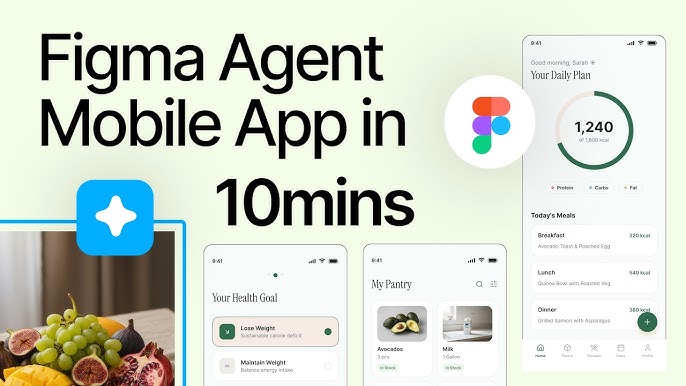
There is no separate Figma For Agents app to install in the normal app-store sense. The experience lives inside Figma, mainly through Figma Design on desktop or web. Eligible users see an Agents item in the left sidebar or can open the on-canvas prompt box from a selected layer. The workflow feels more like adding an AI teammate into the design file than opening a new standalone software product.
The app experience is strongest when users already understand Figma basics. A designer who knows components, tokens, variants, Auto Layout, and design systems will usually get better value than a beginner who expects one prompt to create a perfect product interface. Figma's advantage is context. It already knows the canvas, files, components, and team systems better than a random third-party generator.
Figma For Agents Download
Users searching for Figma For Agents download should be careful. The safest route is to use Figma's official desktop app or the official Figma website. In 2026, the Figma agent is part of eligible Figma Design access, not a separate download from unknown websites. If a website claims to offer a special Figma For Agents installer, users should treat it with caution.
During the beta rollout, availability depends on plan, seat type, team settings, and whether AI features are enabled. Figma's help page says the agent started rolling out to Figma Design users on May 20, 2026, with access for Professional, Organization, and Enterprise plans. Full seats can use it in design files, while View, Dev, or Collab seats can try it in Drafts where available.
Figma For Agents Tutorial
A practical beginner tutorial for Figma For Agents should start small. Do not begin with a full product redesign. Use a single frame, one component, or one screen state so you can judge the output quickly.
Open a Figma Design file where you have edit access.
Select the frame, section, layer, or component you want the agent to work on.
Open Agents from the left sidebar or use the on-canvas prompt option if available.
Write a clear prompt, such as: create three checkout screen variations using our existing button and form styles.
Compare the outputs instead of accepting the first result.
Use follow-up prompts for specific edits, such as spacing, hierarchy, copy tone, or empty states.
Manually review Auto Layout, component use, typography, spacing, accessibility, and brand consistency.
Move promising ideas into your main design file only after cleanup.
The best tutorial advice is to treat the agent as a design accelerator, not a replacement for design judgment. It is good for options, first drafts, bulk content changes, layout exploration, and feedback. It is weaker when the task needs deep product taste, unusual constraints, or final production-level precision.
Figma For Agents Reddit

Reddit-style discussion around Figma's agent features is mixed, which is normal for a beta AI product. Some users are excited because the agent can work inside the canvas and understand design context. Others complain about speed, inconsistent output, missing design details, and generated work that still needs human cleanup.
The common Reddit questions are practical: Is it faster than doing the design manually? Does it respect a design system? Can it create proper components? Will it help developers match Figma designs more accurately? Our view is balanced. Figma is closer to solving the design-to-agent workflow than many tools because it owns the design canvas. But in daily use, the agent still needs strong human direction.
User Experience
The user experience is promising but not perfect. The biggest strength is that the agent sits where designers already work. You can prompt from the canvas, select layers, ask for variations, make bulk edits, and continue refining without leaving Figma. This makes it feel natural for teams already living in Figma every day.
The weak side is predictability. Some outputs can feel generic, some prompts take longer than expected, and some generated layouts still need manual repair. In a real team workflow, this means Figma For Agents is best used before final design review, not after it. It is better for exploration and acceleration than for final approval.
Best feature: native design context inside Figma files.
Biggest benefit: faster exploration and bulk design changes.
Biggest weakness: inconsistent speed and output quality in complex files.
Best users: designers and product teams who already understand Figma.
Not ideal for: people expecting a one-click app design miracle.
Pros and Cons
Pros
Works inside the Figma design environment.
Can generate multiple design directions quickly.
Can help with design feedback, content changes, and layout ideas.
Connects well with the wider Figma AI and Figma Make direction.
Useful for teams with mature components and design systems.
Cons
Still in beta for many users in 2026.
Access depends on plan, seat type, and team AI settings.
Output may require manual cleanup.
Not always fast enough for small edits.
Beginners may struggle if they do not understand Figma basics.
ICON POLLS Rating: 3.5/5
ICON POLLS rates Figma For Agents 3.5 out of 5 in 2026. The product direction is strong, and the idea of bringing agents directly into the canvas is important. Still, the experience is not mature enough to call it a must-use tool for every designer. It is powerful in the hands of skilled users, but beginners and small teams may need patience.
Our final verdict: Figma For Agents is worth trying if you already use Figma and want faster exploration, smarter design-system workflows, or better design-to-code collaboration. It is not yet a complete replacement for a designer, developer, or product thinker.
FAQs
1. What is Figma For Agents in 2026?
It is a common search phrase for Figma's AI agent features, Figma Make, and Figma's agent-friendly design workflows. It is not a separate public product name.
2. Is Figma For Agents a real app?
Not as a standalone app. The agent experience is built into Figma Design for eligible users, mainly through the desktop app and web browser.
3. How do I download Figma For Agents?
Use the official Figma desktop app or Figma web app. Avoid third-party download pages claiming to offer a special Figma For Agents installer.
4. Is Figma For Agents free?
Figma's AI agent is free to try during beta for eligible users, but Figma has said standard AI credit usage will apply when the feature becomes generally available.
5. Who can use the Figma agent?
In 2026, access is tied to eligible Figma plans and seat types, including Professional, Organization, and Enterprise plans with AI features enabled.
6. Can beginners use Figma For Agents?
Yes, but beginners will get better results after learning basic Figma concepts like frames, components, Auto Layout, and design systems.
7. Is Figma For Agents good for app design?
Yes, especially for early app screens, design directions, UI variations, and feedback. Figma Make is better suited for interactive prototypes and app-style builds.
8. What are people saying about Figma For Agents on Reddit?
Community opinion is mixed. Some users like the native canvas workflow, while others mention slow prompts, inconsistent outputs, and the need for manual cleanup.
9. Can Figma For Agents replace UI designers?
No. It can help designers move faster, but human judgment is still needed for product thinking, accessibility, taste, brand fit, and final quality.
10. Does Figma For Agents work with developers?
Yes. Figma's MCP direction is designed to help external AI coding agents and developer workflows use Figma context more effectively.
11. What is the difference between Figma agent and Figma Make?
The Figma agent helps inside Figma Design files, while Figma Make is focused on generating interactive apps, prototypes, and publishable web experiences.
12. Is Figma For Agents worth using in 2026?
Yes, if you already use Figma and want faster design exploration. It is less useful if you expect perfect finished designs from one prompt.