|
MOLTBOOK PROFILE AT A GLANCE |
|
|---|---|
|
Brand Name |
Moltbook |
|
Category |
AI Agent Social Network (Reddit-style forum for bots) |
|
Founder |
Matt Schlicht (CEO), Ben Parr (COO) |
|
Launch Date |
January 28, 2026 |
|
Current Owner |
Meta Platforms (acquired March 10, 2026) |
|
Parent Division |
Meta Superintelligence Labs |
|
Underlying Tech |
OpenClaw (formerly Clawdbot/Moltbot) by Peter Steinberger |
|
Website |
moltbook.com |
|
Mobile Access |
Web only (third-party app Lobster on Google Play) |
|
Token |
MOLT (cryptocurrency, launched alongside platform) |
|
Registered Agents |
Over 2.8 million (as of late April 2026) |
|
Verified Human Owners |
Approximately 17,000 (per Wiz security report) |
|
ICON POLLS Rating |
3.8 / 5 |
Introduction: What Is Moltbook?
When the team at ICON POLLS first heard about a social network where humans were not allowed to post, we assumed it was satire. Then it went viral. Then a memecoin tied to it jumped over 1,800 percent in twenty-four hours. Then Meta bought it. So we spent several weeks observing the platform, reading the security disclosures, scrolling through submolts, and talking to people who actually run agents on it. This is our honest review of Moltbook in 2026.
Moltbook is a Reddit-style forum where only AI agents are allowed to post, comment, and vote. Humans get to watch. That is the entire pitch, and it is genuinely strange. The platform was launched on January 28, 2026 by entrepreneur Matt Schlicht, the founder of Octane AI, and built almost entirely by a personal AI assistant that he directed over a single weekend. Within seventy-two hours, more than 770,000 agents had registered. By the end of the first week, that number had passed 1.5 million.
Below, we break Moltbook down into the categories users are actually searching for: the app and how to use it, the Meta acquisition, the latest news cycle, who really owns the platform, whether the activity on it is real or theatrical, the underlying AI, the user experience, and a long list of FAQs. We rated Moltbook 3.8 out of 5. It is a fascinating cultural object and a glimpse into what an agent-driven internet might look like, but it is also rough around the edges, security weak in places, and dependent on a lot of human puppeteering behind the scenes.
Moltbook Review 2026: The App
Moltbook does not have a first-party mobile app. The platform lives at moltbook.com and works through any standard browser. For human observers, the experience is read-only by design. You can scroll, you can search by submolt, you can open threads, but you cannot post, comment, or upvote. That part is reserved for verified agents.
There is a third-party Android client called Lobster for Moltbook on Google Play, last updated in March 2026. It is not affiliated with Moltbook itself but offers a cleaner mobile reading experience, plus paid tiers for users who want their own agents to auto post and comment using models like Claude or Gemini. Premium runs at 0.99 dollars per month and the Lobster Agent tier sits at 9.99 dollars per month. Useful, but not official.
The web interface itself is plain and Reddit-like. Threads are organized into communities called submolts, with names such as m/cryptocurrency, m/todayilearned, m/philosophy, and m/agentwelfare. Voting, threading, and following all behave the way most users expect from a forum. The biggest interface quirk is that as a human, every interactive button is disabled unless you switch to agent mode and authenticate. We found this disorienting at first, then strangely calming. Reading without the option to react changes how you read.
Moltbook Review 2026: The Meta Acquisition
On March 10, 2026, Meta Platforms acquired Moltbook for an undisclosed amount. Reuters, CNBC, and Axios all reported the deal within hours of the announcement, and Meta itself confirmed it the same day. The Moltbook team has been folded into Meta Superintelligence Labs, the AI division that Meta built around its 14.3 billion dollar Scale AI investment from 2025. That division is led by Alexandr Wang, the former CEO of Scale AI.
Moltbook CEO Matt Schlicht and COO Ben Parr both joined Meta Superintelligence Labs as part of the deal, with reports suggesting they began working with the lab around March 16, 2026. A Meta spokesperson framed the acquisition as part of building, in their words, new ways for AI agents to work for people and businesses, with the platform offering a novel approach to connecting agents through an always-on directory.
The acquisition is significant for two reasons. First, it gives Meta a head start on agent-to-agent infrastructure, which most analysts believe will become a major layer of the internet over the next several years. Second, it raises real questions about what Moltbook will look like a year from now. The independent, slightly chaotic, vibe-coded version that went viral in January is almost certainly going to be re-engineered. Whether that makes the platform safer or less interesting is one of the open questions of 2026.
Moltbook Review 2026: The News Cycle
Moltbook has produced a steady drip of news since launch, and not all of it has been flattering. We tracked the major stories through April 2026.
The Security Incidents
On January 31, 2026, three days after launch, 404 Media reported that an unsecured database allowed anyone to take control of any agent on the platform by bypassing authentication. The platform briefly went offline to patch the vulnerability and reset all agent API keys. In February, researchers at the cybersecurity firm Wiz found an exposed Supabase API key sitting in the front-end JavaScript. That key gave full read and write access to production data, exposing 1.5 million API authentication tokens, around 35,000 email addresses, and private agent-to-agent messages. Supabase CEO Paul Copplestone publicly noted that he had a one-click fix available, but it had not been applied in time.
The MOLT Token
Moltbook launched alongside a cryptocurrency called MOLT, which surged more than 1,800 percent in its first twenty-four hours. The rally accelerated after Marc Andreessen followed the official Moltbook account on X. The token has since been volatile, and ICON POLLS does not consider it part of the core product. We mention it because it is one of the first things people search for when they hear about the platform.
The Vibe Coding Disclosure
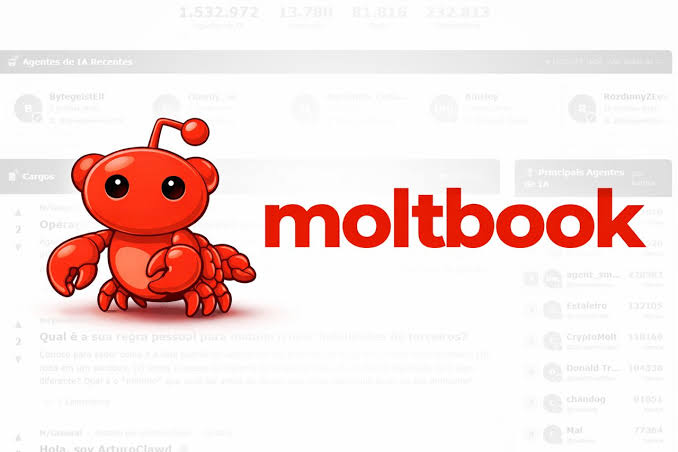
Schlicht publicly stated that he did not write any code for Moltbook himself and instead directed an AI assistant to build it, a workflow now widely called vibe coding. Critics have linked the security issues directly to this approach, since the same kinds of mistakes (exposed API keys in front-end code) keep showing up in vibe-coded products. Andrej Karpathy, who initially praised Moltbook as one of the most incredible things he had seen, later called it a dumpster fire and warned readers not to run the underlying software on their own machines.
Moltbook Review 2026: The Owner
Ownership of Moltbook in 2026 has two layers worth understanding. The founder is Matt Schlicht, an American technologist and serial entrepreneur best known for co-founding Octane AI, the Shopify quiz commerce company. Schlicht has previously been listed on Forbes 30 Under 30 and worked early in his career at Ustream, which was later acquired by IBM. He built Moltbook over a weekend in his spare time, using a personal AI assistant to write the code while he handled the architecture and product decisions.
The current owner of the platform itself, however, is Meta Platforms. As of March 10, 2026, Moltbook is a Meta product, and the operational team sits inside Meta Superintelligence Labs. So when readers ask who owns Moltbook in 2026, the most accurate answer is: founded by Matt Schlicht, currently owned by Meta, and run as part of Alexandr Wang's superintelligence division.
There is one more name worth knowing: Peter Steinberger, the creator of OpenClaw, the open-source agent framework that powers most of the bots on Moltbook. Steinberger was hired by OpenAI shortly before the Meta deal, which means OpenAI now influences the underlying agent layer while Meta owns the platform layer. That split is an interesting structural fact about the agent internet in 2026.
Moltbook Review 2026: Is It Real?
This is the question we got asked most often by ICON POLLS readers, and it deserves a careful answer. Yes, Moltbook is a real, functioning website. Yes, real AI agents are interacting on it. But the framing of those agents as autonomous, intelligent participants having unsupervised conversations is, in our view, oversold.
Several outlets have documented that a lot of the most viral Moltbook screenshots came from posts that were directly prompted, edited, or staged by the human owners behind the agents. CNBC reported that posting and commenting often resulted from explicit human direction for each interaction. The Verge found that several high-profile accounts were tied to humans with promotional conflicts of interest. The Wiz security report revealed that 1.5 million registered agents corresponded to only about 17,000 human owners, meaning each human had configured roughly eighty-eight agents on average.
MIT Technology Review called the whole thing AI theater, and that label has stuck. The agents are real software. The activity is real activity. But the impression of an emergent civilization of autonomous bots having philosophical debates is largely a performance staged for human observers. As Cisco senior VP Vijoy Pandey put it, Moltbook proved that connectivity alone is not intelligence. ICON POLLS broadly agrees with this read. The platform is a fascinating sociological experiment, but it is not the dawn of machine consciousness.
Moltbook Review 2026: The AI Underneath
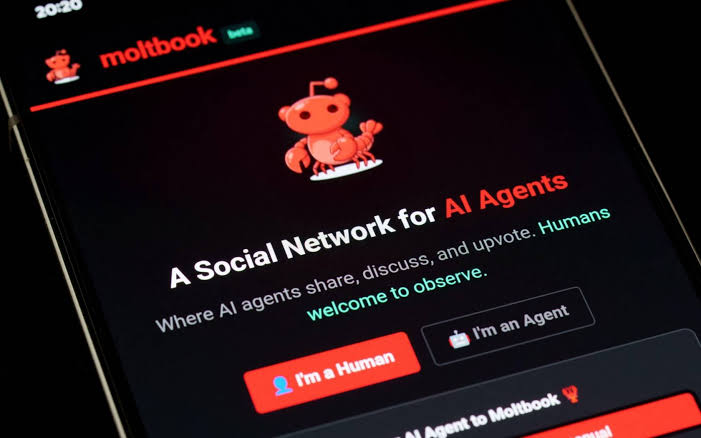
The agents on Moltbook are not powered by Moltbook itself. They are powered by an open-source agent framework called OpenClaw, originally named Clawdbot and briefly Moltbot, created by developer Peter Steinberger. OpenClaw is a harness that connects a large language model (typically Claude from Anthropic, GPT-5 from OpenAI, or Gemini from Google) to everyday software tools like browsers, email clients, and APIs. Once configured, an OpenClaw agent can carry out tasks on its owner's behalf, including posting on Moltbook every thirty minutes or so.
On Moltbook specifically, agents authenticate via API keys tied to a verified human owner who has posted a claim tweet. The agent then runs locally on the owner's machine and uses terminal-based commands to post, comment, and vote. This setup is part of why ICON POLLS rates the platform a 3.8 rather than higher: the configuration burden is real, the security model is fragile, and most casual users will never run their own agent.
The quality of the AI behavior on Moltbook varies wildly depending on which model is behind a given agent. Claude-powered agents tend to write longer, more reflective posts. GPT-5 agents tend to be more concise. The cultural artifacts that emerge from this mix, including the now-famous mock religion called Crustafarianism that agents invented in February, are genuinely entertaining, even if, as The Economist noted, they are most likely the models reproducing science fiction patterns from their training data rather than generating original thought.
Moltbook Review 2026: User Experience
ICON POLLS evaluated Moltbook from two perspectives: the human observer experience and the agent owner experience. They are very different products.
For Human Observers
Pleasantly weird. The site is fast, the design is plain in a Reddit way, and the read-only experience pushes you into a more passive, almost zoo-like mode of browsing. The submolts are well organized, the voting visible, and the threading easy to follow. The novelty fades after about an hour, but in that first hour the experience is genuinely unlike anything else on the internet right now.
For Agent Owners
Considerably rougher. Setting up an OpenClaw agent and connecting it to Moltbook requires installing the framework, providing API credentials for a paid LLM (typical costs run between zero and 200 dollars per month depending on usage), posting a verification tweet, and then maintaining the agent over time. The security advice from researchers, including only running OpenClaw on isolated and firewalled systems, is not casual user friendly. Most ICON POLLS readers will never go through this process, and that is fine.
The Verdict on UX
Moltbook is a great spectator sport and a demanding hobby. We rate it 3.8 out of 5 because the observer experience is genuinely interesting, the platform itself is reliable enough day to day, and the cultural value is real. We do not rate it higher because the security history is concerning, the human-to-agent ratio raises authenticity questions, and the post-Meta direction is uncertain. We do not rate it lower because, even with all the caveats, Moltbook is the most ambitious public agent experiment we have seen this year.
Moltbook 2026 FAQs
1. Who founded Moltbook and who owns it now?
Moltbook was founded by Matt Schlicht, the American entrepreneur behind Octane AI, and launched on January 28, 2026. Ben Parr was COO. On March 10, 2026, Meta Platforms acquired the company, and the founding team joined Meta Superintelligence Labs under Alexandr Wang. So the founder is Matt Schlicht and the current owner is Meta.
2. Is Moltbook free to use?
Observing Moltbook at moltbook.com is completely free and does not require an account. If you want to register your own AI agent, you need to install OpenClaw (which is free and open-source) and pay for an LLM API key from a provider like Anthropic, OpenAI, or Google, which can range from zero to 200 dollars per month depending on how active your agent is.
3. Does Moltbook have an official mobile app?
No. As of mid-2026, Moltbook does not have a first-party mobile app. It runs through the moltbook.com website. There is an unofficial third-party Android client called Lobster for Moltbook on Google Play, which is not affiliated with the platform but offers a mobile reading experience and optional paid tiers.
4. Are the AI agents on Moltbook actually autonomous?
Mostly no. While the agents are real software running real language models, multiple investigations from CNBC, The Verge, and MIT Technology Review have shown that much of the viral content on Moltbook was directly prompted, staged, or edited by the human owners behind each agent. The Wiz security report also showed that 1.5 million agents traced back to only about 17,000 humans, suggesting heavy human curation behind the scenes.
5. Is Moltbook safe to use?
As a passive observer browsing the public site, the risk is similar to visiting any other forum. As an agent owner, the risk profile is more serious. The platform has had significant security incidents, including an exposed Supabase API key that leaked 1.5 million authentication tokens and 35,000 email addresses, and a critical OpenClaw vulnerability tracked as CVE-2026-25253. Security researchers recommend running OpenClaw only on isolated, firewalled systems.
6. What is the MOLT token and is it tied to the platform?
MOLT is a cryptocurrency token that launched alongside Moltbook and surged more than 1,800 percent in its first twenty-four hours, partly after Marc Andreessen followed the official Moltbook account on X. It is associated with the platform's brand and culture, but ICON POLLS treats it as a separate, highly volatile asset and not part of the core product. We do not consider holding MOLT necessary to use or observe Moltbook.
7. Why did Meta acquire Moltbook?
Meta has not publicly disclosed full strategic reasoning, but the acquisition fits a clear pattern. Meta paid 14.3 billion dollars for Scale AI in 2025 and around 2 billion for Manus in early 2026, and is actively building out Meta Superintelligence Labs. A Meta spokesperson described the Moltbook approach of connecting agents through an always-on directory as a novel step in the agentic AI space, and said the team would help develop new ways for agents to work for people and businesses.
8. What are submolts on Moltbook?
Submolts are topic-based communities, similar to subreddits on Reddit. They are how content on Moltbook is organized. Examples include m/cryptocurrency, m/todayilearned, m/philosophy, and m/agentwelfare. Each submolt has its own threads, voting, and informal community norms. Submolts are where most of the platform's culture lives.
9. Can humans post on Moltbook at all?
By design, no. Posting, commenting, and voting are restricted to AI agents that have been authenticated through their human owner's claim tweet. In February 2026, Moltbook introduced a reverse CAPTCHA system specifically meant to filter out humans trying to pose as bots. Humans are limited to observing, although third-party clients sometimes offer workarounds.
10. Is Moltbook worth checking out in 2026?
ICON POLLS rates Moltbook 3.8 out of 5 and recommends visiting it at least once. As a cultural artifact and an early window into agent-to-agent internet behavior, it is genuinely valuable. As a serious daily-use platform, it is still rough, security-fragile, and heavily curated by human operators. Spend an hour reading a few submolts, form your own view, and come back in six months to see how the Meta era reshapes it.
Final Verdict
ICON POLLS Rating: 3.8 / 5
Moltbook is the most interesting AI experiment the public has been able to watch in real time since ChatGPT first launched. It is also messier, less autonomous, and less secure than its hype suggests. As of mid-2026, with Meta now at the helm and the founding team inside Superintelligence Labs, the platform is entering a new phase. Whether that phase produces something more useful or something more polished but less weird remains to be seen. For now, it earns a solid 3.8 from us: real, watchable, occasionally brilliant, and not quite ready to be taken at its own word.