|
Product |
GPT-5.3-Codex-Spark |
|
Developer |
OpenAI |
|
Release status |
Research preview in 2026 |
|
Primary purpose |
Near-instant, real-time coding iteration in Codex |
|
Model type |
Smaller, fast coding model |
|
Input and context |
Text-only, 128k context window |
|
Access |
ChatGPT Pro in Codex app, CLI and VS Code extension |
|
API availability |
Not generally available at launch; limited design-partner access was announced |
|
Plus access |
No Spark access listed for ChatGPT Plus |
|
Pricing context |
ChatGPT Pro starts at $100/month; higher Pro tier available |
|
Usage limits |
Separate, adjustable Spark rate limits; demand can cause queues |
|
ICON POLLS rating |
3.0/5 |
Our quick verdict
GPT-5.3-Codex-Spark is one of the most interesting coding releases of 2026 because it changes the feeling of an AI coding session. It is designed for rapid back-and-forth work: make a small change, see a response immediately, correct the direction, then keep moving. That sense of pace is real, and it can make ordinary editing, debugging and interface refinement feel much less heavy.
But speed is not the same as a complete coding product. Spark is a smaller, less-capable model than the main Codex line, it is text-only, and access remains tied to the ChatGPT Pro plan during its research preview. It also has separate limits that can shift with demand. ICON POLLS gives GPT-5.3-Codex-Spark a 3.0 out of 5. It is excellent at one job, but its price, access restrictions and preview status make it hard to recommend as an all-purpose choice for every developer.
How ICON POLLS assessed GPT-5.3-Codex-Spark
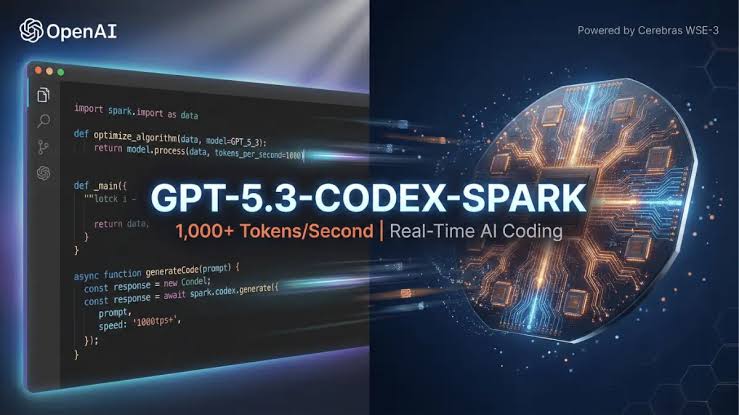
Our review looked at the areas people actually search before choosing a coding model: access, price, workflow fit, integrations, benchmark claims, practical limits and the experience of using it day to day. We gave more weight to what a user can reliably do than to a headline speed figure. That matters here because Spark is deliberately built around a narrow promise: quick, targeted collaboration inside Codex.
What GPT-5.3-Codex-Spark does well
Spark is built for a developer who wants to remain in the loop. Its default style is light and targeted. It is suited to small code edits, reshaping a function, refining a component, investigating a narrow issue or asking for a quick explanation of a file. The model is also designed to be interrupted and redirected without making the interaction feel slow.
OpenAI positions Spark as a fast small model rather than a replacement for deeper coding agents. That distinction is useful. In an IDE or terminal, waiting can break concentration. A model that answers almost immediately can make iterative work more natural, especially when you already know the project and simply want help moving faster.
Pricing, Plus and Pro access
This is the main reason for the modest score. ChatGPT Plus is priced at $20 per month and includes Codex access, but Spark is not listed as a Plus model. GPT-5.3-Codex-Spark is a ChatGPT Pro research preview feature. Pro starts at $100 per month, with a higher $200 tier offering a larger allowance. That is a big step up for people who only need a few focused coding sessions each week.
The Pro price may make sense for a developer whose billable work depends on fast iteration. It is a much tougher value case for students, hobbyists or teams that mainly need dependable general coding help. The fact that Spark has its own quota is helpful in theory, but it does not remove the wider question of whether a preview-only speed model is worth the subscription by itself.
GPT-5.3-Codex-Spark API review
Do not subscribe expecting ordinary, open API access to Spark. At launch, OpenAI made the model available to a small set of API design partners while it learned how developers wanted to integrate it. The public pricing information also marks Spark as a research preview rather than giving it standard token pricing. In plain terms, a typical developer should treat Spark as a Codex subscription feature, not as a model they can automatically call from every application.
That limitation affects automation, CI pipelines and third-party agent tools. If your project needs a stable API model with documented token pricing, choose a generally available API model instead. Spark may become more open over time, but a 2026 review should judge it by the access users can actually count on now.
VS Code, GitHub and OpenClaw
For people who can access it, Spark is available in the Codex app, Codex CLI and the Codex VS Code extension. The VS Code fit is obvious: fast answers work well when you are reading files, making a narrow edit and checking the result. It is less convincing when a task needs broad repository planning, extensive tool use or careful review across many files.
GitHub is a Codex workflow, not a Spark-only feature. Codex can support repository-based work and GitHub-connected flows, but users should not assume that selecting Spark makes every GitHub action faster, deeper or automatically safe. Review diffs and tests yourself. For OpenClaw, compatibility is more conditional: Spark is not a normal public API-key route, so any setup depends on whether the account and connector expose the Codex subscription model. That is not the same as guaranteed native support.
Benchmark claims: useful, but not the whole story
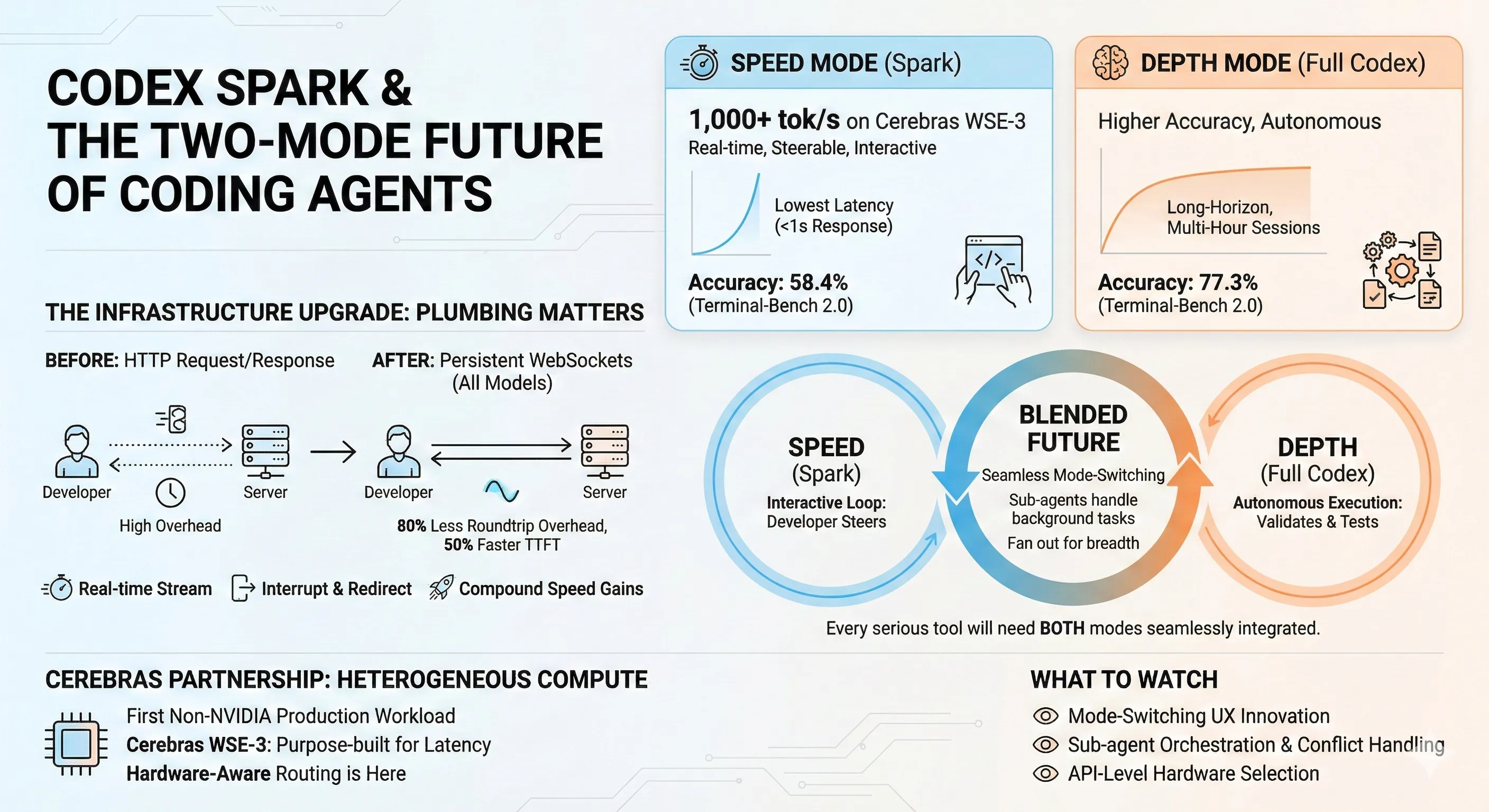
OpenAI reports strong results for Spark on SWE-Bench Pro and Terminal-Bench 2.0 while completing tasks in a fraction of the time of GPT-5.3-Codex. Those results help explain why the model feels impressive in short coding loops. However, benchmark performance should not be read as a promise that every real repository task will be correct, secure or ready to merge.
The important tradeoff is already stated in the product’s design: Spark optimizes for speed and is less capable than the mainline Codex model. That makes it a specialist. Use it to keep momentum on clearly defined work, then move to a more capable model when the task involves architecture, tricky reasoning, long context or high-risk changes.
Limits and user experience
The best part of the user experience is responsiveness. Spark can make coding assistance feel conversational rather than like sending a job into a queue. It also makes minimal edits by default and does not automatically run tests unless you ask, which gives developers more control over a live codebase.
The frustrating part is that the limits are separate and adjustable. During high demand, access can be reduced or temporarily queued. There is also a natural mismatch between the product name and user expectations: people may hear “Codex” and expect the most capable agent, when Spark is intentionally a faster, smaller option. The model works best when that boundary is clear from the start.
Who should use it?
GPT-5.3-Codex-Spark is best for ChatGPT Pro users who want extremely fast help with small, well-scoped coding tasks. It also fits developers working interactively in the Codex app, CLI or VS Code extension, especially when quick iteration matters more than maximum depth on each request.
Who should be careful?
Plus users looking for the least expensive Codex option should be careful, as should teams that need general public API access, stable automation or predictable token pricing. Developers working on security-sensitive, long-horizon or architecture-heavy tasks should use a more capable model and keep human review in the workflow.
Final rating: 3.0/5
GPT-5.3-Codex-Spark earns its 3.0 rating because the core idea is strong but the package is still limited. The model’s speed genuinely improves the feel of live coding, and the Codex surfaces make it easy to try where access is available. Still, it is a research preview, Pro-only, text-only and not a broadly available API model. For the right Pro user it can be a very useful second tool. For everyone else, it is more of a promising preview than a clear buying decision.
Frequently Asked Questions about GPT-5.3-Codex-Spark
1. What is GPT-5.3-Codex-Spark?
It is a fast, smaller coding model designed for near-instant, real-time iteration in Codex.
2. Is GPT-5.3-Codex-Spark available on ChatGPT Plus?
No. In 2026, Spark is listed as a research preview for ChatGPT Pro users. Plus includes Codex but does not list Spark access.
3. How much does GPT-5.3-Codex-Spark cost?
Spark is included through ChatGPT Pro, which starts at $100 per month. A higher Pro tier is also available. There is no separate public Spark token price at launch.
4. Is GPT-5.3-Codex-Spark available through the API?
Not as general public access at launch. OpenAI announced access for a limited set of API design partners during the research preview.
5. Can I use GPT-5.3-Codex-Spark in VS Code?
Yes, eligible Pro users can access it through the Codex VS Code extension.
6. Does GPT-5.3-Codex-Spark work with GitHub?
It can be used within Codex workflows that work with repositories and GitHub-connected features, but GitHub support is not unique to Spark and every code change still needs review.
7. Does GPT-5.3-Codex-Spark work with OpenClaw?
It is not a normal public API-key model. An OpenClaw setup depends on whether the account and connector expose the Codex subscription catalog, so availability can vary.
8. What are the GPT-5.3-Codex-Spark limits?
It has its own usage limits separate from standard Codex use. The limits can change during the research preview, and heavy demand may lead to queuing or limited access.
9. What is the context window for GPT-5.3-Codex-Spark?
At launch it has a 128k context window and is text-only.
10. Is GPT-5.3-Codex-Spark better than GPT-5.3-Codex?
Not in every case. Spark is faster but deliberately less capable. It is best for quick, well-scoped iteration, while a stronger model is usually safer for complex or long-running work.