Watch any neighbourhood game long enough and you'll notice the players aren't really the point. The real show is everyone else: the kid running for water, the uncle who has refereed every Saturday for a decade, the group arguing about a foul call long after it stopped mattering. Basketball is often described as a game for ten people. In practice it's a reason for a hundred people to show up at the same place at the same time.
That matters more than it used to. A commonly cited figure puts the number of people who play basketball at least twice a month at over 610 million. Plenty of leisure now happens alone, on a screen, at whatever hour suits. A court doesn't work that way. It has a schedule, shared rules and the same faces week after week, and that repetition is exactly what turns strangers into something closer to neighbours.
The jobs nobody puts on a highlight reel
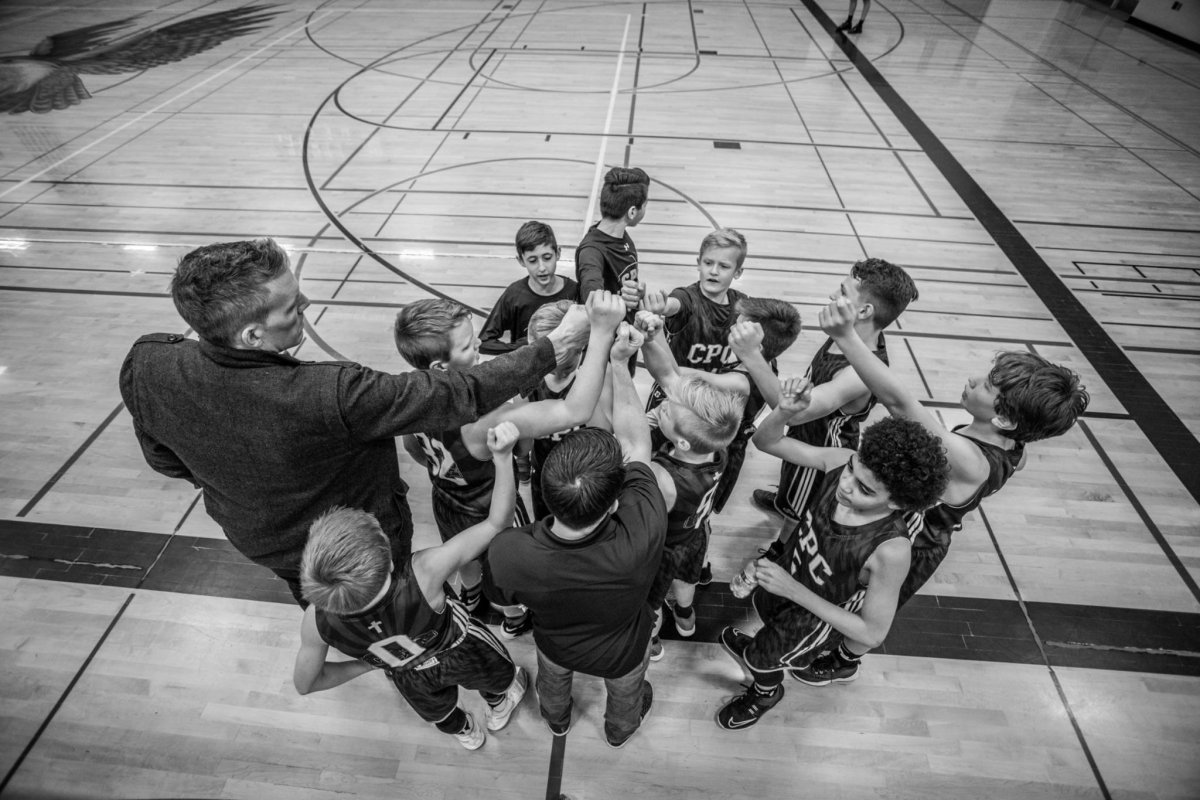
A local tournament can't run on athletes alone. Someone keeps score. Someone builds the schedule and chases teams who haven't confirmed. Referees take the abuse so the game can happen. Volunteers sweep the court, families sort out food and lifts home, and older players quietly coach the younger ones between games.
None of this is glamorous, and all of it is the point. When a person who never takes a shot still has a job at the event, they belong to it. The competition stops being the property of whoever made the roster and becomes something the whole street owns. That sense of ownership is why a barangay league can outlast any individual team in it.
The PBA is the same crowd, just bigger
Professional basketball runs on the same emotional machinery, only louder. Fans attach themselves to colours, cities, players and the opponents they love to hate. They follow a calendar together. A win becomes a shared celebration; a loss becomes the next week's argument.
In the Philippines, the PBA has played that role since 1975, making it the oldest professional basketball league in Asia. What it offers isn't a series of isolated games but a running story: conference races, rivalries and stars who stick around long enough for parents to explain them to their children. That continuity is how fandom gets passed down a family, the way a surname does.
Stats, predictions and keeping it in proportion
Modern supporters talk in numbers as much as feelings. Shooting splits, rebounds, rotations and injury news have become a shared vocabulary for explaining why a team won or fell apart. Sports media keeps that conversation running before tip-off and well after the buzzer, and for some adults, making predictions has become part of following a match.
Someone checking PBA betting markets might weigh recent form and lineups before a game. That can add an analytical layer, but loyalty is a terrible basis for a financial decision. Your favourite club can, and will, lose. Any wager belongs inside a budget set in advance, and it should never feel like the price of being part of the fan group.
38,115 people, one result
Big international tournaments make all of this visible at a glance. Fans who spend the season supporting rival clubs suddenly wear the same national colours. Strangers hug at public viewing areas. The community is temporary, but nobody who was there would call it shallow.
The 2023 FIBA World Cup, co-hosted by the Philippines, Japan and Indonesia, is the clearest recent example. A crowd of 38,115 packed the Philippine Arena to watch Gilas Pilipinas face the Dominican Republic, setting a record for attendance at a FIBA World Cup game. It was a reminder that global events don't create passion out of nothing. They borrow it from local courts.
| Setting | What brings people together |
|---|---|
| Neighbourhood court | Volunteer roles, regular schedules, the same faces each week |
| PBA (since 1975) | Long-running rivalries and stars followed across generations |
| 2023 FIBA World Cup | Rival club fans united by national colours; 38,115 at one game |
| Online fan spaces | Group chats, clips and debates between fixtures |
One rulebook, a hundred local accents
Basketball travels well because its core rules barely change from place to place. The culture around it changes completely. A school gym in Japan, a barangay court in the Philippines and an outdoor playground in Europe all produce their own version of the game, yet a player from any of them knows instantly what the hoop is for.
That common structure is what makes international competition so easy to follow. Fans meet unfamiliar teams and styles, visiting supporters bring their own chants, and the sport becomes a meeting point that doesn't require a shared language. It's also why fans everywhere love arguing about who the greatest is. If you have strong opinions, add your voice to our poll on the best basketball players of all time.
After the buzzer, the phone takes over
Fandom no longer stops at the exit. Debates spill into group chats late at night, highlights circulate within minutes, and fan pages archive the stats, jokes and clips that a local league would once have forgotten. A competition that plays only a few times a month can stay alive all month long.
The same phone carries other kinds of entertainment too, and it helps to keep them in separate mental boxes. Browsing online casino games or joining a live casino stream is paid entertainment with real financial risk. It is not the same thing as belonging to a sporting community, and it shouldn't borrow the adrenaline of a big win or a group celebration. Set a budget, set a stopping point, and let the match be the match.
What kids actually learn on the court
Community sport teaches social skills almost by accident. Players wait their turn, accept calls they disagree with and communicate under pressure. They figure out quickly that a team collapses when everyone wants the ball. And they learn to lose in public, which is harder and more useful than learning to win.
The habits that grow out of regular games tend to look like this:
- turning up because other people are counting on you;
- talking to teammates instead of around them;
- accepting rules you didn't write;
- handling wins and losses with some grace;
- helping newer players find their feet;
- looking after the equipment and the space.
None of this needs a professional coach. It needs a group that keeps coming back. That's the quiet case for basketball as a community builder: not the trophies or the record crowds, but the ordinary weekly habit of people agreeing to meet in the same place and play by the same rules.
Why do local leagues matter if the big events draw the crowds?
Because the big events run on passion that local courts create. Record crowds like the 38,115 at the Philippine Arena in 2023 come from fans who learned the game, and their loyalties, close to home.
Do you have to play to be part of a basketball community?
No. Scorekeepers, referees, volunteers and families are as central to a local league as the players, and those roles are often what keep people involved for years.