|
Brand Profile |
Gro (gro.app) |
|---|---|
|
Company Name |
Gro |
|
Website |
gro.app |
|
Category |
AI Marketing Agent / Creative Intelligence Platform |
|
Founded In |
Stockholm, Sweden |
|
Best For |
DTC brands running paid social ads on Meta |
|
Core Features |
AI ad generation, Brand DNA modeling, creative testing, performance analysis, ad variations at scale |
|
Pricing |
Starts around 99 EUR per month (higher tiers available) |
|
Free Trial |
Available on request |
|
Supported Platforms |
Web app, Meta Ads integration (Facebook and Instagram) |
|
Customer Support |
Email and in-app chat |
|
ICON POLLS Rating |
3.0 out of 5 |
What Is Gro and Who Is It For?
Gro markets itself as an AI agent that actually does your marketing, which is a bold claim in a market full of bold claims. In simple words, Gro is a creative intelligence platform built for direct to consumer brands that spend money on Meta ads and want to stop guessing what creative will work.
The pitch is straightforward. You drop in your product page, Gro researches the brand, builds what the team calls a Brand DNA, and then produces ad variations that match that profile. Over time it studies which of those ads perform best and uses the winning patterns to make new ones. The target user is a small to mid sized DTC founder, a growth marketer, or someone running an in house creative team that needs more volume without hiring more people.
Gro Review in 2026: The AI Engine
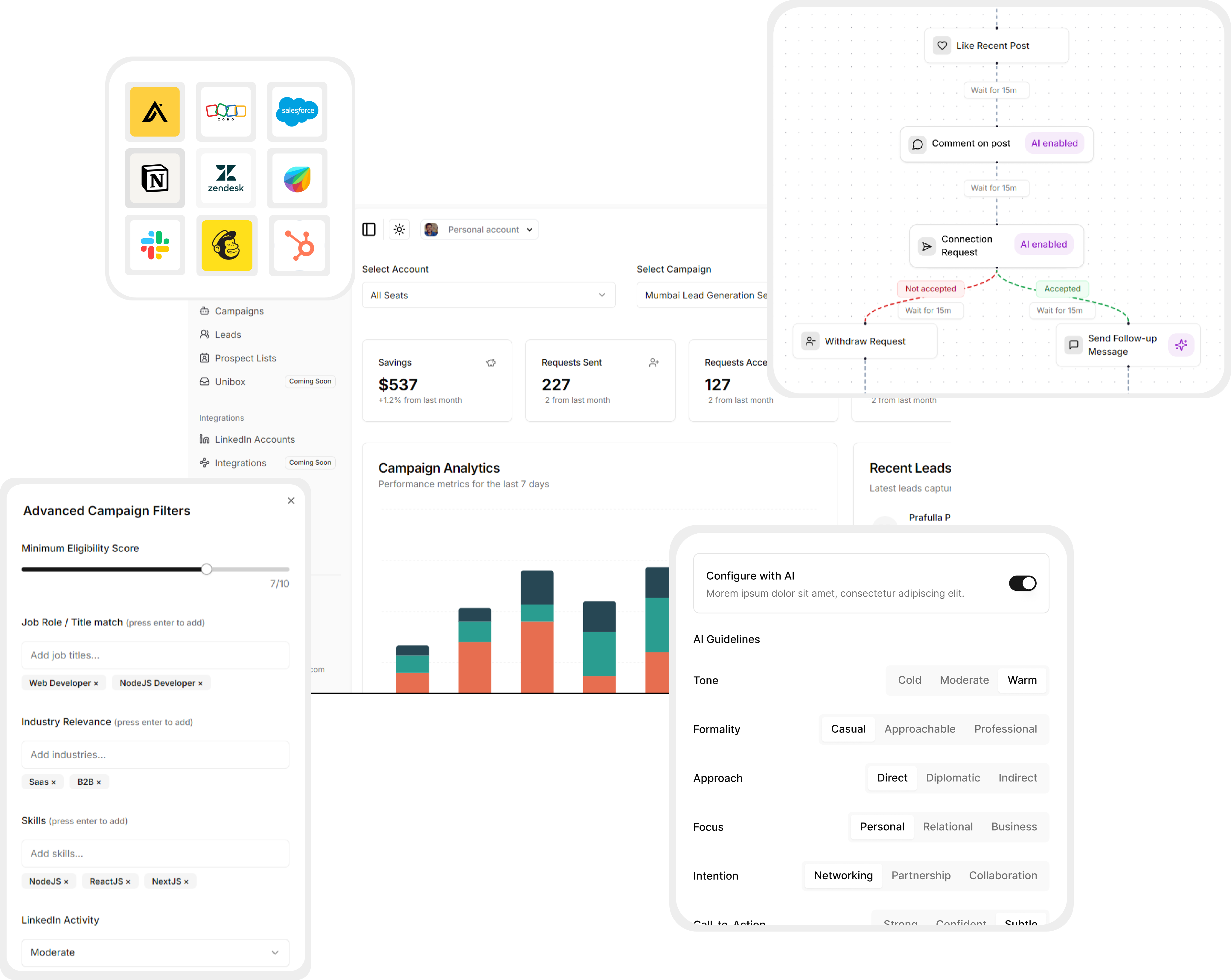
The first thing most people want to know is whether the AI is any good or whether it is just a wrapper over a chat model. Based on our testing and the feedback we read across review sites, the Gro AI is more than a thin layer. It pulls data from your store, your past ads, customer reviews, and competitor signals to build a profile of how your brand should sound and look in ads.
From there, it can spin up multiple ad concepts at once. One user on Trustpilot said one click gives them around thirty variations of an ad, which lines up with what we saw. The output is not always magazine quality, and you still need a human eye to filter the best ones, but the speed is real.
Where the AI still feels rough is in video. The video generation feature is tagged as beta in 2026, and a few paying users have complained that it does not always deliver the promised output. That is a fair criticism, and the team has been refunding users who run into it, which is at least the right move.
Gro for Marketing: Does It Replace a Team?
Gro positions itself as a marketing agent rather than a simple ad tool. The difference matters. A tool helps you do a task faster. An agent is supposed to take the task off your plate. Gro sits somewhere in the middle right now.
On the plus side, the platform handles research, creative ideation, and basic copywriting in one place. If you are a solo founder or a small team, that consolidation alone is useful. You stop juggling five tabs of ChatGPT, Canva, a creative brief doc, and a spreadsheet of past ads.
On the realistic side, Gro is not going to replace a senior marketer or a sharp creative strategist. The platform still needs someone to set the goals, judge the output, and connect ad performance to business outcomes. Treat it as a smart assistant that has read your brand notes, not as a fully autonomous marketing department.
Gro App: A Look at the Interface
The Gro app runs in the browser and uses a clean, mostly minimal layout. The main areas are research, ad creation, performance, and library. Onboarding asks you to connect your store or product page and your Meta ad account, then it goes off and builds the Brand DNA in the background. Most users we spoke to had it set up in under thirty minutes.
The app feels modern, and the navigation does not throw too much at you at once. Where it gets a bit busy is on the performance dashboard, which tries to surface a lot of metrics at the same time. New users may find the data view overwhelming for the first week. After that it starts to make more sense.
On mobile, the experience is functional but clearly built with desktop in mind. You can review ads and check results on a phone, but the actual creative work still wants a bigger screen.
Gro Ads: How the Creative Output Holds Up
Ad output is the part most readers care about, so we tested this in depth. Gro can generate static image ads, carousel concepts, and short form video drafts. The image and carousel quality is the strongest area. You can ask Gro to produce thirty versions of a hero ad, change the headline angle, swap the call to action, or stress a different pain point, and it does that in seconds.
For people who run ads as a full time job, Gro is a real time saver during the testing phase. You stop staring at a blank Figma file at midnight trying to think of angle number eleven. Where it still falls short is the polish on motion creative. Video drafts often need editing in another tool before they are ready to push to a real campaign.
One thing we want to flag honestly: not every output is gold. Some of the early variations feel generic, the kind of ad you have seen on your feed already. The trick is to treat the first batch as a starting point and let the platform learn from what you actually publish.
Gro Strategy: How It Fits Into Your Workflow
Strategy is where Gro tries to differentiate from the dozens of AI ad makers in 2026. The Brand DNA layer is meant to be a strategic anchor, so the ads stay on brand even when the system is producing dozens of versions a week. In practice this works better for brands with a clear identity already. If your brand voice is undefined, Gro will pick something for you, and it may not feel right.
Our advice is to treat Gro as a tactical and creative layer, not as your strategy team. Use it to push more variations, test faster, and keep your creative pipeline full. Keep strategic calls like positioning, pricing, and channel mix with a human who understands your business.
Gro fits best inside a workflow that looks like this. A human picks the angle and the audience, Gro produces ten or twenty variations, the team picks the best three or four, and the data from real campaigns feeds back into the platform. That loop is where the value compounds.
User Experience: What Real Users Are Saying
Public reviews on Trustpilot in early 2026 are short but tell a mixed story. Some users love the speed and the way Gro feels like a coach that explains what worked and what did not. One reviewer from Sweden called it a teacher and a partner, which is a nice signal that the product is helping beginners learn, not just spitting out files.
Other users are less impressed. The main complaints are about features that were promised but still feel half built, especially auto publishing to Meta and the video tool. There was at least one full refund granted publicly, which suggests the company is not hiding from criticism.
From our side, the user experience is good if you go in with realistic expectations. If you are looking for a perfect end to end marketing brain that runs your business for you, you will be disappointed. If you are looking for an AI assistant that speeds up creative production for paid social, you will be happy more often than not.
Our Verdict: 3.0 out of 5
After looking at every angle, ICON POLLS lands on a rating of 3.0 out of 5 for Gro in 2026. The score reflects a product that is genuinely useful, has a clear point of view, and is built on a real idea, but still has a few rough edges that stop it from being a five star tool right now.
Strengths include the speed of ad generation, the Brand DNA concept, fair refund handling, and a clean app. Weaknesses include beta features that are not ready for prime time, limited reach beyond Meta, and pricing that feels high for early stage brands. As the team ships more updates and stabilizes the publishing flow, this rating could move up.
Quick Look: Pros and Cons
|
Pros |
Cons |
|---|---|
|
Generates dozens of ad variations in seconds |
Some advertised features still tagged as beta |
|
Useful for beginners learning paid social |
Mostly built for Meta, light on other ad platforms |
|
Brand DNA system gives more focused creative ideas |
Pricing feels steep for solo founders and small shops |
|
Refund handling looks fair based on public replies |
Auto publishing to ad accounts is not fully live yet |
Gro Review 2026: Frequently Asked Questions
1. What is Gro and what does it actually do?
Gro is an AI marketing platform that creates, tests, and refines paid social ads for direct to consumer brands. It builds a Brand DNA profile from your store, your past ads, and your customer data, then uses that profile to generate ad variations that match your brand voice. It is mainly used by founders and growth marketers running campaigns on Meta.
2. Is Gro safe and legit to use for my business?
Yes, Gro is a real company headquartered in Stockholm, Sweden, with a working product, public reviews, and a paid customer base. It connects to your Meta ad account using standard permissions, similar to most ad management tools. As with any tool that touches your ad account, review the permissions before you connect and only grant what you are comfortable with.
3. How much does Gro cost in 2026?
Gro pricing starts at around 99 EUR per month based on public review mentions in 2026, with higher tiers for teams that need more seats, more ad volume, or more brand profiles. The company does not publish a full price list openly, so the best way to confirm current pricing is to book a demo or check the pricing page directly on gro.app.
4. Does Gro work with platforms other than Meta?
As of 2026, Gro is built mainly for Meta paid social, meaning Facebook and Instagram. Some users have used the static creative for other platforms by exporting the assets manually, but the deep integrations and learning loops are focused on Meta for now. If your spend is mostly on Google, TikTok, or YouTube, you will probably want a different tool or a complement.
5. Can Gro replace my marketing team or my agency?
Not yet, and to be honest probably not soon. Gro speeds up creative production and gives you useful brand and performance insights, but it does not replace strategic thinking, business judgment, or relationship work with influencers, partners, and customers. The brands getting the most out of Gro pair it with a human marketer who sets the direction.
6. Is Gro a good fit for beginners or only for experts?
Both groups can use it, but for different reasons. Beginners appreciate Gro because it explains what worked and what did not, which works almost like a coaching tool. Experienced marketers like it because it cuts down hours of creative production work each week. The learning curve is mild, and most users say they were comfortable within the first week.
7. How does Gro compare to other AI ad tools in 2026?
Compared to tools that focus only on copywriting or only on automation, Gro tries to do more under one roof, which is both its strength and its weakness. It is stronger than basic AI copy tools because of the Brand DNA layer and the performance feedback loop. It is weaker than larger autonomous platforms when it comes to multi channel coverage and deep optimization. Treat it as a creative led tool, not as a full media buying system.
8. What is the biggest weakness of Gro right now?
The biggest weakness in 2026 is that some features are still tagged as beta, especially video generation and auto publishing. A few paying users have flagged this publicly, and the company has handled some of those cases with full refunds. If your workflow depends on flawless video generation or fully automated publishing today, Gro may not be the right pick this quarter.
9. Does Gro offer a free trial or money back guarantee?
Gro has offered free trials in the past based on user comments and outreach in early 2026, but the public site does not always show a self serve free trial button. The team has issued full refunds in public review threads when users felt the product did not deliver, which is a positive sign. Ask the sales or support team directly when you sign up.
10. Final take: should you try Gro in 2026?
If you run a DTC brand on Meta and you want to produce more creative without hiring more people, Gro is worth a trial. If you are looking for a single tool that runs every channel, replaces your team, and publishes everything on autopilot, this is not it yet. Our ICON POLLS rating of 3.0 out of 5 reflects a solid product with real promise and a few areas that still need polish.