|
MODELENCE APP BUILDER PROFILE |
|
|
Product Name |
Modelence App Builder |
|
Company |
Modelence, Inc. |
|
Founders |
Aram Shatakhtsyan (CEO), Eduard Piliposyan (CTO), Marco Bambini |
|
Founded |
2025 |
|
Headquarters |
San Francisco, California, United States |
|
Category |
Full-stack AI app builder, Developer platform |
|
Backed By |
Y Combinator (S25), Rebel Fund, seed investors |
|
Funding Raised |
Approximately 3 million dollars (seed round, January 2026) |
|
Framework |
TypeScript based, open-source |
|
Free Plan |
Yes, includes 10 dollars in AI Builder credits |
|
Starting Paid Plan |
Starter at 20 dollars per month, Pro at 100 dollars per month |
|
Official Website |
modelence.com |
|
GitHub Repository |
github.com/modelence/modelence |
|
|
Listed under Modelence (YC S25) |
|
Best For |
Developers, technical founders, indie hackers building SaaS, MVPs, internal tools |
|
ICON POLLS Rating |
3.5 out of 5 |
What Is Modelence App Builder
Modelence is a full-stack platform built for what the team calls agentic development. In plain English, it is a place where you describe the app you want, and an AI agent uses an open-source framework underneath to spin up a working web application with authentication, a database, and monitoring already wired in. It is backed by Y Combinator (Summer 2025 batch) and was co-founded by Aram Shatakhtsyan, who previously co-founded CodeSignal, and Eduard Piliposyan.
The product itself has two sides. The first is the open-source Modelence framework, which lives on GitHub and is built on TypeScript. The second is the hosted App Builder at modelence.com, where you can type a prompt and watch a real full-stack app come together. You can then pull the code locally, keep building in your own editor, and deploy it back to Modelence Cloud.
What makes it stand out from the crowd of AI app builders we have tested at ICON POLLS is the philosophy behind it. Most builders generate a frontend and hope you find a backend somewhere. Modelence ships the framework, the database, the auth layer, the monitoring, and the deployment as one package.
Modelence App Builder Review in 2026
Our hands-on testing started with a simple prompt. We asked the App Builder to create a small client feedback dashboard. Within minutes we had a working app with sign in, a database for storing entries, and a deployed URL we could share. That alone was impressive. What stood out to us was that the generated code did not feel like throwaway demo code. It looked like something a mid-level developer would actually write, which matches the team's pitch that the platform is meant to build real apps, not prototypes.
That said, the platform is still very young. It launched on Product Hunt in February 2026 and the team is openly working through requested features. During our testing we noticed a few rough edges around editing inside the builder and the integration story with external developer tools could be smoother. The team has acknowledged these on their public channels and indicated improvements are coming.
Modelence App Builder Free Plan
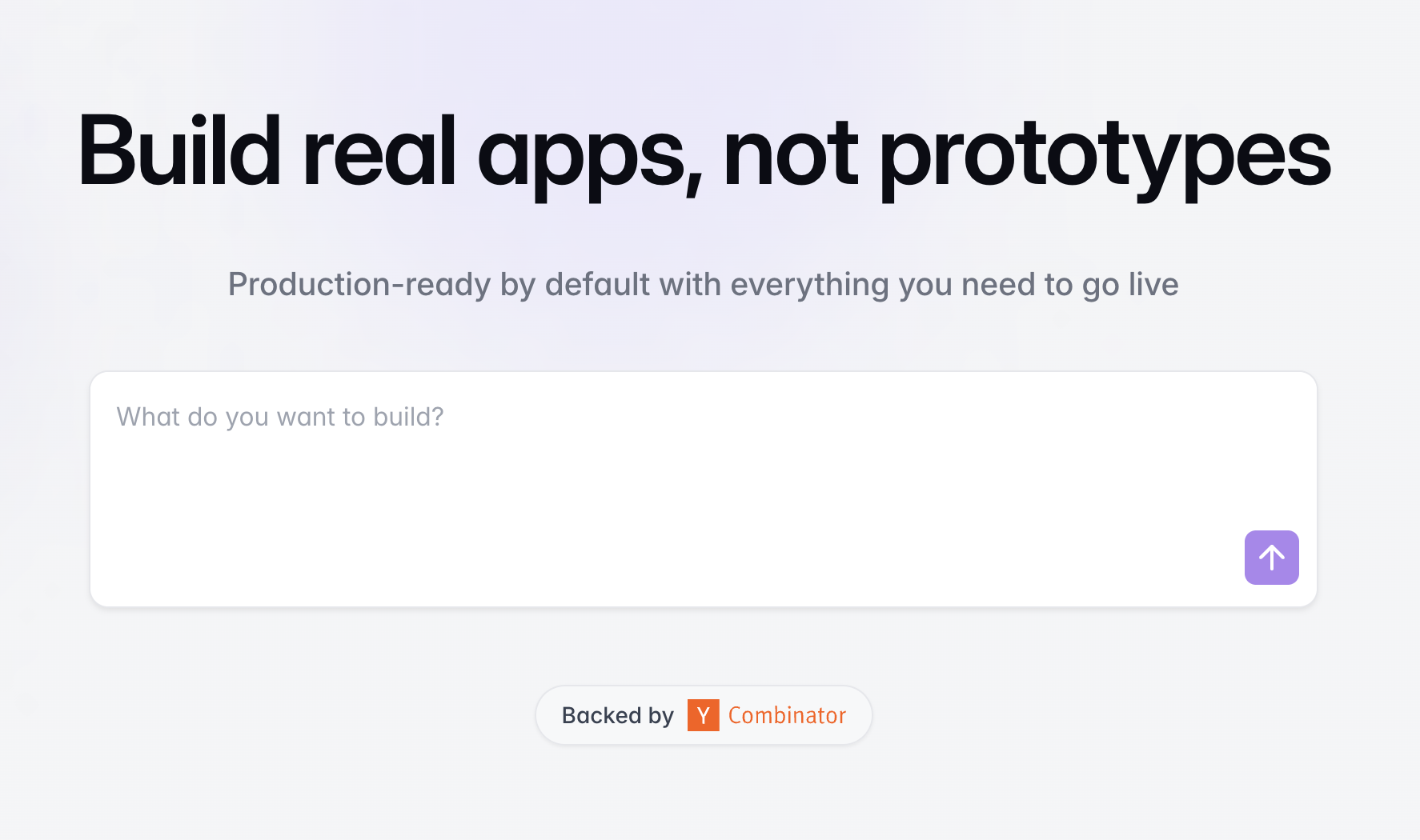
Modelence offers a free plan, and you do not need a credit card to start. The free tier gives you 10 dollars in AI Builder credits, which is enough to build a few small apps end to end. You also get access to sandbox environments and local environments, plus the monitoring tools. For students, indie hackers, or anyone testing the waters, this is a generous starting point.
Paid plans kick in when you need to actually deploy a production app. The Starter plan is 20 dollars per month and includes one production instance plus 20 dollars in builder credits. The Pro plan is 100 dollars per month with five production instances. There is also a custom enterprise plan. One detail we liked is that once your AI builder credits run out, you can keep using the builder on demand at Anthropic API rates with no markup added on top.
Modelence App Builder AI Features
AI is the beating heart of the product. The App Builder uses LLMs to read your prompt, generate the frontend and backend, wire up the database schema, and add authentication. The framework underneath has been designed specifically to be friendly to AI agents, with what the team calls guardrails that help the agent catch and correct errors before deploying. In our tests, when we deliberately gave vague instructions, the agent asked clarifying questions instead of guessing, which is a behavior we wish more AI builders had.
The roadmap also mentions a built-in DevOps agent that will live inside your cloud environment and use observability data to act on errors and incidents automatically. It is not fully shipped yet, but the idea is interesting and shows where the team is heading.
Modelence on LinkedIn
On LinkedIn, the company is listed as Modelence (YC S25) and the co-founders are active. Aram Shatakhtsyan, the CEO, posts regularly about product updates, the AI app building space, and lessons from running a startup. His past role as co-founder and CTO of CodeSignal, which was valued at around 500 million dollars, gives the team real credibility. Eduard Piliposyan, the co-founder and CTO, was also the founding engineer at CodeSignal.
If you are evaluating Modelence as a potential tool for your team or product, the LinkedIn presence is a useful signal. The founders are not anonymous and the team is small but experienced. Most LinkedIn discussion around Modelence right now praises the bundled approach, with some users requesting deeper IDE integrations and GitHub-native workflows.
Modelence App Builder on GitHub
The Modelence framework is open source and the main repository sits at github.com/modelence/modelence. The README describes it as a full-stack framework for building production web apps with a built-in database, authentication, and monitoring, optimized for AI code generation. There is also a separate examples repo with sample applications you can study or fork.
Being open source matters here. It means you are not locked into the platform. You can clone the framework, run it locally, host it elsewhere, and audit the code. For developers who have been burned by closed AI builders before, this is a real plus. We also found the documentation to be clean and the quick start guide reasonable, though a few of the deeper sections are still being filled out.
Modelence App Builder User Experience
The interface is uncluttered and the onboarding is fast. Sign up, type a prompt, watch the app build. The dashboard for managing deployments and environments is clear, and the pricing controls let you scale instances up or down on the fly. Cloud usage is billed by the hour, so if you stop a deployment, the bill stops too. We appreciated that level of transparency.
Where the experience still has room to grow is in the in-builder editing flow. Some users on Product Hunt mentioned wanting better editing inside the builder itself, tighter GitHub integration, and small extras like voice input. The team has been responsive in public threads, which suggests these will land over time.
Compared with alternatives like Supabase, Railway, Firebase, or Lovable, Modelence sits in its own lane. It is more bundled than Supabase, more developer-focused than purely no-code builders, and more production-minded than tools that only generate demo apps. If you are non-technical and want a drag-and-drop builder, this is not the right fit. If you are a developer or technical founder who wants to skip the boring infrastructure setup, it is a strong option.
Pros and Cons of Modelence App Builder
Pros
Full-stack output with auth, database, and monitoring already wired in.
Open-source framework on GitHub, so you own your code and data.
Free plan with 10 dollars in AI Builder credits and no credit card needed.
Backed by Y Combinator with experienced founders from CodeSignal.
Transparent pricing including hourly cloud billing and no markup on AI usage beyond credits.
Built specifically for AI agents, with guardrails that reduce broken output.
Cons
Still early stage, so some features like deep GitHub integration and richer in-builder editing are not fully there yet.
Not built for non-technical users who want a no-code drag-and-drop experience.
Designed mainly for new projects, so migrating an existing codebase onto it is not the main use case.
Smaller community compared with mature platforms like Supabase or Firebase.
ICON POLLS Final Verdict on Modelence App Builder
Modelence App Builder lands at a 3.5 out of 5 in our review. The product idea is sharp, the team is credible, the framework is open source, and the bundled approach saves real time for developers building from scratch. The free tier is generous enough to test seriously, and the paid plans are priced sensibly for early-stage teams.
It does not get a higher score from us only because the platform is still new and a few of the rough edges around editing, integrations, and ecosystem maturity matter when you are betting on infrastructure. Once the planned DevOps agent ships and the integration story tightens up, we expect this score to climb. For now, we recommend it for developers and technical founders who want to skip the infrastructure setup phase and ship a real app fast. We do not recommend it for non-technical users or teams migrating large existing codebases.
Frequently Asked Questions About Modelence App Builder
1. Is Modelence App Builder free to use?
Yes, Modelence offers a free plan that does not require a credit card. The free tier includes 10 dollars in AI Builder credits, access to sandbox and local environments, and built-in monitoring. It is enough to build small apps end to end before deciding whether to upgrade.
2. How much does Modelence App Builder cost in 2026?
Paid plans start at 20 dollars per month for the Starter tier, which includes one production instance and 20 dollars in builder credits. The Pro plan is 100 dollars per month and includes five production instances. There is also a custom enterprise plan for larger teams. Cloud usage is billed hourly based on container size, and AI credits beyond the included amount are charged at Anthropic API rates with no markup.
3. Who founded Modelence and is it a legitimate company?
Modelence was founded in 2025 by Aram Shatakhtsyan, Eduard Piliposyan, and Marco Bambini. The CEO, Aram Shatakhtsyan, previously co-founded CodeSignal, a skill assessment platform once valued at around 500 million dollars. The company is based in San Francisco, has been accepted into Y Combinator (S25 batch), and raised approximately 3 million dollars in seed funding in early 2026. Yes, it is a legitimate company.
4. Is Modelence open source and available on GitHub?
Yes. The core Modelence framework is open source and lives at github.com/modelence/modelence. There is also a separate examples repository where you can study working sample applications. Being open source means you can run the framework locally, audit the code, and avoid vendor lock-in.
5. What can you actually build with Modelence App Builder?
Modelence is well suited for full-stack web applications such as SaaS products, internal tools, MVPs, dashboards, and client portals. It is best for new projects rather than migrating existing codebases. Because the platform includes authentication, a database, monitoring, and cloud deployment out of the box, it works well for apps that need user accounts and persistent data.
6. How does Modelence compare with Supabase, Firebase, and Lovable?
Supabase gives you backend infrastructure such as database, auth, and storage, but you still need to bring your own frontend and hosting. Firebase is more mature but locks you into the Google ecosystem. Lovable and similar AI builders focus on quickly generating apps but often leave production concerns to you. Modelence bundles the framework, AI builder, database, auth, monitoring, and deployment into one open-source platform, which is its main differentiator.
7. Do you need to know how to code to use Modelence App Builder?
Some technical background is recommended. While the App Builder lets you generate a working app from a prompt, the platform is designed for developers and technical founders. If you want full control, you will eventually want to pull the code locally and continue editing in your own IDE. Non-technical users looking for a true drag-and-drop no-code experience may find other tools a better fit.
8. Is Modelence App Builder safe and is your data secure?
Modelence handles authentication, hosting, and observability with security as a stated priority, and the team publishes security and compliance details for enterprise customers. Because the framework is open source and your app code is yours to own, you can also self-audit and self-host if you prefer. As with any newer platform, we recommend reviewing the security documentation on modelence.com and starting with a non-critical project before moving sensitive workloads onto it.