|
Product |
Qwen3.5 |
|
Category |
Multimodal AI model family and developer platform |
|
Developer |
Qwen team, Alibaba |
|
Release period |
February 2026, with later 2026 variants and related releases |
|
Model types |
Open-weight dense and Mixture-of-Experts models, plus hosted Plus and Omni options |
|
Key abilities |
Text, image and video understanding, coding, reasoning, tool use and long-context work |
|
Platforms |
Qwen Studio web, desktop and mobile apps, cloud API, local deployment |
|
License |
Apache 2.0 for the open-weight Qwen3.5 releases |
|
Context window |
Up to 262,144 tokens for the open models covered in this review |
|
Pricing |
The app has a free access route; API and coding-plan costs depend on plan, region and model |
|
Overall rating |
3.0 / 5.0 |
|
Best suited for |
Developers and technical teams prepared to test, tune and deploy models themselves |
Qwen3.5 Review in 2026
Qwen3.5 arrived with a big idea: an AI family that could see, read, reason, code and use tools without feeling like separate products stitched together. In practice, that ambition is real. The model family is unusually broad, from small local-friendly options to much larger Mixture-of-Experts releases, while the hosted Plus tier is aimed at people who want the power without managing infrastructure.
Our score is 3.0 out of 5. Qwen3.5 deserves credit for open weights, serious multimodal ambition and a generous range of deployment choices. But this is not a simple recommendation for everyone. The ecosystem moved very quickly after launch, documentation can feel developer-first, and reports around reasoning and tool-call reliability mean teams should test their actual workflow before building around it.
How ICON POLLS Rated Qwen3.5
We looked at four things: the usefulness of the model family, the practical route from demo to deployment, the clarity of the app and pricing journey, and the public developer experience. We also weighed the gap between capability claims and what a normal user or small team can reliably reproduce. A model can be impressive on paper and still be frustrating if the setup, output format or cost is hard to control.
Qwen3.5 scored well for openness, model choice and multimodal direction. It lost points because the product story is fragmented across local models, Qwen Studio, cloud access, a Plus tier and later related releases. That is exciting for advanced users, but it makes it harder for a newcomer to know which Qwen3.5 route is the right one.
What Is Qwen3.5 AI?
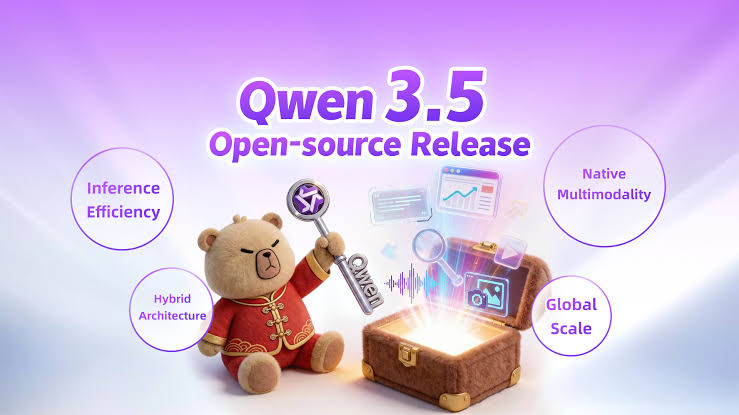
Qwen3.5 is a 2026 generation of models from the Qwen family. It is built as a unified vision-language foundation, meaning it can work with written prompts as well as visual material. The practical uses are familiar: analyse an image or screenshot, summarise a document, answer questions about a video, write code, plan a task or call a tool inside an agent workflow.
The important point is that Qwen3.5 is not one single chatbot. It is a family. The first flagship release used a very large Mixture-of-Experts design, then smaller and mid-sized models followed. This matters because a 0.8B or 4B model serves a very different user from a 122B or 397B model. The small versions make experimentation more realistic, while the largest versions are for cloud or serious infrastructure.
Qwen3.5 Models and the Technical Report
The Qwen3.5 range includes 0.8B, 2B, 4B, 9B, 27B, 35B-A3B, 122B-A10B and 397B-A17B releases. The letters after some model sizes point to the active-expert design, which is one reason the family can chase high capability without treating every parameter as active for every task. The open models use an Apache 2.0 licence, a practical plus for teams that want to inspect, adapt or run their own stack.
The official Qwen3.5 paper frames the release around native multimodal agents, hybrid attention and scaled reinforcement learning. The related Qwen3.5-Omni report takes the idea further with text, image, audio and video understanding. For a blog reader, the key takeaway is simpler: Qwen is trying to make one model foundation handle the material people actually work with, rather than leaving vision, audio and agent behaviour as separate add-ons.
Long context is another strong point. The open Qwen3.5 models reviewed here support up to 262,144 tokens. That is useful for long documents, repository work and multi-file analysis, although very long context also raises memory, speed and cost questions. A headline context number is not a promise that every local machine will run it comfortably.
Qwen3.5 App, API and Plus
For non-technical users, Qwen Studio is the easiest entrance. It provides a web interface and desktop and mobile apps, with chat and multimodal features. For developers, the cloud route offers API access and an OpenAI-compatible path, while the open weights can be deployed with common inference tools. This flexibility is one of Qwen3.5’s best qualities.
Qwen3.5-Plus is the hosted route for people who do not want to download or serve a model. It offers stronger capacity and a much larger cloud context allowance than the standard local releases. The catch is pricing. Usage, subscriptions and coding-plan access can depend on region, model choice and current offers. The free Qwen OAuth tier used by Qwen Code was discontinued in April 2026, so a user should not assume that a free developer workflow will remain available forever.
Qwen3.5 User Experience
The user experience has two sides. In Qwen Studio, the product is approachable. You can get started like any modern AI assistant, and the multimodal options make it more useful than a plain text bot. This is the side of Qwen3.5 that creators, students and curious users are most likely to enjoy.
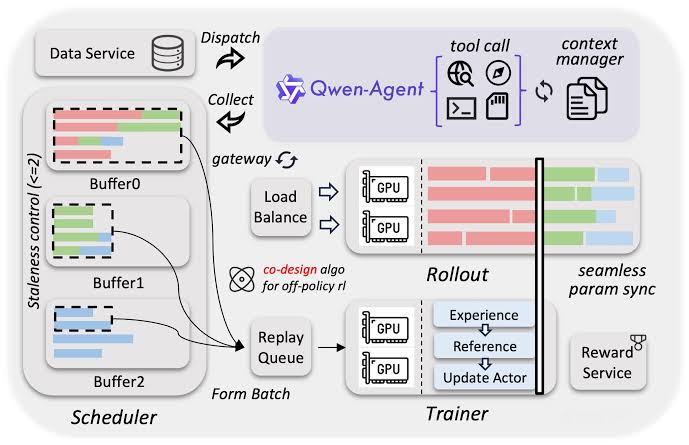
For local and agent use, the experience is more technical. Developers need to choose a model size, a serving stack, a context setting, a reasoning mode and sometimes a parser for tool calls. Qwen3.5 thinks by default, and switching into a direct-response mode is a configuration decision rather than the simple prompt toggle some users expect. Community bug reports also flagged looping reasoning and inconsistent tool-call formats in some model and framework combinations. Those reports do not make the entire family unusable, but they are a real reason to run a pilot before a production launch.
What We Liked
The open-weight strategy is a real strength. Qwen3.5 gives technical users more control than a closed chatbot-only product, and the size range makes it possible to match a model to a task. The visual understanding direction is also promising. Qwen3.5 can analyse images and video, and the Omni work expands that story into audio and audio-visual interaction. For teams building internal tools, research assistants or document workflows, this breadth is meaningful.
What Needs Work
Qwen3.5 is a moving target. Newer Qwen releases arrived soon after it, so a buyer can feel unsure whether to adopt 3.5, jump to 3.6 or use a specialised Qwen model instead. The local setup is not beginner-friendly, and the best performance often needs modern inference software plus enough hardware. We also want clearer, simpler pricing communication across app, API and Plus routes. The quality ceiling is high, but the path to a dependable result still asks a lot of the user.
Final Verdict: Is Qwen3.5 Worth It?
Qwen3.5 is worth trying if you are a developer, AI builder or technical team that values open weights and needs multimodal input. It is less convincing as a one-click replacement for every mainstream AI assistant. The 3.0 score reflects a strong foundation with an uneven real-world experience. It has the ingredients for serious work, but it needs careful model selection, testing and guardrails before it earns a central role in a business workflow.
Frequently Asked Questions About Qwen3.5
1. What is Qwen3.5?
Qwen3.5 is a family of multimodal AI models released in 2026. It can work with text, images and video, with related Qwen3.5-Omni work extending into audio and audio-visual tasks.
2. Is Qwen3.5 free?
Some Qwen Studio access is free, and the open-weight models can be downloaded under Apache 2.0. Running models locally still requires hardware, while API and Plus use can have paid usage or plan costs.
3. What is Qwen3.5-Plus?
Qwen3.5-Plus is a hosted, higher-capacity option for users who want cloud access rather than a local deployment. Availability, pricing and quotas can vary by region and plan.
4. Can I use Qwen3.5 on my phone?
Yes. Qwen Studio has mobile access, but the largest open-weight models are not designed to run directly on a typical phone. Mobile users usually access hosted models through the app.
5. Is Qwen3.5 open source?
The open-weight Qwen3.5 model releases use the Apache 2.0 licence. “Open source” is often used casually, so check the exact model card and licence for the release you plan to use.
6. What models are in the Qwen3.5 family?
The released range includes 0.8B, 2B, 4B, 9B, 27B, 35B-A3B, 122B-A10B and 397B-A17B models, alongside hosted and related Qwen3.5 variants.
7. Does Qwen3.5 support images and video?
Yes. Its core design supports visual input, including images and video. The exact experience depends on the model and the app, API or local framework you choose.
8. How long is the Qwen3.5 context window?
The open models covered in this review support up to 262,144 tokens. Hosted Plus offerings can advertise larger context limits, subject to their product rules.
9. Can Qwen3.5 write code?
Yes. Qwen3.5 can assist with code, reasoning and agent workflows. Developers should still test output carefully, especially when tool calling or structured JSON is important.
10. Why does Qwen3.5 receive a 3.0 rating?
It has a strong feature set, open weights and good multimodal potential, but it loses points for a complicated product journey, local setup demands and reported reliability issues in some developer workflows.
11. Where can I read the Qwen3.5 paper?
The Qwen team published a technical report for Qwen3.5, and a separate technical report covers Qwen3.5-Omni. These are useful for readers who want architecture and benchmark detail.
12. Should I choose Qwen3.5 or a newer Qwen model?
Choose based on your task and testing. Qwen3.5 remains useful when its open model sizes fit your setup, but newer Qwen releases may offer better stability or specialised capabilities for some workloads.