|
Platform |
Starting Price |
Built-In Store |
Transaction Fees |
Free Plan |
Best For |
|
Stan Store |
$29/mo |
Full storefront |
0% |
No |
Digital product sellers |
|
Beacons |
Free |
Digital store |
9% (free tier) |
Yes |
All-in-one creators |
|
Linktree |
Free |
Shops + products |
12% (free tier) |
Yes |
Brand awareness |
|
brandID |
Free |
Full storefront |
Low/variable |
Yes |
Monetisation-first |
|
Taplink |
Free (limited) |
Payment blocks |
0% (own gateway) |
Yes |
E-commerce sellers |
|
The Leap |
Free |
Sales pages |
0% |
Yes |
Course creators |
|
Hopp by Wix |
Free |
Wix e-commerce |
0% (Wix plans) |
Yes |
Wix ecosystem users |
|
Shorby |
$12/mo |
Product feeds |
0% |
No |
Paid-traffic marketers |
|
Koji |
Free |
Mini-app store |
Varies by app |
Yes |
Interactive creators |
|
Carrd |
Free |
Via integrations |
0% |
Yes |
Design-focused pages |
1. Stan Store
Stan Store does not pretend to be a link-in-bio tool. It is a creator storefront that happens to occupy your bio link, and that distinction matters. When a visitor lands on a Stan page, they see products, pricing, and a checkout button. There is no intermediary redirect, no third-party cart, and no friction. The entire transaction happens on the page itself.
The Creator plan, priced at $29 per month, includes unlimited products, a built-in course builder, community features, webinar hosting, and Instagram auto-DMs. Crucially, Stan charges zero percent platform transaction fees on every tier, a rarity in this category. Linktree and Beacons both take nine percent or more on their lower plans, which adds up fast for anyone selling at volume. The trade-off is the absence of a free tier: Stan requires commitment from day one, and there is no way to test the waters without a credit card and the 14-day trial. For creators whose primary objective is revenue rather than traffic distribution, Stan consistently converts at higher rates than tools that route buyers to a separate checkout page. It earned the top spot because it does one thing extraordinarily well: it sells.
2. Beacons
Beacons has quietly built the most generous free plan in the entire link-in-bio category. At zero cost, you get a customisable bio page, a digital storefront for downloads, courses, and memberships, an email marketing suite, a media kit generator, and even a brand-deal invoicing system. That breadth of functionality for free is difficult to overstate.
The catch is a nine percent transaction fee on sales made through the free plan. Upgrading to Creator Pro at roughly $10 per month drops that fee to zero and unlocks custom domains, advanced analytics, and priority support. For creators who sell anything at all, Beacons eliminates the need for a separate Gumroad or Payhip account. The editor has a steeper learning curve than Linktree's, and the templates are not quite as visually polished, but in terms of raw functionality per dollar spent, Beacons is hard to beat.
3. Linktree
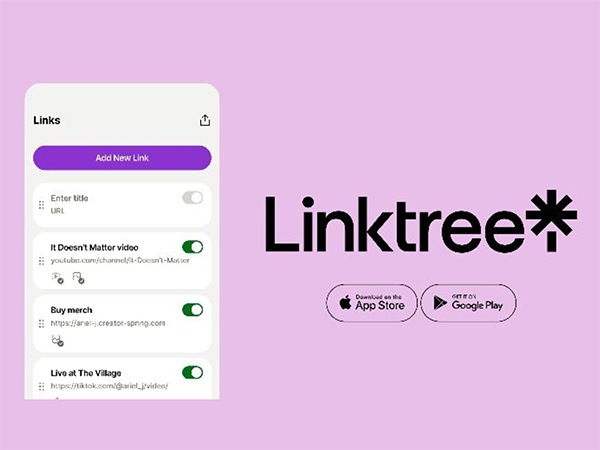
Linktree remains the name most people think of first, and for good reason. With over 70 million profiles and a valuation of $1.3 billion, it has become synonymous with the category it essentially created back in 2016. The platform has expanded well beyond simple link lists. In 2026, it offers digital product sales, course hosting, affiliate storefronts through its US-only Shops programme, sponsored links, automated Instagram replies, and social scheduling.
However, Linktree's commerce ambitions come with caveats. The free plan charges a 12 percent commission on every digital product or course sale. The Starter plan at $8 per month lowers that to nine percent, and you need the $35 Premium plan to eliminate the platform fee entirely, with Stripe's standard processing fees still on top. For creators who primarily need a clean, recognisable landing page with light commerce bolted on, Linktree remains the safe default. For serious sellers, the fee structure makes dedicated storefronts more attractive.
4. brandID
brandID is the most ambitious newcomer in this space and arguably the one trying hardest to redefine what a bio link can do. It combines a customisable storefront, paid bookings, subscription plans, a tipping system, email marketing, AI-powered video translation, and a built-in affiliate marketplace with access to over five million products from more than 2,000 brands. Perhaps most unusually, it offers digital billboard rentals, allowing creators to sell visual ad space directly on their bio page to brands.
Pricing is refreshingly accessible. The free plan includes one digital product, one tipping jar, one subscription plan, and basic analytics. The Creator plan at $9 per month and the Turbo Creator plan at $15 per month unlock unlimited products and lower transaction fees. A lifetime purchase option is also available, which is almost unheard of in this space. brandID is best suited for creators who want the maximum number of income streams consolidated under one roof without paying Stan-level prices.
5. Taplink
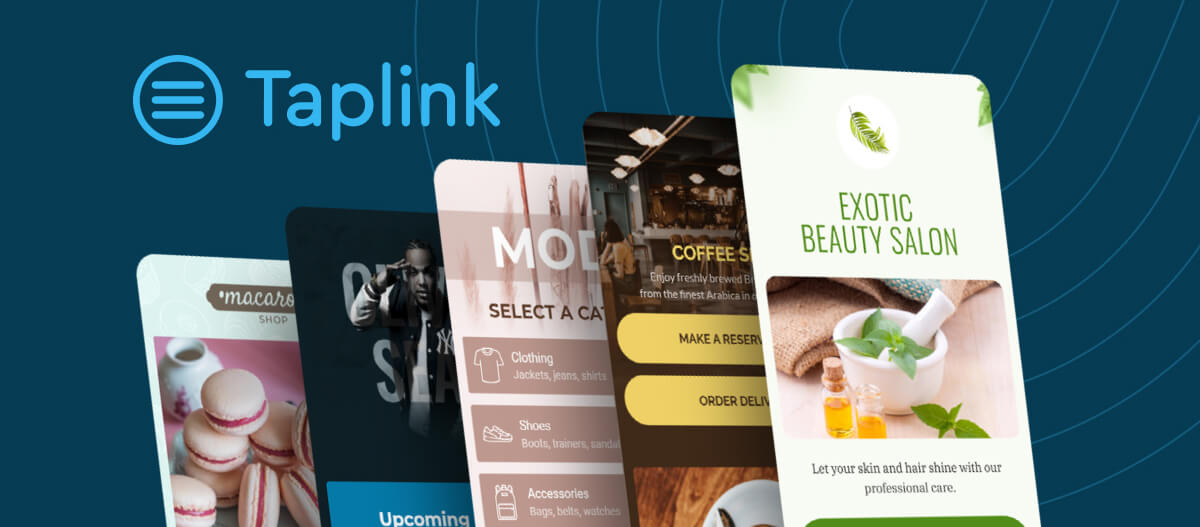
Taplink takes a different philosophical approach. Rather than presenting itself as a storefront, it positions the bio link as a conversion-focused micro landing page. Users build pages with image sliders, FAQ accordions, countdown timers, video embeds, and payment blocks. The result feels closer to a Squarespace one-pager than a traditional link list.
The free Basic plan offers unlimited links, but the real power lives in the Business plan, which adds digital product listings, email notifications, a CRM system, custom domains, and SSL certificates. Taplink supports payment processing through Stripe, PayPal, and Paddle, charging no platform transaction fee when creators connect their own payment gateway. The platform is especially popular across Europe and among service-based businesses that need forms, booking flows, and structured content on a single page. At roughly three euros per month for the Pro plan, it undercuts most competitors on price.
6. The Leap by Thinkific
Thinkific, the established course-hosting platform, launched The Leap as a free link-in-bio tool designed specifically for creators who sell knowledge. It auto-generates sales pages for digital products, includes built-in email marketing with up to 500 contacts, and provides calendar booking functionality. The free plan supports up to three live products, making it a genuine zero-cost entry point for educators, coaches, and consultants.
What makes The Leap stand out is the seamlessness of its sales flow. A visitor can discover a product, read the sales copy, and complete the purchase without leaving the bio page. Because it sits inside Thinkific's broader ecosystem, creators who outgrow The Leap can migrate to full Thinkific course hosting without rebuilding their audience from scratch. It is a smart funnel play: give creators a free storefront, then grow alongside them.
7. Hopp by Wix
Wix entered the link-in-bio race with Hopp, a product designed to bridge the gap between a quick social landing page and the full power of the Wix website builder. Hopp pages are clean, mobile-optimised, and fast to set up. The real advantage, though, is that creators already embedded in the Wix ecosystem can tap into its e-commerce infrastructure, including product catalogues, payment processing, and order management, without leaving the platform.
For anyone already running a Wix site, Hopp is a natural extension that keeps everything under one login. For newcomers without Wix commitments, the tool feels slightly over-engineered for simple use cases, but the integration depth is unmatched if you eventually want to scale from a bio link to a full-featured online store.
8. Shorby
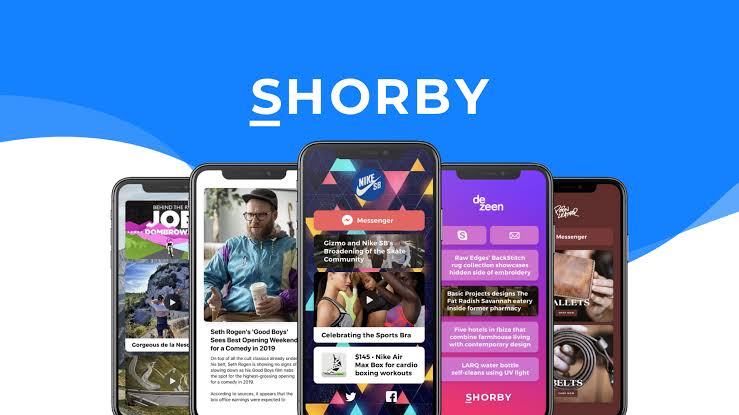
Shorby occupies a niche that most competitors ignore entirely: creators and marketers running paid advertising campaigns. Its SmartPage feature is highly customisable and supports dynamic content feeds pulled from other platforms, retargeting pixels from Facebook, Google, and TikTok, UTM tracking on every link, and direct messenger buttons for WhatsApp, Telegram, and Facebook Messenger.
There is no free plan, with pricing starting at $12 per month, but Shorby charges zero platform transaction fees. For creators and agencies that treat the bio link as a performance marketing asset rather than a passive directory, Shorby offers tracking and attribution capabilities that free tools simply cannot match. It is not the right choice for a casual creator, but for anyone spending money to drive traffic, the data Shorby provides pays for itself quickly.
9. Koji
Koji reimagines the bio link as a mini app store. Instead of static links or product listings, creators add interactive modules: tip jars, quizzes, polls, shoppable galleries, gated content, and even simple games. The platform was acquired by Linktree, which has gradually folded some of its interactive features into the Linktree ecosystem, though Koji's standalone identity persists for creators who want that app-like experience.
The core platform is free, but many of the most engaging modules carry per-transaction fees. Koji is best suited for gaming, entertainment, and lifestyle creators who want their bio page to feel like an experience rather than a catalogue. Its storefront capabilities are more playful than transactional. If your goal is to sell a $49 e-book, Stan or Beacons will serve you better. If your goal is to create a memorable, interactive touchpoint that deepens audience connection, Koji has no real competitor.
10. Carrd
Carrd is not a link-in-bio tool in the traditional sense, yet thousands of creators use it as one, and for good reason. It is a one-page website builder with complete design control, custom domain support, and the ability to embed forms, payment buttons, and third-party widgets. The free plan allows one site with Carrd branding, while the Pro plan at $19 per year is among the cheapest paid options in the entire category.
Carrd does not include a built-in checkout or product hosting. Commerce happens through integrations, typically Gumroad, Stripe, or PayPal embeds. That makes it more hands-on than a managed storefront, but the design freedom is unmatched. For creators who care deeply about aesthetic control and are comfortable wiring up their own payment flow, Carrd delivers a polished, professional result that looks nothing like a templated bio page.