Type "Alkemi" into a search bar and you won't get one company. You'll get several. There's an AI data startup in Washington state, a pharma consultancy in Vermont, a supplement made by Ambrosia Collective, a perfume house called Alkemia, a crypto lending protocol in Toronto and, for good measure, a padel racket brand. None of them share a public affiliation. They just share a word.
That matters more than it sounds. If you're about to sign up for a data platform, hire a market access consultant or swallow a capsule before dinner, you should know exactly who you're dealing with. So we took the three Alkemis most people are actually searching for and judged each on its own merits.
| Detail | What we know |
|---|---|
| The three businesses | Alkemi AI (data platform), Alkemi Health (HEOR consulting), Alkemi NCT by Ambrosia Collective (supplement) |
| Bases | Snohomish, Washington (AI) and Manchester Center, Vermont (Health) |
| AI platform founded | 2023 |
| AI platform CEO | Connor Folley |
| Main products | DataLab, Alkemi Discover, Alkemi NCT |
| Websites | alkemi.ai and alkemihealth.com |
| Icon Polls scores | AI 3.0, Data 3.5, Health 3.0, Supplement 2.5, User experience 3.0 |
| Overall | 3.0 out of 5 |
DataLab: ask your database a question
The AI startup gets the most attention right now, and its pitch is easy to like. DataLab is an AI-native workspace where you type a question in plain English and the system pulls answers from connected data. No SQL required. It connects to Snowflake, BigQuery, Databricks and plain CSV files, and it supports MCP (Model Context Protocol) tools, so it can slot into a wider AI setup rather than living on an island.
The version aimed at data providers launched in late 2025, and updates have kept coming through 2026. Simple lookups work well enough. Push it into multi-step reasoning over large datasets, though, and user reports describe results that are hit or miss. The entry-level bronze model handles basics and struggles with nuance. The silver and gold models do better, but they cost more per question, which brings us to the catch.
Scale is the other worry. Recent reports put the team at about 10 people. Small isn't a sin, but it does raise fair questions about long-term support and how fast the product can mature. Promising, decent for its age, not yet essential: 3.0.
The marketplace is the better idea
Where Alkemi AI genuinely stands out is in how data gets bought and sold. Alkemi Discover is a catalogue where providers list datasets and buyers browse categories such as business intelligence, consumer behaviour, health insurance ratings, energy, weather, soil moisture, EV charging locations and financial markets.
The clever part sits on the provider side. Instead of emailing static sample files during a sales process, a provider can publish an interactive demo that buyers question conversationally. Alkemi says its inference-only design never exposes the raw files, which protects the seller's intellectual property. That solves a real, irritating problem in data procurement.
The range is wide for a company this size. Depth is uneven, though: some categories are well stocked, others feel thin. Still, this is the strongest part of the whole Alkemi story: 3.5.
Credits, tiers and the arithmetic
Everything runs on credits. There's a free tier to try DataLab, then paid team plans and top-ups with an auto-reload option. The multipliers are where costs climb:
- Bronze model: 1 credit per query or tool call
- Silver model: 4 credits
- Gold model: 6 credits
So the better answers cost four to six times as much. A team firing off hundreds of questions a day will feel that quickly, and the full picture at scale takes some digging through documentation. That documentation, at docs.alkemi.ai, is otherwise tidy, with quick-start guides and connection walkthroughs that beat what many young startups offer. Check alkemi.ai/pricing before committing, because rates can change.
Alkemi Health and the 90-day promise
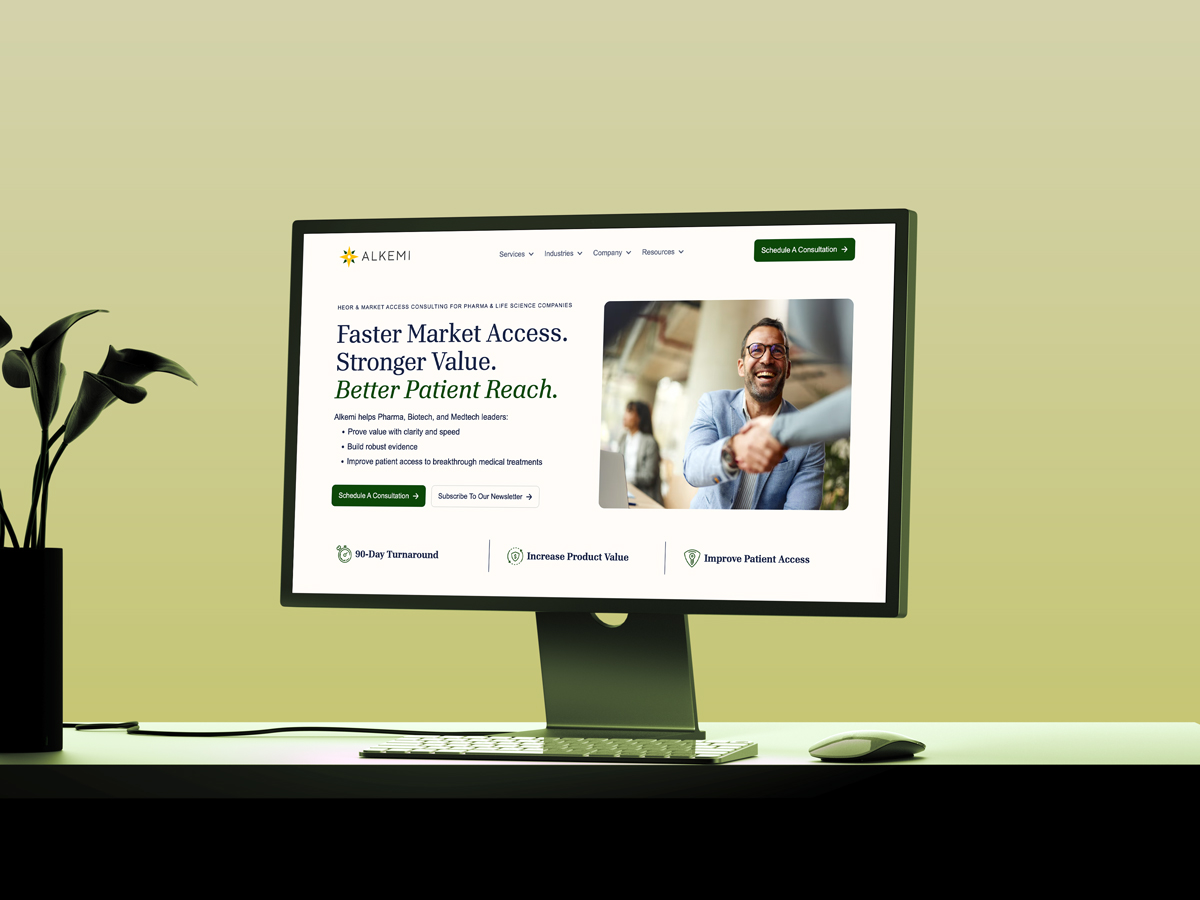
Alkemi Health is a different animal. It's a market access and health economics (HEOR) consultancy serving pharma, biotech and MedTech companies that need new treatments approved, reimbursed and adopted. Consumers will never touch it directly.
Its headline offer is what it calls the Access Threat Response System, which it says can produce a deployable evidence case in 90 days or less. Competing firms typically take six to twelve months for similar work, so if that holds up consistently, it's a real edge. The firm also says it has worked on more than 50 treatment launches over fifteen years, across oncology, immunology, rare diseases, obesity and cell and gene therapies.
The trouble is verification. Work in this field is usually covered by NDAs, the testimonials on its site are warm but vague, and third-party coverage is scarce. The website itself is clear and its blog is regularly updated. Credible on paper, hard to confirm: 3.0.
Alkemi NCT: glucose agent or brain pill?
The supplement, sold under the Ambrosia Collective brand, is marketed as a glucose disposal agent (GDA): something meant to support insulin sensitivity and steer carbohydrates toward muscle rather than fat storage. The ingredient list is respectable and, helpfully, not hidden behind a proprietary blend:
- Berberine, which has a growing body of blood sugar research behind it
- ProCynCi, a patented cinnamon extract that Ambrosia claims is up to three times more effective than standard cinnamon extracts
- Chromax (chromium picolinate) at 200mcg a day
- GlucoVantage, Banaba Leaf and InSea2
Then it gets muddled. Some versions lean into a nootropic angle, mentioning Alpha GPC, Lion's Mane and L-Theanine. A product that wants to be both a carb manager and a focus aid makes it harder to know what you're actually buying. User feedback is mixed: some notice they feel better after heavy meals or sharper at work, others notice nothing. It's mid-priced for the category and sold on Amazon, supplement retailers and Ambrosia's own channels, with no single Alkemi supplement hub tying it together.
None of its claims have been evaluated by the FDA, and it isn't intended to diagnose, treat, cure or prevent any disease. Decent formula, confused message: 2.5.
Who should bother, and who shouldn't
Data providers tired of mailing sample files should try the free DataLab tier; that's where Alkemi is most original. Analysts hunting for third-party data will find a useful but patchy catalogue. Pharma teams racing a launch deadline may find the 90-day pitch worth a conversation, provided they ask for evidence. Supplement shoppers can take or leave NCT; it's not snake oil, but it's not a must either.
The biggest flaw cuts across all of it: one name stretched over unrelated businesses dilutes trust in every one of them. That's why the overall score lands at 3.0. For more reviews and fan debates, browse the latest Icon Polls features and vote on what's trending.
Is Alkemi AI the same company as the Alkemi crypto platform?
No. The crypto Alkemi is a DeFi lending protocol based in Toronto. Alkemi AI is a data discovery and analytics startup in Snohomish, Washington. There's no public link between them.
How is Alkemi NCT meant to be taken?
The stated dose is two capsules, one to two times a day, before your largest meals. If you take medication for blood sugar or anything else, speak to your doctor first, check the label for allergens and buy from reputable sellers to avoid counterfeits.