Most AI agent tools sell you more: more integrations, more triggers, more things the agent can reach. BetterClaw's most interesting idea runs the other way. It argues that an agent drowning in notifications is a worse agent, and that the useful work happens before the model sees anything at all. In 2026, with agents moving out of chat windows and into repositories, team channels and phones, that argument carries more weight than it first appears to.
BetterClaw is also harder to pin down than it should be. This review covers what it does, who it suits, and why we stopped at 3.0 out of 5.
The short version
| Item | Details |
|---|---|
| Product | BetterClaw |
| Category | AI agents, OpenClaw tooling, workflow automation |
| Core idea | No-code agent setup, GitHub workflows, app-based context and event filtering |
| Built for | Developers, small teams, technical founders and OpenClaw users |
| Poor fit for | Casual users who want a simple chatbot or a plug-and-play mobile app |
| GitHub skills | Repository management, pull requests, issues, code search and CI workflow monitoring |
| App side | Public listings link BetterClaw to iOS device context and hosted app flows |
| Pricing | Public materials mention a free plan and paid plans; check the current pricing page |
| Icon Polls rating | 3.0 out of 5 |
Two products wearing one name
The first thing you notice when you look into BetterClaw is that it shows up in two forms. One is a hosted service that talks about no-code AI agents, curated skills, paid plans and quick setup. The other is a plugin concept for OpenClaw, where BetterClaw sits between an iOS device and an AI agent and decides which events are worth passing along.
Those device events are the unglamorous stuff: battery levels, location changes, health readings, geofence triggers, activity updates. Left unfiltered, they bury an agent. Run through BetterClaw, the idea is that only the meaningful ones get through, with enough context attached to act on.
So the two versions share a philosophy. Better context beats more context. But a newcomer landing on either one could easily wonder which BetterClaw they're actually looking at, and that confusion follows the product through everything else.
Less noise, better decisions
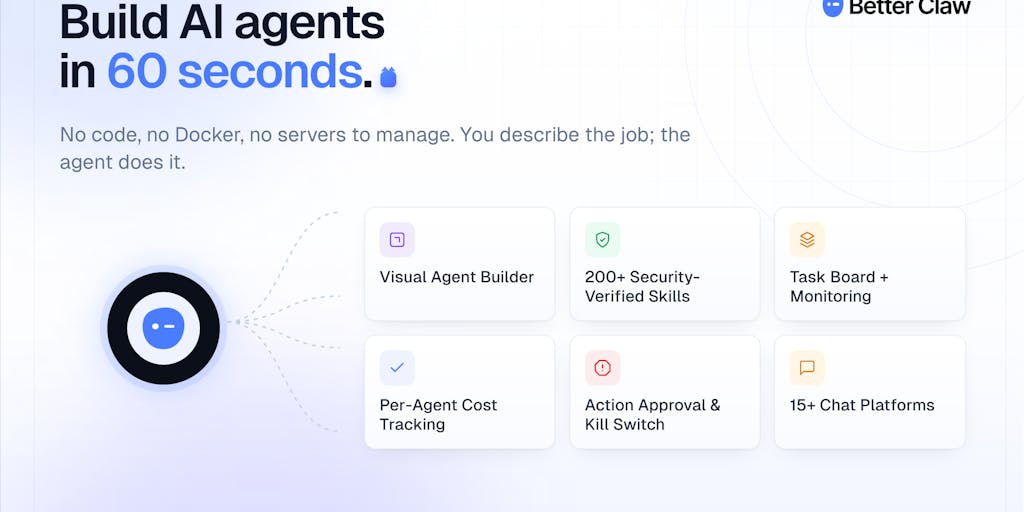
Here's where BetterClaw earns its keep. Anyone who has experimented with proactive agents knows the failure mode: the agent gets every ping, every tool response and every raw log, then makes a confident decision based on the wrong one. BetterClaw's pitch is to filter, triage and enrich information first, so the agent receives the event that matters rather than the forty that don't.
That logic applies well beyond phones. A support agent doesn't need every ticket update. A code assistant doesn't need every commit notification. A personal operations agent doesn't need to know your battery dropped two percent. Clean inputs and clear boundaries are what separate a useful agent from an expensive source of noise.
The catch is trust. Once an agent can touch messages, calendars, repositories or device signals, the person setting it up has to understand exactly what they're granting. BetterClaw's public materials mention scoped access, trust levels and sandboxing, which is the right vocabulary. It still isn't something we'd hand to a user who has never thought about permissions.
Handing an agent your repositories
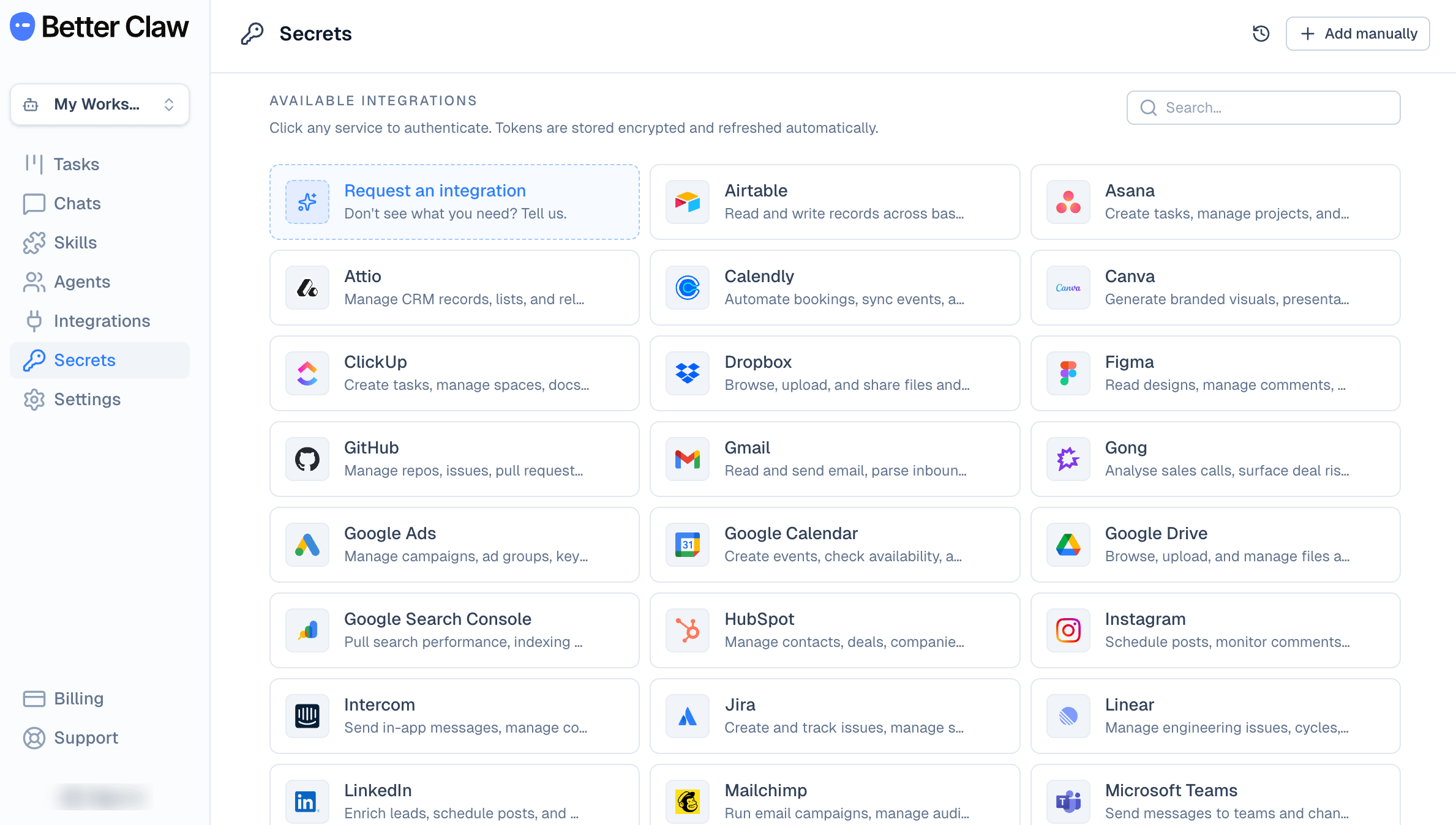
For developers, the GitHub integration is the real question. According to BetterClaw's public material, its agent skills can manage repositories, create and review pull requests, open and close issues, search code, monitor CI/CD workflow runs, and handle releases and tags.
Picture a small team's morning. The agent scans open pull requests, summarises what changed, flags reviews that have gone stale, labels new issues and drops an update into the team channel. Nobody spends twenty minutes doing that by hand. For a three-person startup, that's a genuine win.
It's also where the stakes climb. Even with admin access excluded, write permissions on pull requests and issues can cause real mess if an agent is badly configured. We'd like to see plainer documentation, simple explanations of each permission, and beginner-facing warnings before calling this part of the product excellent. For larger teams, careful governance isn't optional.
No Docker, no servers, still not for everyone
BetterClaw's setup message is well judged: no Docker, no config files, no servers. Plenty of people like the idea of OpenClaw-style agents without wanting to become part-time systems administrators, and this speaks directly to them.
Compared with raw self-hosted agent setups, it's clearly cleaner. Compared with an ordinary productivity app, it's clearly not. The wording, the use cases and the integration list all assume a technical reader. A non-technical user can grasp that BetterClaw automates work, but will likely struggle with the harder questions: what should an agent be allowed to do alone, what needs approval, and what should stay manual?
The people who'll get the most out of it already live in GitHub, Slack, Discord, Telegram, Teams or web chat, and want an agent layer sitting on top of tools they understand.
What works and what doesn't
Working in its favour:
- A smart, timely focus on filtering noisy context before it reaches the agent
- Practical GitHub workflows for pull request reviews, issue triage and CI alerts
- No-code positioning that lowers the barrier compared with self-hosting
- Scoped permissions and trust levels that signal some attention to safety
Holding it back:
- Split identity as both a hosted agent product and an OpenClaw plugin
- Too technical for casual users who just want a simple AI app
- GitHub and workflow permissions demand careful setup
- Public documentation could be clearer on risks, pricing and setup paths
- Still a niche tool outside developer and automation circles
Why 3.0 feels right
BetterClaw isn't a weak idea. It's arguably ahead of where most users are. As agents become more capable, controlling what they see and what they're allowed to do becomes the central problem, and BetterClaw is aimed squarely at it.
But a good concept isn't the same as a finished experience. The positioning needs to make sense from the first page, and onboarding needs to hold the hand of anyone who isn't already fluent in permissions and automation rules. Until that happens, 3.0 out of 5 is a fair score: real developer appeal, a sound core idea, and rough edges that matter.
Should it be on your shortlist?
If you're a developer, a technical founder, a consultant, part of a small software team or an existing OpenClaw user, yes, it's worth a look. Start with narrow permissions and expand only once you trust the setup. It's also one to watch if you're interested in agents that act on signals instead of waiting for a prompt.
If you mainly want a chatbot, a writing assistant or a tidy mobile productivity app, BetterClaw will probably feel like more machinery than you need. And if you have strong opinions on which online tools actually earn a place in your day, add them to our vote on the world's most useful websites.
Three things readers ask
Is BetterClaw free?
Public materials mention a free plan alongside paid plans. AI agent products change pricing often, so check the current pricing page before subscribing.
Is BetterClaw the same as OpenClaw?
No. BetterClaw is connected to the OpenClaw ecosystem but isn't OpenClaw itself. It works as a hosted agent layer, curated skill product or plugin around agent workflows.
Is it safe to connect to GitHub?
It can be, if access is limited and reviewed. Avoid granting broad permissions at the start, especially for repositories, work tools, messages and device data.