Bunny Database Review in 2026: CDN, Online, Livestream, Steam, User Experience and FAQs

By ICON Team · Aug 24, 2026 · 12 min read
Bunny Database Review in 2026: CDN, Online, Livestream, Steam, User Experience and FAQs

Platform Name

Bunny Database (by bunny.net)

Parent Company

BunnyWay d.o.o.

Founded

2015 (bunny.net); Database launched 2023

Headquarters

Ljubljana, Slovenia

CEO / Founder

Dejan Grofelnik Pelzel

Co-Founder

Lovrenc Gregorcic

Employees

Approximately 105 (as of 2026)

Database Type

Managed, serverless, SQLite-compatible

Protocol

libSQL (SDKs for TypeScript, Go, Rust, .NET)

Global Regions

41+ available database regions

CDN PoPs

119+ points of presence across 82 countries

Key Products

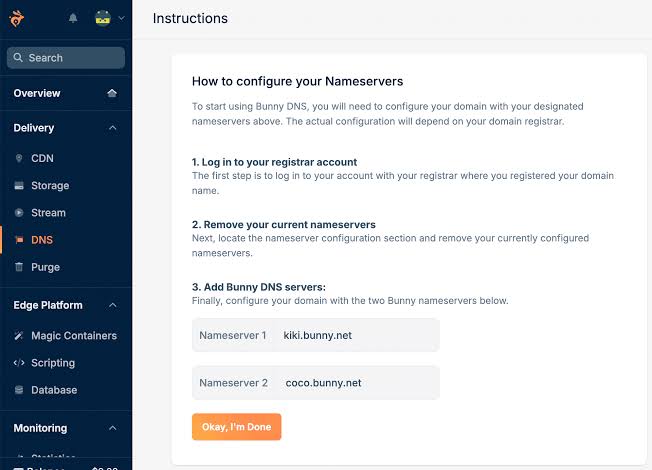
CDN, Bunny Stream, Database, Magic Containers, DNS, Storage, Shield, Optimizer

Pricing Model

Pay as you go (no contracts)

Free Trial

14 days, no credit card required

Website

bunny.net

Icon Polls Rating

4.1 out of 5


What Is Bunny Database?


If you have spent any time looking for affordable and reliable cloud infrastructure in 2026, there is a good chance you have come across bunny.net. Originally known as BunnyCDN, this Slovenian company has quietly grown from a simple content delivery network into a full blown edge platform that now covers video streaming, object storage, DNS, security, edge computing, and yes, a database service.

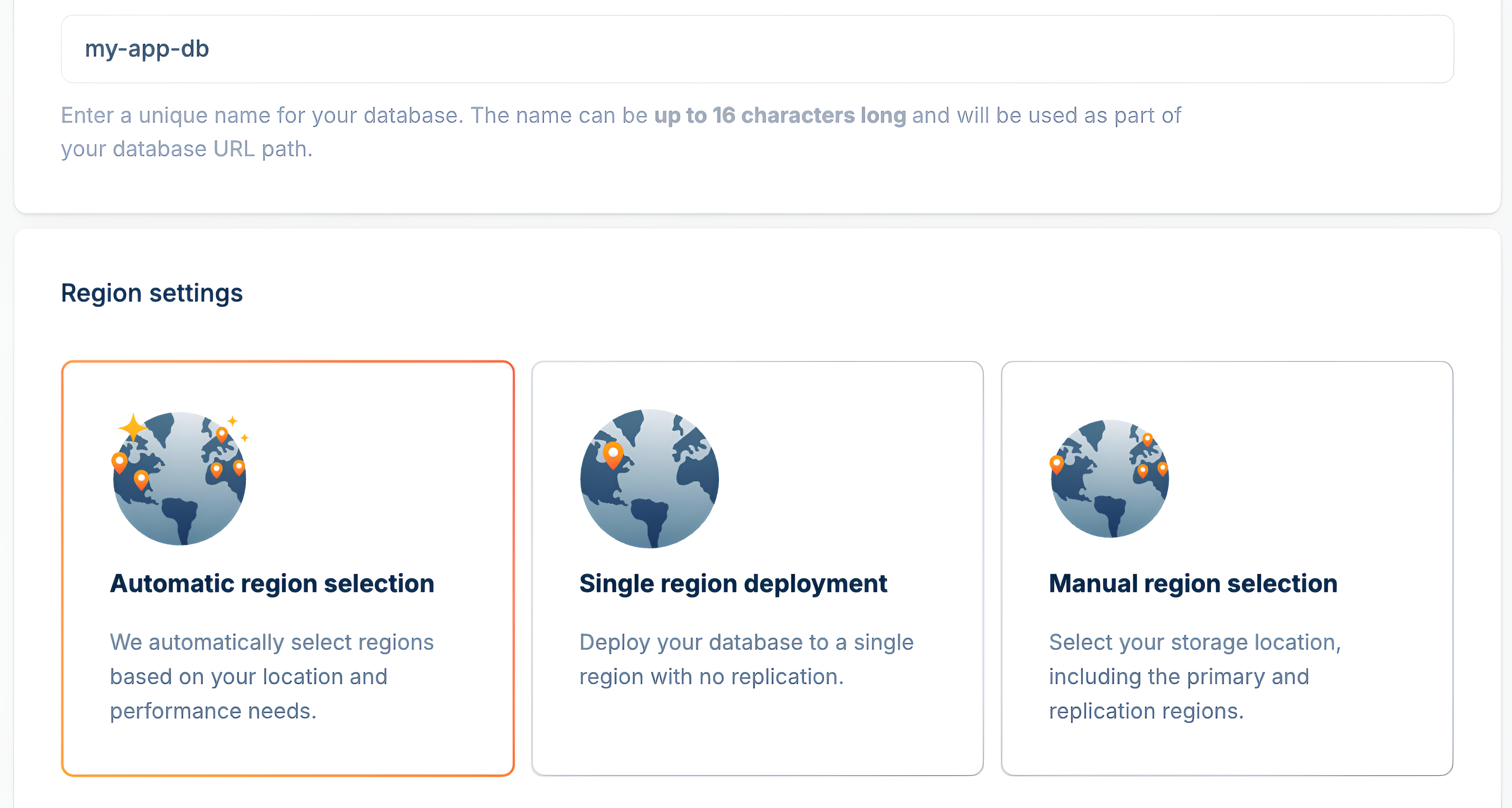
Bunny Database is their managed, serverless SQL database product. It launched in 2023 and is built on SQLite through the libSQL protocol. The idea behind it is simple but powerful. Instead of your database sitting in one data centre thousands of miles from half your users, Bunny Database lets you spin up a primary region and then add read replicas across any of their 41+ global regions. Your data follows your users.

Icon Polls spent time researching and testing the bunny.net ecosystem to bring you this honest review. We looked at the CDN, the database, the streaming platform, Magic Containers, and the overall user experience. Here is what we found.


Bunny CDN


The CDN is where bunny.net made its name, and it still holds up well in 2026. With 119 points of presence spread across 82 countries, it delivers content fast. We are talking about average latency of around 25 milliseconds globally. That is competitive with providers that charge five to ten times more.

The pricing is what really stands out. Standard Network pricing starts at $0.01 per GB in North America and Europe, with higher rates in regions like Asia Pacific and South America. If you are pushing serious volume, the Volume Network drops that to a flat $0.005 per GB for the first 500TB. For context, that is significantly cheaper than Cloudflare Pro, Fastly, or AWS CloudFront.

What makes it even more attractive is that all features come included with every plan. There are no tiers to unlock. You get image optimisation, edge rules, DDoS protection, custom headers, cache purging, URL signing, and access controls from day one. Many competitors gate those behind premium plans.

Based on our Icon Polls research, Bunny CDN is one of the best value CDN services available in 2026 for small to mid size businesses and developers who want performance without the enterprise price tag.


Bunny Database Online

The database side of things is where bunny.net is making its most ambitious push. Bunny Database is a fully managed, serverless SQL service. You create a database, pick a primary region, and it just works. If nobody is querying it, the database spins down and you only pay for storage. When traffic picks up, it scales back automatically.

It is built on libSQL, which is the same open source fork of SQLite that Turso uses. That means you connect using official SDKs for TypeScript, JavaScript, Go, Rust, and .NET. There is also a plain HTTP API if your stack does not have a dedicated SDK yet.

The standout feature is the global distribution. You can start with a single region and add read replicas in any of the 41+ available locations as your audience grows. You do not need to rearchitect your application to do this. For read heavy workloads like product catalogues, user profiles, app configuration, and metadata filtering, this setup works really well.

There are limitations worth knowing about. Since it is based on SQLite, it is not the right pick for write heavy transactional systems. If you are building something that hammers the database with constant writes, you will want to look elsewhere. But for the vast majority of web applications where reads far outnumber writes, Bunny Database handles the job nicely.

As of mid 2026, Bunny Database is still in public preview and free to use during this period. That is a nice perk if you want to test it out before committing any budget.


Livestream and Bunny Stream


Bunny Stream started as a video on demand platform and has been growing steadily. You upload a video, Bunny transcodes it into multiple resolutions (from 240p all the way up to 4K with the premium encoding tier), replicates it across storage regions, and serves it through the CDN with an embeddable player.

The player is customisable in terms of colours, controls, and language settings, or you can grab the raw HLS stream URLs and plug them into your own player if you prefer. Transcoding is free at the standard level, which is a major cost saver compared to platforms like Mux that bill separately for encoding.

As for live streaming, bunny.net opened up a live streaming preview for Bunny Stream customers in 2026. It supports RTMP ingest and distribution, scheduling, countdown timers, DVR, and video on demand recording from live streams. The signup banner for the live streaming preview can be found within your video library dashboard. Once approved, you get access to a control room in the dashboard along with full API support.

Pricing is straightforward. Storage costs $0.01 per GB, CDN delivery starts at $0.005 per GB, and there is a $1 monthly minimum. The player, DRM, and token authentication all come included. For anyone coming from Vimeo or Wistia, the savings can be substantial.


Magic Containers


This is probably bunny.net's most ambitious product in 2026 and the one that has developers talking the most. Magic Containers is an edge compute platform that lets you deploy Docker containers across 40+ global locations. The pitch is simple: pick your container image, hit deploy, and the platform handles everything else.

What makes it different from something like AWS ECS or traditional serverless platforms is the AI powered auto scaling. The system identifies where your users are and deploys your application close to them. When traffic spikes, it scales instantly within regions and across the globe. Each container runs fully isolated with its own dedicated space, NVMe storage, and high frequency CPUs. There are no shared memory issues or noisy neighbour problems.

Bunny claims up to 5x cost savings over traditional edge hosting, though our Icon Polls testing suggests the real savings depend heavily on your specific workload and traffic patterns. For API services, game servers, DNS clusters, real time apps, image processing, and microservices, it is a compelling option.

In March 2026, they also launched pre built application templates that let you deploy common setups with just a few clicks, some of which include a sidecar database. And in July 2026, the Bunny CLI added support for on demand cloud sandbox environments backed by Magic Containers, with Node.js, Bun, Python, and Claude Code pre installed.

It is still fairly new compared to established services, so it is less battle tested than something like AWS ECS or Fly.io. But the direction is promising.


The Company Behind Bunny Database

Bunny.net is operated by BunnyWay d.o.o., a company headquartered in Ljubljana, Slovenia. It was founded by Dejan Grofelnik Pelzel, who serves as CEO, along with co-founder Lovrenc Gregorcic. The company started in 2015 with a focus on affordable content delivery for developers and has since grown into a much larger operation.

As of mid 2026, bunny.net has approximately 105 employees. They raised $6 million in a Series A round in October 2022, led by Runa Capital and Capital Genetics. Despite being a relatively small team compared to giants like Cloudflare or Akamai, they have built a platform that consistently ranks among the fastest CDNs globally in independent performance tests by CDNPerf.

The company opened its first physical office in Ljubljana in 2024 after years of operating fully remote. They accept PayPal, major credit cards, and cryptocurrency for payments, which shows their developer friendly approach.


User Experience


One of the things bunny.net gets consistently praised for is how easy everything is to set up. Creating a CDN pull zone takes just a few minutes, and most users report being able to serve cached content in production the same day. The dashboard is clean, intuitive, and does not overwhelm you with options.

The same applies to the database. You create it, pick your region, connect with your SDK of choice, and start querying. There is no complex infrastructure to manage, no Kubernetes configuration, and no DevOps overhead. For solo developers and small teams, this simplicity is a huge selling point.

Support is another area where bunny.net punches above its weight. Multiple reviewers mention getting responses within minutes, which is a stark contrast to the 24 to 48 hour wait times that are common with larger providers. The documentation is solid, though some users note that it could be more detailed in certain areas, particularly around newer features like Magic Containers and the database.

The 14 day free trial with no credit card required is a nice touch. After the trial, the $1 monthly minimum covers most small projects without any noticeable cost. For larger operations, the pay as you go model means you only pay for what you actually use.


Icon Polls Rating: 4.1 out of 5


After thorough research and evaluation, Icon Polls gives Bunny Database and the broader bunny.net platform a rating of 4.1 out of 5 for 2026.

The CDN performance is excellent for the price, the database offering is innovative and well suited for edge applications, and the streaming platform delivers solid value. Magic Containers is exciting but still maturing. The main areas for improvement are the smaller network footprint compared to Cloudflare, the fact that the database is still in public preview, and some gaps in documentation for newer products.

Overall, bunny.net offers one of the best value propositions in the edge infrastructure space in 2026. If you are a developer, a small to mid size business, or a content creator looking for fast, affordable, and genuinely easy to use infrastructure, it is well worth your time to give them a try.


Frequently Asked Questions About Bunny Database


1. Is Bunny Database free to use?

As of 2026, Bunny Database is in public preview and is free to use during this period. Once it exits preview, pricing will follow a usage based model similar to other bunny.net products. The broader platform has a $1 monthly minimum after the 14 day free trial.

2. What type of database is Bunny Database?

Bunny Database is a managed, serverless SQL database service that is compatible with SQLite. It uses the libSQL protocol and supports connections through official SDKs for TypeScript, JavaScript, Go, Rust, and .NET, as well as a plain HTTP API.

3. How does Bunny Database compare to Turso?

Both Bunny Database and Turso are built on libSQL, the open source fork of SQLite. The key difference is that Bunny Database runs on bunny.net's own global network, which means it integrates directly with their CDN, Edge Scripting, and Magic Containers. Turso runs on AWS infrastructure. If you are already using bunny.net for other services, the integration is smoother with Bunny Database.

4. Does bunny.net support live streaming?

Yes. Bunny Stream opened a live streaming preview in 2026. It supports RTMP ingest and distribution, scheduling, countdown timers, DVR, and video on demand recording. You can sign up for the preview from within your Bunny Stream video library dashboard.

5. What are Magic Containers on bunny.net?

Magic Containers is bunny.net's edge compute platform. It lets you deploy Docker containers across 40+ global regions with AI powered auto scaling. Each container runs in full isolation with NVMe storage and high frequency CPUs. It is designed for API services, game servers, microservices, and real time applications.

6. Is bunny.net better than Cloudflare?

It depends on what you need. Bunny.net is significantly cheaper on a per GB basis and offers a more integrated platform for video, storage, and database. Cloudflare has a larger network, a more mature security stack, and a generous free tier. For developers and small businesses focused on value and simplicity, bunny.net often comes out ahead. For enterprise level security and the largest possible network, Cloudflare still has the edge.

7. Where is bunny.net based?

Bunny.net is operated by BunnyWay d.o.o. and is headquartered in Ljubljana, Slovenia. The company was founded by Dejan Grofelnik Pelzel and Lovrenc Gregorcic. As a European company, it is fully GDPR compliant, which is a plus for businesses that need to keep data processing within the EU.

8. Can I use Bunny Database for a production application?

You can, but keep in mind that Bunny Database is still in public preview as of August 2026. It is well suited for read heavy workloads like product catalogues, user profiles, and app configuration. For write heavy transactional systems, you may want to use a different database. It is also worth noting that the service may change as it moves out of preview, so Icon Polls recommends keeping an eye on their changelog and documentation for any updates.

9. What payment methods does bunny.net accept?

Bunny.net accepts PayPal, all major credit cards, and cryptocurrency. There are no long term contracts. Everything runs on a pay as you go model with a $1 monthly minimum after the free trial ends.

10. How many global locations does bunny.net have?

As of 2026, bunny.net operates 119+ CDN points of presence across 82 countries. For the database service specifically, there are 41+ available regions. Magic Containers can deploy across 40+ global locations.