|
Platform |
Code Arena by Arena.ai |
|
Category |
AI coding model comparison and leaderboard |
|
Core use |
Testing coding models and voting on competing outputs |
|
Key areas |
Web development, image-to-web development, and agentic coding workflows |
|
Ranking approach |
Human preference signals, scores, vote totals, and rank spread |
|
Best for |
Developers comparing AI coding models before deeper testing |
|
Pricing |
The comparison experience is publicly accessible; individual model costs vary |
|
Privacy note |
Do not submit sensitive code or personal information |
|
ICON POLLS rating |
4.1 out of 5 |
|
Review status |
Reviewed for 2026 |
Code Arena Review in 2026: Our Verdict
Code Arena is one of the more useful places to compare AI coding models because it does not ask developers to accept a polished claim at face value. It lets people see competing outputs, vote on what works better, and follow a leaderboard that changes as more results come in. For a developer trying to decide which model is likely to help with a web build or a visual coding task, that is a practical starting point.
ICON POLLS rates Code Arena 4.1 out of 5 in 2026. The score reflects a strong idea, an easy way to compare frontier models, and a leaderboard that gives more context than a simple top-ten list. The main limitation is equally important: a good public ranking does not automatically mean a model will be the best fit for your own stack, private repository, budget, or security rules.
What Code Arena Actually Does
Code Arena is built around side-by-side testing of leading AI coding models. You can give a coding or web-development task, compare outputs, and judge which response is stronger. The voting signal is then used to help produce rankings. In 2026, the platform also separates coding-related areas such as WebDev and Image-to-WebDev, making it more useful for people who care about UI work rather than general chat performance.
The experience feels more hands-on than reading a static benchmark page. You can see how a model approaches a prompt, whether it gives usable code, and whether the result feels clear enough to build on. That matters because programming help is not only about whether code can compile. Developers also care about structure, explanation, design decisions, and how much repair work is needed afterwards.
AI and Ranking: How to Read the Leaderboard
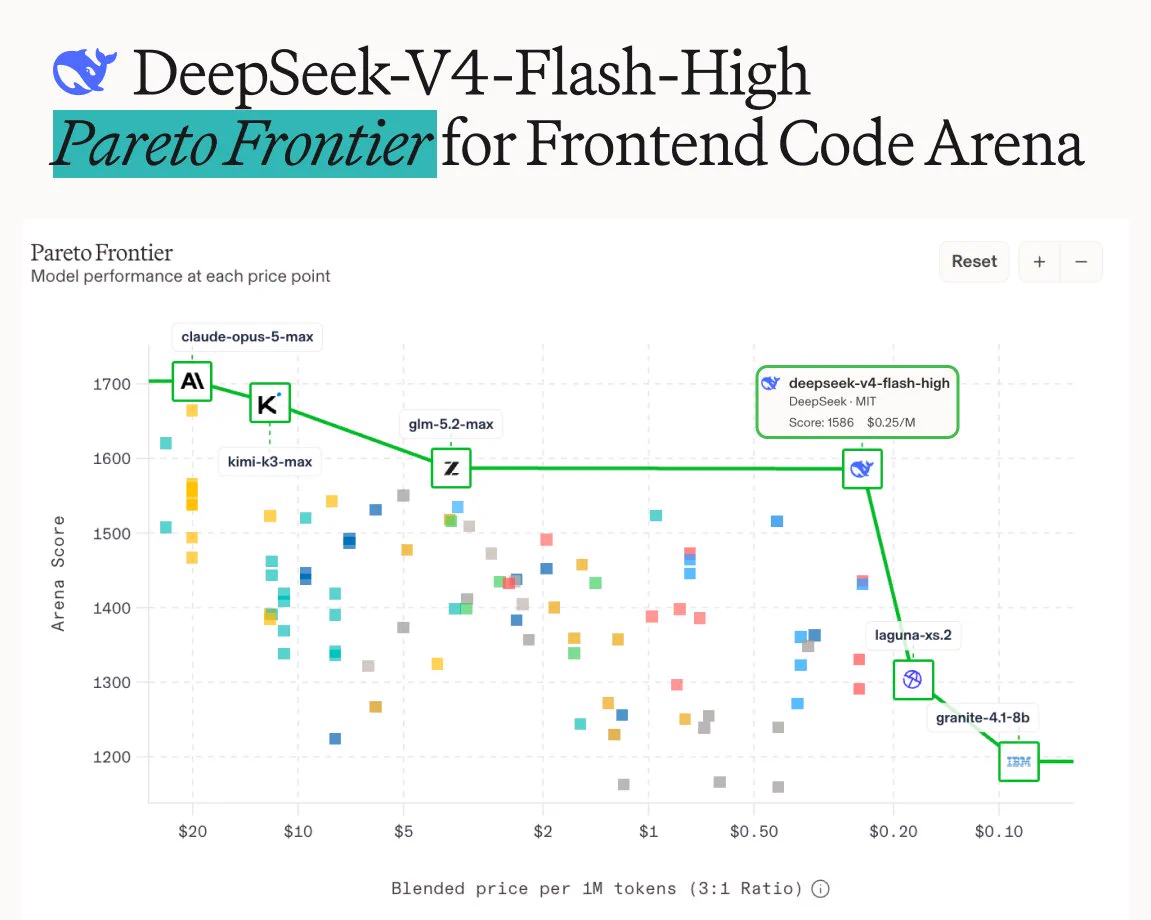
Code Arena rankings should be read as a public signal, not a final answer. The ranking reflects comparative voting and can include score, vote count, rank spread, model provider, price data, and context-window information where available. A narrow score gap usually means the order can change, especially when a model has fewer votes or is marked preliminary.
For everyday use, the smart move is to make a short list from the leaderboard and then test those models on your own real tasks. Use a small component from your frontend, a bug from a non-sensitive sample project, or a representative feature request. This gives you a better answer than selecting a model purely because it is sitting at number one this week.
Code Arena Benchmark: What It Measures and What It Does Not
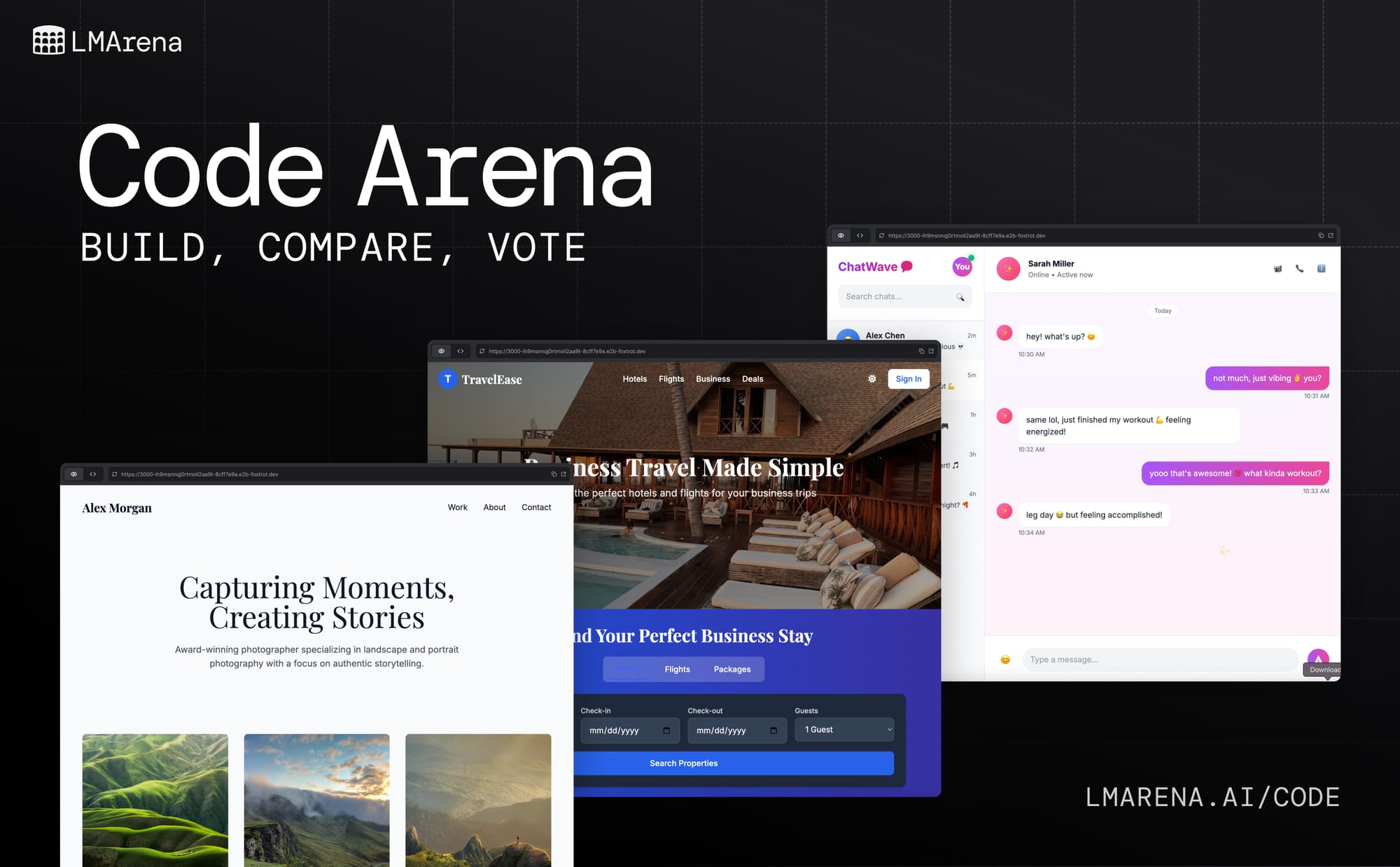
The platform is particularly helpful for practical web-development and image-to-web workflows. Its public comparisons reveal whether people prefer one model’s coding result over another in a direct battle. That is valuable for judging usability, presentation, and the ability to create a working-looking interface from a prompt or visual reference.
Still, Code Arena is not a replacement for every benchmark. It does not prove that a model will safely resolve every real repository issue, write secure production code, or follow your company’s internal rules. A model can impress in an interactive comparison and still need careful review in a large codebase. Think of Code Arena as an excellent screening tool, then follow it with your own tests and code review.
IIM, Swafe, and Fronted: Clearing Up Common Searches
Some people search for Code Arena together with terms such as “IIM,” “Swafe,” and “Fronted.” At the time of this review, IIM and Swafe are not clear official Code Arena feature names. In many searches, “Swafe” appears to be a spelling mix-up for SWE-bench, another coding evaluation used to test issue-resolution performance. “Fronted” is commonly used when the searcher means frontend, the area Code Arena covers through web-development and image-to-web comparisons.
This is worth clearing up because the tools answer different questions. Code Arena helps you compare how people prefer coding outputs in direct battles. SWE-bench-style evaluation is more focused on whether a model can resolve defined software issues. Both can be useful, but they should not be treated as the same metric.
Frontend User Experience
The frontend experience is one of Code Arena’s strongest points. The layout is direct, the comparison focus is clear, and the leaderboard can be filtered without feeling like a dense research dashboard. It is approachable enough for a solo developer while still giving technical teams details such as score ranges, vote counts, model pricing, context information, and licensing labels.
There are a few trade-offs. New users may not immediately understand why a model with a lower rank can still be a better value. They also need to pay attention to uncertainty, preliminary labels, and the fact that different categories can produce different winners. The site would be even stronger with more in-product guidance on choosing between rankings, cost, latency, and task-specific reliability.
Who Should Use Code Arena?
Code Arena is a good fit for developers, product teams, founders, designers who work with AI web builders, and anyone trying to compare coding models before committing time or money. It is especially useful when you are choosing a model for a frontend prototype, a landing page, an image-to-interface experiment, or an agentic coding workflow.
It is less suitable as the only decision-maker for sensitive production work. If your software handles customer data, payments, health information, legal documents, or proprietary code, keep private data out of public testing and build a controlled internal evaluation before deployment.
Pros and Cons
What we liked: Code Arena makes model comparisons feel practical, offers granular coding categories, shows useful leaderboard context, and turns public feedback into something developers can actually use. It is also helpful for spotting when newer models are moving quickly rather than relying on old benchmark summaries.
What needs attention: rankings can be misread as universal truth, public testing is not suitable for sensitive material, and a strong visual result is not always the same as robust production code. Users still need to consider testing, security, maintenance, price, and the needs of their own project.
Final Rating: 4.1/5
Code Arena earns its 4.1 out of 5 rating because it gives developers a fresh, human-centred way to compare AI coding models. It is useful, fast to understand, and increasingly relevant for frontend and image-to-web work. Use it to find promising models, not to skip engineering judgment. That balance is what makes it a genuinely useful 2026 tool rather than just another leaderboard.
Frequently Asked Questions About Code Arena
1. What is Code Arena?
Code Arena is an AI coding comparison experience from Arena.ai. It lets users test and compare coding models and helps produce public rankings from user preference signals.
2. Is Code Arena free to use?
The public comparison and leaderboard experience is accessible to users. However, costs connected to individual AI models can vary, especially where model pricing is displayed.
3. How does Code Arena ranking work?
Rankings use comparative voting between model outputs and provide supporting context such as score, vote count, and rank spread. A higher rank is a useful signal, not a guarantee for every project.
4. What does Code Arena test?
It focuses on coding and web-development tasks, including web development, image-to-web development, and agentic workflows that require multiple steps and tools.
5. What is the Code Arena frontend benchmark?
It refers to comparisons that are useful for frontend work, such as generating interfaces, websites, components, and visual web experiences. “Fronted” is a common spelling variation used in searches.
6. Is Code Arena the same as SWE-bench or “Swafe”?
No. Code Arena and SWE-bench measure different things. “Swafe” is not a clear official Code Arena term and may be a search typo for SWE-bench, which focuses more on issue-resolution tasks.
7. What does IIM mean in Code Arena searches?
IIM is not a clearly defined official Code Arena feature in this review. It may be a search variation or confusion with another AI term, so users should check the exact feature or model name they mean.
8. Can Code Arena tell me the best AI coding model?
It can help you shortlist strong models, but the best choice depends on your codebase, language, cost limit, response speed, security needs, and the specific task you want to complete.
9. Is Code Arena safe for private code?
You should not submit sensitive code, passwords, personal information, or proprietary material to public AI comparison tools. Use a private, approved workflow for confidential projects.
10. Why does a model’s Code Arena rank change?
Ranks can move as new battles, votes, models, and confidence data are added. A rank can also be less stable when a model has fewer votes or a wider rank spread.
11. Does a high Code Arena score mean the code is production-ready?
No. High-ranked output can still contain bugs, security issues, dependency problems, or poor fit for your architecture. Every result should be reviewed, tested, and adapted before production use.
12. What is the ICON POLLS rating for Code Arena in 2026?
ICON POLLS rates Code Arena 4.1 out of 5 in 2026 for its practical model comparisons, strong frontend relevance, and useful ranking context.