There was a time when adding WhatsApp to a customer service stack felt like a nice-to-have, a checkbox for companies expanding into emerging markets. That era ended quietly sometime around late 2024, and by mid-2026, the shift is unmistakable. With more than two billion active users exchanging roughly 100 billion messages every day, WhatsApp has evolved from a personal messaging app into the default customer interaction layer for businesses across Latin America, South Asia, Southeast Asia, the Middle East, and large parts of Europe.
For companies that have built their operations around WhatsApp, the challenge is no longer whether to offer support on the platform but how to do it without drowning in volume. Manual responses cannot scale when thousands of order inquiries, refund requests, and product questions arrive every hour inside a 24-hour session window that Meta enforces strictly. The answer, increasingly, is AI.
The platforms featured in this guide represent the most capable options available today for businesses that treat WhatsApp as their primary support channel. Some are purpose-built for messaging commerce; others are established helpdesk giants that have made serious investments in WhatsApp integration. All of them use large language models to handle conversations autonomously, take real actions inside business systems, and escalate to human agents when the situation demands it.
At a Glance: The 2026 Landscape
Before diving into individual profiles, the table below offers a comparative snapshot of each platform's positioning, pricing model, and core capabilities.
|
Platform |
Best For |
WhatsApp Tier |
Starting Price |
AI Agent |
Channels |
|---|---|---|---|---|---|
|
Respond.io |
Omnichannel teams |
Native API |
$79/mo |
Yes |
12+ |
|
Intercom (Fin) |
SaaS & tech |
Native API |
$29/seat/mo + $0.99/res |
Yes |
10+ |
|
Zendesk AI |
Enterprise CX |
Native API |
$55/agent/mo + AI add-on |
Yes |
15+ |
|
Wati |
SMB WhatsApp-first |
Native API |
$49/mo |
Limited |
2 |
|
Crisp |
Startups |
BSP Partner |
$95/mo workspace |
Yes (Hugo) |
8+ |
|
Tidio |
E-commerce support |
Via integration |
$24/mo |
Yes (Lyro) |
5+ |
|
Freshchat |
Freshworks users |
Native API |
$15/agent/mo |
Yes (Freddy) |
7+ |
|
Gorgias |
Shopify brands |
Native API |
$60/mo |
Yes |
6+ |
|
Botpress |
Custom builders |
Via API |
Free / $495/mo Plus |
Yes |
Any |
|
AeroChat |
DTC e-commerce |
Native API |
Custom |
Yes |
WhatsApp-first |
1. Respond.io
Best for: Mid-market B2C teams running high-volume conversations across multiple channels
If one platform has come closest to solving the omnichannel messaging puzzle for WhatsApp-heavy businesses, it is Respond.io. Built from the ground up as a conversation management platform rather than a traditional helpdesk, it supports more than twelve channels, including WhatsApp, Instagram, Messenger, TikTok, Telegram, email, and voice, all within a single unified inbox.
What sets Respond.io apart in 2026 is its autonomous AI Agent, which holds multi-turn conversations, qualifies leads, updates CRM records, and handles voice calls without human intervention. Unlike competitors that cap automation triggers, Respond.io offers unlimited automation on its Growth plan, which starts at $199 per month for ten users. For teams running click-to-WhatsApp ad campaigns or managing high inbound volumes, that difference between capped and uncapped automation is the difference between captured revenue and lost leads.
The platform's native human handoff is particularly well-executed. When the AI Agent reaches the limits of its confidence, it passes the full conversation context to a human teammate in the same inbox, so customers never have to repeat themselves. Support is available around the clock on weekdays in English, Spanish, Chinese, and Arabic.
2. Intercom (Fin AI)
Best for: SaaS companies and tech-forward support teams with mature knowledge bases
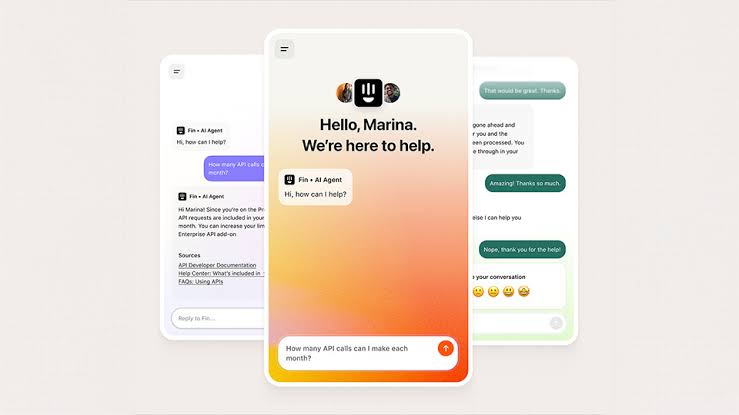
Intercom's Fin AI has quietly become the benchmark against which every other AI support agent is measured. Averaging a 76 percent resolution rate across more than 12,000 businesses, Fin is not a chatbot in any traditional sense. It resolves complex, multi-step queries, including refunds, account modifications, and order changes, through what Intercom calls Procedures. It operates across ten or more channels, with WhatsApp, SMS, Instagram, and voice all supported natively.
Fin runs on Intercom's proprietary AI Engine, which includes custom-trained models built specifically for customer service rather than general-purpose language tasks. The per-resolution pricing model ($0.99 per resolved conversation) means companies pay only when the AI actually solves a problem, which aligns costs with outcomes rather than seat counts. For WhatsApp-first operations with a well-maintained help centre, Fin delivers one of the fastest paths to meaningful automation.
A significant development worth noting: as of mid-2026, Salesforce announced its intent to acquire Intercom. The long-term implications for independent Fin deployments remain to be seen, but the current product is as strong as it has ever been.
3. Zendesk AI Agents
Best for: Enterprise support operations with complex routing, SLAs, and regulatory requirements
Zendesk has spent eighteen years building the infrastructure that large support operations depend on: mature ticketing, granular SLA management, sophisticated routing rules, and a marketplace of more than 1,800 integrations. Its Advanced AI Agents product, introduced in its current form in 2025, layers generative AI on top of that operational backbone.
For WhatsApp-first businesses at enterprise scale, Zendesk's strength is not novelty but reliability. The platform unifies email, chat, SMS, voice, WhatsApp, and social messaging into a single workspace with AI-powered routing that accounts for agent skills, language, and ticket complexity. WhatsApp integration runs through the official Cloud API with full template management and session-window compliance.
The pricing model does require attention. AI capabilities sit behind an add-on on top of per-agent licensing, which can escalate costs quickly for large teams. But for organizations already embedded in the Zendesk ecosystem, the AI upgrade delivers genuine value without the risk of migrating away from a proven system.
4. Wati
Best for: Small and mid-sized businesses that want a WhatsApp-native platform with minimal complexity
Where most platforms in this guide treat WhatsApp as one channel among many, Wati was built exclusively around the WhatsApp Business API. For small ecommerce brands, service providers, and regional businesses across India, Brazil, and the Middle East, that singular focus is an advantage rather than a limitation.
Wati offers broadcast messaging, WhatsApp Flows, click-to-WhatsApp ad integration, and a built-in chatbot builder, all starting at $49 per month. Its AI-powered support agent handles common inquiries on WhatsApp, though it does not yet match the autonomous capabilities of platforms like Respond.io or Fin. Automation triggers are capped between 1,000 and 5,000 per month depending on the plan, which is worth factoring into growth projections.
The trade-off is clear: Wati excels at doing one thing well, but businesses that eventually need cross-channel support or advanced AI handoff may outgrow it.
5. Crisp
Best for: Startups and growing teams that want predictable costs without per-conversation billing
Crisp has carved out a distinct position by offering unlimited conversations across all paid plans, eliminating the usage-based billing anxiety that plagues many competitors. Its workspace-based pricing (starting at $95 per month) includes live chat, ticketing, CRM, knowledge base, and its AI agent, Hugo, in a single package.
Hugo is a genuinely capable AI support agent that understands customer intent and context rather than relying on scripted prompts. On WhatsApp, where customers describe problems in fragments and switch between casual and urgent tones mid-conversation, Hugo's ability to interpret fragmented input is particularly valuable. Crisp connects WhatsApp Business alongside email, Messenger, Instagram, Telegram, and SMS in one shared inbox.
For early-stage companies and scaling startups that cannot afford unpredictable support costs, Crisp offers a rare combination of breadth and budget certainty.
6. Tidio (Lyro AI)
Best for: Small ecommerce and support teams looking for an affordable entry point
Tidio occupies an interesting space in this landscape: it is one of the few platforms offering a genuinely functional free tier that includes WhatsApp connectivity, making it one of the most accessible starting points for businesses testing AI support for the first time.
Its AI engine, Lyro, handles FAQ responses, product recommendations, and basic order inquiries across webchat and WhatsApp. Paid plans start at approximately $24 per month, with Lyro AI available as a separate add-on from $39 per month. The modular pricing means businesses can scale their AI investment gradually, though costs can accumulate if both automation (Flows) and AI conversations are needed simultaneously.
Tidio is not a WhatsApp-first platform, and its broadcast and campaign capabilities on the channel lag behind Wati or Respond.io. But for support-focused teams managing moderate volumes, it delivers solid value at a price point that larger competitors cannot match.
7. Freshchat (Freddy AI)
Best for: Teams already invested in the Freshworks ecosystem
Freshchat benefits from deep integration with Freshdesk, Freshsales, and the broader Freshworks suite, making it an attractive option for businesses that want customer support, sales automation, and CRM under one vendor umbrella. Its AI agent, Freddy, handles chat-based interactions on WhatsApp and web with per-session pricing (approximately $0.49 per session), which keeps costs manageable at moderate volumes.
The entry price of $15 per agent per month is among the lowest for a platform with genuine AI capabilities, which makes Freshchat particularly appealing for mid-market teams watching their budgets. However, Freddy AI does not currently support email or phone channels, and European data hosting for AI features is not yet available. For WhatsApp-first businesses outside Europe, those limitations may be irrelevant. For those within the EU, they warrant careful consideration.
8. Gorgias
Best for: Shopify and ecommerce brands with high volumes of order-related inquiries
Ecommerce support lives or dies on order context, and no platform handles that context more cleanly than Gorgias. Built specifically for online retail, Gorgias connects directly to Shopify, WooCommerce, and BigCommerce, pulling real-time order data, shipping status, and customer history into every conversation.
Its AI agent automates shipping inquiries, return requests, refund processing, and product availability questions with more than 75 pre-built Shopify actions. WhatsApp support is native, and the AI resolves conversations at approximately $0.90 per interaction. For DTC brands managing seasonal spikes, the ability to absorb sudden volume increases without hiring temporary agents is a material competitive advantage.
Gorgias is less suited for non-retail use cases, and its channel coverage beyond ecommerce workflows is narrower than generalist platforms. But within its niche, it remains the most purpose-built option available.
9. Botpress
Best for: Technical teams that need full control over bot logic, hosting, and integrations
Botpress occupies the builder end of the spectrum. Rather than offering a turnkey solution, it provides a visual bot development platform that supports any channel, including WhatsApp through the Cloud API, with complete control over conversation logic, NLU models, and deployment infrastructure.
The platform's channel abstraction layer translates platform-specific message formats (WhatsApp templates, Slack blocks, web widgets) so developers build the logic once and deploy everywhere. This is particularly valuable for organisations that need identical bot behaviour across customer-facing WhatsApp support, internal Slack channels, and web chat without maintaining separate implementations.
A free open-source tier makes Botpress accessible for experimentation, while the paid Plus plan at $495 per month adds enterprise features and hosting. The learning curve is steeper than plug-and-play alternatives, but for businesses with development resources, the flexibility is unmatched.
10. AeroChat
Best for: Direct-to-consumer ecommerce brands on Shopify and WooCommerce
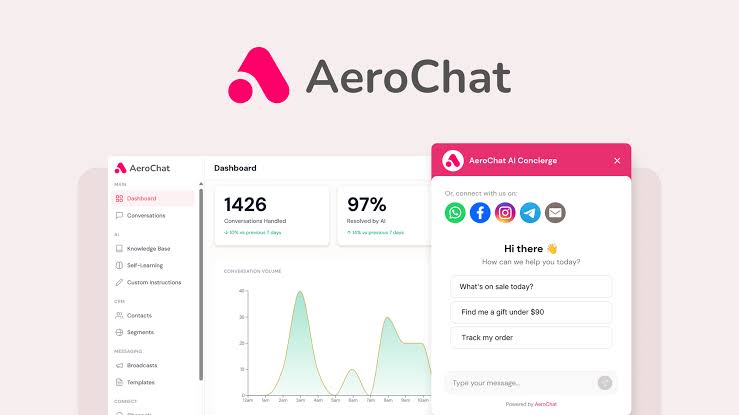
AeroChat is a newer entrant designed specifically for ecommerce businesses that want conversational AI connected to live store data. Unlike rule-based WhatsApp bots, AeroChat uses AI to understand customer intent and respond naturally using real-time information from Shopify and WooCommerce, including order tracking, inventory levels, shipping updates, and product availability.
The platform's strength lies in bridging the gap between a customer's natural language query on WhatsApp and the structured data sitting inside an ecommerce backend. When a customer asks about the status of an order or whether a product is available in a specific size, AeroChat pulls the answer from the store rather than deflecting to a generic FAQ response.
As a younger platform, AeroChat's integration ecosystem and channel breadth are more limited than established competitors. But for DTC brands seeking a WhatsApp-native AI agent that speaks ecommerce fluently, it represents a focused and increasingly capable option.