Nearly a quarter of the world's workforce clocks on when everyone else is clocking off. Nurses on overnight rotations, warehouse staff cycling through three-shift patterns, paramedics on 48-hour rosters. The rest of us sleep because they don't.
The cost shows up in the research. Irregular shift work is consistently linked to higher rates of anxiety, depression, insomnia and chronic fatigue. When your body clock gets pulled in three directions a week, a bad mood is an occupational hazard, not a character flaw. The mental health app market, now valued at more than six billion dollars, has piled into this space. The catch is that most of these apps quietly assume you wake at seven and wind down at ten.
So we narrowed the field to ten that still make sense when Tuesday morning is your Saturday night. We judged them on scheduling flexibility, quality of guided content, how quickly you can log a mood, whether they take the circadian clock seriously, offline access and value. This is editorial analysis of what each app offers, not a clinical trial, and prices are as listed at the time of writing, so check before you subscribe.
The shortlist at a glance
| App | Type | Best for | Price | Platforms |
|---|---|---|---|---|
| Headspace | Meditation and sleep | Structured daily practice | $12.99/mo | iOS, Android, Web |
| Calm | Meditation and mood | Sleep and anxiety relief | $14.99/mo | iOS, Android, Web |
| Timeshifter | Circadian guidance | Planning light, caffeine and sleep | $6.99/mo | iOS, Android |
| Daylio | Mood tracker | Fast mood logging | Free or $4.99/mo | iOS, Android |
| Wysa | AI support and mood | CBT exercises at odd hours | Free or $74.99/yr | iOS, Android |
| Insight Timer | Meditation library | Huge free catalogue | Free or about $70/yr | iOS, Android, Web |
| Bearable | Health and mood tracker | Finding what drives your mood | Free or $5.99/mo | iOS, Android |
| Waking Up | Contemplative meditation | Deeper practice | $14.99/mo | iOS, Android, Web |
| Moodfit | Mood and CBT tools | Sharing data with clinicians | Free or $7.99/mo | iOS, Android |
| SleepSync | Sleep planning | Shift-specific sleep timing | Free (research tool) | iOS, Android |
Habits that survive a missed day

Headspace is still the most polished meditation app around. More than a decade of refinement, over 70 million users and a library covering guided sessions, sleepcasts, yoga and focus music, yet it never feels cluttered. Its real advantage for shift workers is the course structure. Skills build over days and weeks, and if you sleep through a session after a run of nights, the course simply waits. No guilt, no penalty. The wind-down content, pitched at different energy levels, is among the best here. At $12.99 a month it isn't cheap, but it is consistently good.
Calm has the opposite temperament: less classroom, more library you wander through. Its Sleep Stories have become a cultural fixture, and the breathing exercises are about as intuitive as they get. Nothing demands a fixed time, so 2pm and 3am are equally valid. The Daily Calm refreshes every 24 hours, a small anchor that works whenever your day actually begins. Its mood check-ins track emotional trends against the content you use. They're not as detailed as a dedicated tracker, but they're enough to notice when one rotation keeps dragging you down.
Insight Timer is where to go if both of those feel narrow. Its free library runs to hundreds of thousands of meditations, talks, music tracks and live sessions from teachers across many traditions. The community side matters more than it sounds. You can meditate alongside others in real time and join groups, which counts for something when your roster cuts you off from friends. Premium, around $70 a year, adds offline listening and deeper courses, but the free tier already beats plenty of paid plans.
Fix the clock first
Our honest view: no breathing exercise fully offsets a body clock in chaos. These two go after the root cause.
Timeshifter started life as a jet lag tool built on circadian science developed with Harvard Medical School researchers. Its Shift Work edition asks for your roster, chronotype and preferences, then tells you when to seek or avoid light, when caffeine helps and when to sleep. A fatigue prediction feature flags your most vulnerable windows, which can matter a great deal on the drive home after a night. It isn't a meditation app at all, but at $6.99 a month it may be the best value on this list.
SleepSync, from researchers at Monash University's Turner Institute for Brain and Mental Health, is the only app here designed for shift workers from the start. You enter your work schedule and personal commitments, and it builds sleep timing around your circadian profile. In clinical trials, participants slept an average of 29 minutes longer a night, with improvements in sleep quality, insomnia symptoms, anxiety and stress. More than 80 per cent said their sleep improved. It remains a research tool rather than a slick commercial product, but its evidence base is the strongest of the ten.
Tracking moods, in five seconds or fifty
Daylio gets that the best tracker is the one you'll still use after a twelve-hour night. Tap one of five faces, add a few activity tags, type a note if you feel like it. Roughly five seconds. Over months those taps become a colour-coded heatmap and correlation charts showing which shifts and habits move your mood. The free version works fine; premium at $4.99 a month adds deeper analytics and CSV exports you can share with a therapist. More than ten million downloads suggest the low-friction idea lands.
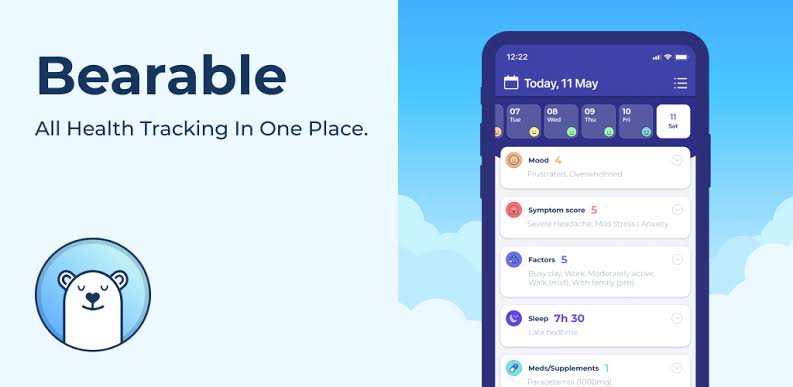
Bearable asks for more and gives back more. It logs mood alongside symptoms, medication, sleep, weather, exercise and dozens of custom factors, then reports which ones correlate most with how you feel. That's valuable when you genuinely can't tell whether you're tired or low, or when you're managing a chronic condition. Entries take longer than Daylio's, a real tradeoff, but the reports can inform conversations with a doctor or occupational health team.
Moodfit calls itself a gym for mental health, and that's fair. Mood tracking sits alongside gratitude journaling, CBT thought records, sleep logs and breathing exercises. Its standout trick is exporting mood and medication charts in a format clinicians can actually use, which makes it a sensible companion between appointments when your schedule shifts week to week.
For the 3am thoughts
Wysa is part mood tracker, part meditation guide, part AI chat companion, fronted by a friendly penguin. When anxiety spikes in the small hours and everyone you know is asleep, it responds straight away with structured CBT exercises rather than platitudes. It's HIPAA compliant, and premium adds access to human coaches. It isn't a replacement for professional or crisis care, but as an overnight first step it earns its place.

Waking Up, Sam Harris's app, treats meditation as serious contemplative practice rather than a stress patch. A 28-day introductory course builds real skill, and the theory lessons tackle consciousness, free will and the self. It sounds like a stretch for exhausted workers, yet some in healthcare and emergency services say the deeper framework helps them process hard shifts better than relaxation tracks. Harris also offers a free subscription to anyone who can't afford it, which deserves credit.
Where we'd start
If you only install two, make one a clock tool and one a tracker: Timeshifter or SleepSync for the biology, Daylio for the pattern-spotting. Add Headspace or Insight Timer once your sleep steadies. Want more takes like this, plus fan votes on the tools and culture people love? Browse the latest ICONPOLLS.com features and polls and add your voice.
Should a shift worker start with meditation or mood tracking?
Start with sleep timing and a quick tracker. Meditation helps more once your rest is stable, and a few weeks of mood data will show which rotations hit hardest.
Are the free versions good enough?
Often, yes. Insight Timer, Daylio and SleepSync are genuinely usable without paying, and the free tiers of Wysa, Bearable and Moodfit cover the basics.