Most language apps teach a version of Spanish that nobody actually speaks: slow, careful, and read aloud by a voice that has never been in a hurry. Wordy is betting that you'd learn faster from the real thing. Instead of studio recordings, it builds lessons around short clips from films and TV shows, so new words arrive at native speed, with real accents and real attitude.
In a market packed with cartoon mascots and streak counters, that's a genuinely different pitch. The question is whether one good idea can carry a whole app. The honest answer is not quite, but it gets closer than you might expect.
Wordy at a glance
| Detail | Information |
|---|---|
| App | Wordy (Language Learning) |
| Developer | Appalex Ltd., based in Hungary |
| Website | wordy.info |
| Launched | 2024 |
| Platforms | iOS, Android (7.0 or higher), Chrome extension |
| Languages | 20+, with full structured courses in English and Spanish |
| Content library | 15,000+ curated film and TV clips |
| Pricing | Free with daily limits; Premium at $9.99 a month or $39.99 a year (as listed in August 2026) |
| Store ratings | 4.7 out of 5 on the App Store, 4.5 out of 5 on Google Play (as listed in August 2026) |
| Icon Polls rating | 3.8 out of 5 |
The pitch: hear it before you read it
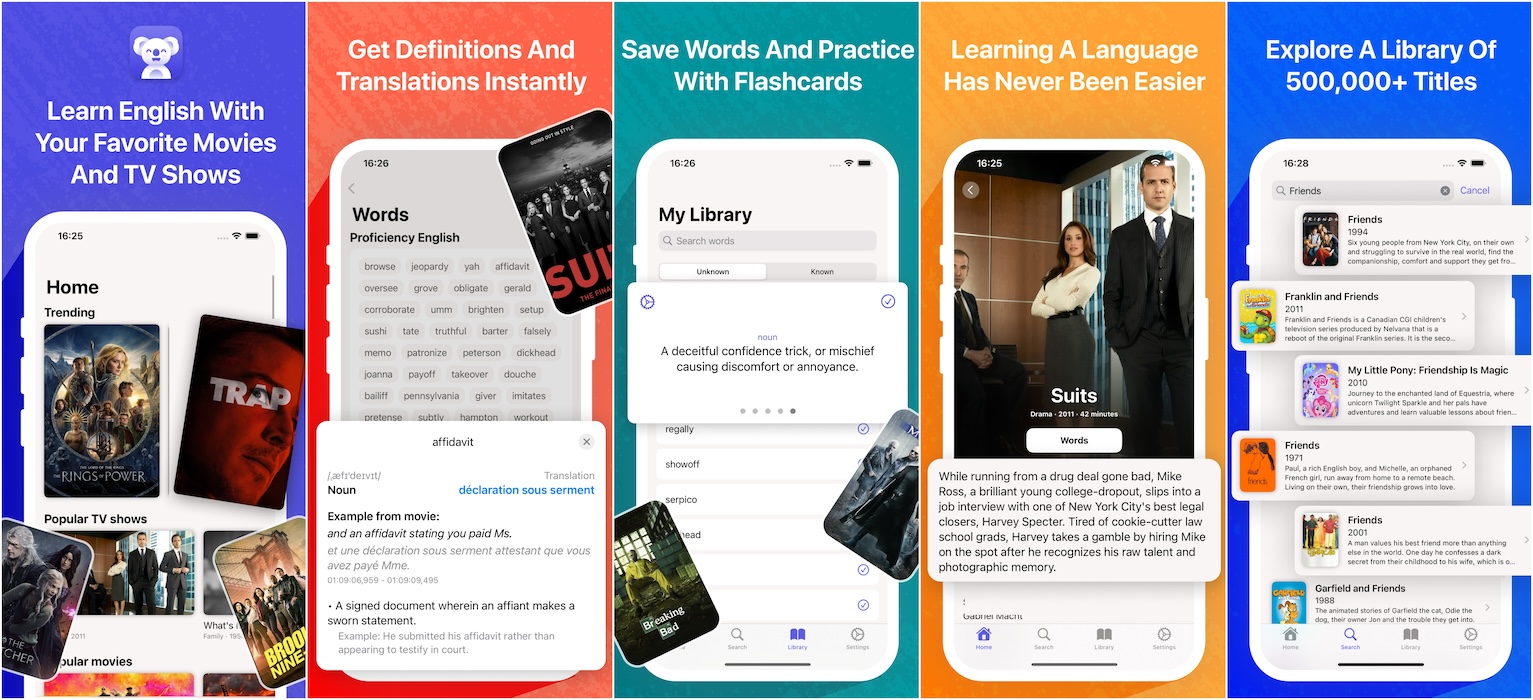
Strip away the movie branding and Wordy is a vocabulary builder. You choose a target language, take a placement check, and get a small batch of new words per lesson. Then comes the hook: each word shows up inside a short scene from an actual film or show.
After the clip, you work through exercises. You match meanings, assemble phrases from word blocks, spell out vocabulary and speak lines aloud while speech recognition scores your pronunciation. A spaced repetition system decides when each word comes back for review, based on how well you've held onto it. That method has solid memory research behind it, and it's doing a lot of the heavy lifting here.
Where the clips earn their keep
Listening is the obvious win. Textbook audio prepares you for textbook conversations. Clips prepare you for people who mumble, interrupt and speak quickly. Hearing everyday expressions in context, with tone and body language attached, makes them stick in a way flashcards rarely manage.
The structure helps too. Vocabulary is mapped to CEFR levels from A1 (beginner) to C2 (advanced), with around 9,000 words per language. That gives you a sense of progress beyond a streak number, which is more than some bigger names offer.
Users on both stores also keep praising one thing: there are no ads, even on the free plan. No banners, no video breaks between exercises. In this category, that restraint buys a lot of goodwill.
What it won't teach you
Here's the catch. Wordy is a vocabulary and listening tool, and it doesn't pretend otherwise for long. There are no proper grammar explanations, little reading practice and almost nothing for writing. You can recognise a phrase in a film without knowing how to build your own sentence around it.
Beginners feel this most. The guided paths start at A1 and introduce words gradually, but native speed dialogue can still be a lot for someone starting from zero. Pair Wordy with a course that explains how the language actually works.
The free tier, the paywall and that signup screen
The free version gives you a daily allowance of clips and exercises, with spaced repetition, saved words and the core learning path included. It's enough for a short session. It's not enough for anyone who wants to settle in for an hour, and the most common complaint in user reviews is hitting the wall just as a lesson gets going. The developers argue that short daily sessions beat marathon study, and research does back them up. It still stings.
Signup pushes a Premium trial, and some users report being asked for card details. According to the developers, you can skip the trial and use the free tier without entering any payment information. Look for the skip option rather than assuming you have to pay.
Premium removes the caps and unlocks the full 15,000+ clip library and all courses. At $39.99 a year, it sits in roughly the same range as Duolingo Super and a little below Babbel. The price is fair. Whether the value is there depends on whether you want an ear trainer or a full course.
Phones yes, laptops not really
Wordy lives on your phone. The Android app needs version 7.0 or higher, so most devices from the last several years are covered, and both platforms get regular updates. User feedback suggests the Android version is a step behind iOS on polish, with a few cramped layouts on smaller screens, but those are cosmetic issues.
Desktop learners get a weaker deal. There's no web app where you can log in and do lessons from a browser, which Duolingo and Busuu both offer. The Chrome extension partly makes up for it by letting you learn from subtitles on Netflix and YouTube. That's a clever feature, but it isn't a replacement for proper lessons on a big screen.
Twenty languages, two real courses
The "20+ languages" headline needs some context. As of mid 2026, only English and Spanish had full structured learning paths, with French and German reported to be in development. The rest, including Italian, Japanese, Korean, Russian, Portuguese, Dutch, Swedish, Polish, Greek and Ukrainian, come with clip libraries and vocabulary practice rather than guided courses. The interface itself is available in 26 languages.
Depth varies a lot. English and Spanish learners get the richest library. If you're studying something like Croatian or Lithuanian, expect far fewer clips. And if you have strong views on which languages are actually worth the effort, cast your vote on the most powerful languages in the world.
The verdict: 3.8 out of 5
Wordy does one thing better than most of its rivals. It puts real, natural speech in your ears and uses smart repetition to make the vocabulary stick. The clip library is strong, the design is clean (dark mode included), and the ad-free approach is refreshing.
It isn't a complete language course, though. The missing grammar and writing practice, thin coverage outside English and Spanish, a tight free tier and no web app all hold it back. Use it alongside a structured course and it earns its place. Expect it to do everything on its own and you'll stall.
Three things people ask before downloading
Is Wordy actually free?
Yes. The free tier is ad-free and usable every day, with a cap on clips and exercises. Premium removes the limits for $9.99 a month or $39.99 a year, based on pricing listed in August 2026.
How is it different from Duolingo?
Duolingo offers broader drills that cover grammar, reading and vocabulary across many languages, plus a full web platform. Wordy focuses on listening and vocabulary through real clips. Many learners will get the most out of using both.
Who makes it?
Appalex Ltd., a Hungarian company that launched Wordy in 2024. The team replies to reviews regularly on both app stores.