Every AI assistant on the market will give you an answer. Far fewer will tell you where that answer came from. For anyone whose name sits on a byline, that second part is the only one that matters.
So this ranking doesn't reward the flashiest chatbot. It sorts ten tools by what a working journalist or blogger actually needs: finding sourced facts, shaping drafts, digging through document dumps and getting finished work in front of readers. Some of these tools overlap. Several don't try to write a word. A couple are worth paying for only if search traffic pays your rent.
The ranking at a glance
| Rank | Tool | Price (as listed) | What it is | Use it for |
|---|---|---|---|---|
| 1 | Perplexity AI | Free, or $20 a month for Pro | Research engine | Sourced research and fact-checking |
| 2 | Claude (Anthropic) | Free, or $20 a month for Pro | AI assistant | Long-form writing and analysis |
| 3 | ChatGPT Deep Research | Free, or $20 a month for Plus | AI assistant | Long multi-source reports |
| 4 | Google Pinpoint | Free | Document analysis | Investigative document work |
| 5 | Gemini | Free, or $20 a month | AI assistant | Multimodal research inside Google |
| 6 | Jasper AI | From $39 a month | Content platform | Brand voice and marketing copy |
| 7 | Notion AI | $10 a month add-on | Workspace AI | Editorial planning |
| 8 | Surfer SEO | From $79 a month | SEO platform | On-page optimisation |
| 9 | Frase | From $15 a month | Content optimisation | Research briefs |
| 10 | Elephas | From $4.99 a month | Knowledge assistant | Private AI writing on a Mac |
Prices are those listed when this ranking was compiled. AI pricing moves fast, so check before you subscribe.
1. Perplexity AI: it shows its work
A search engine hands you ten blue links. Perplexity hands you a written answer with inline citations you can click and check. When you're backgrounding a new beat at speed, that difference is hours.
Pro, at $20 a month, adds more advanced searches and a choice of underlying models. The free tier is still useful for lighter days. But keep the caveat front and centre: a Columbia University Tow Center audit found Perplexity had the lowest citation-failure rate of the major AI search tools, and that rate was still 37 percent. Best in class is not the same as trustworthy. Click every link.
2. Claude: when the material is already in hand
Anthropic's assistant has built its reputation on prose. Writers tend to describe its drafts as closer to a colleague's first pass than a machine's. It holds a voice across thousands of words, which is exactly what long-form bloggers need.
It also has a Deep Research mode for multi-source reports, and Pro costs the now standard $20 a month. It's less aggressive about chasing the freshest web results than Perplexity. Its real strength comes later in the process: you've got your notes and quotes, and you need them shaped into something publishable.
3. ChatGPT Deep Research: thorough, slow and rationed
Deep Research behaves like a junior researcher who vanishes for twenty minutes and returns with a briefing. It asks clarifying questions first, then works through dozens or even hundreds of sources and produces the longest, most structured reports on this list.
The catch is quota. Runs are limited even on the $20 Plus plan, so this isn't for quick lookups. Save it for trend pieces and investigative groundwork. The wider ChatGPT toolkit, including custom GPTs and a code interpreter for charts, adds range, and OpenAI says the platform has more than 800 million weekly users.
4. Google Pinpoint: taming the document pile
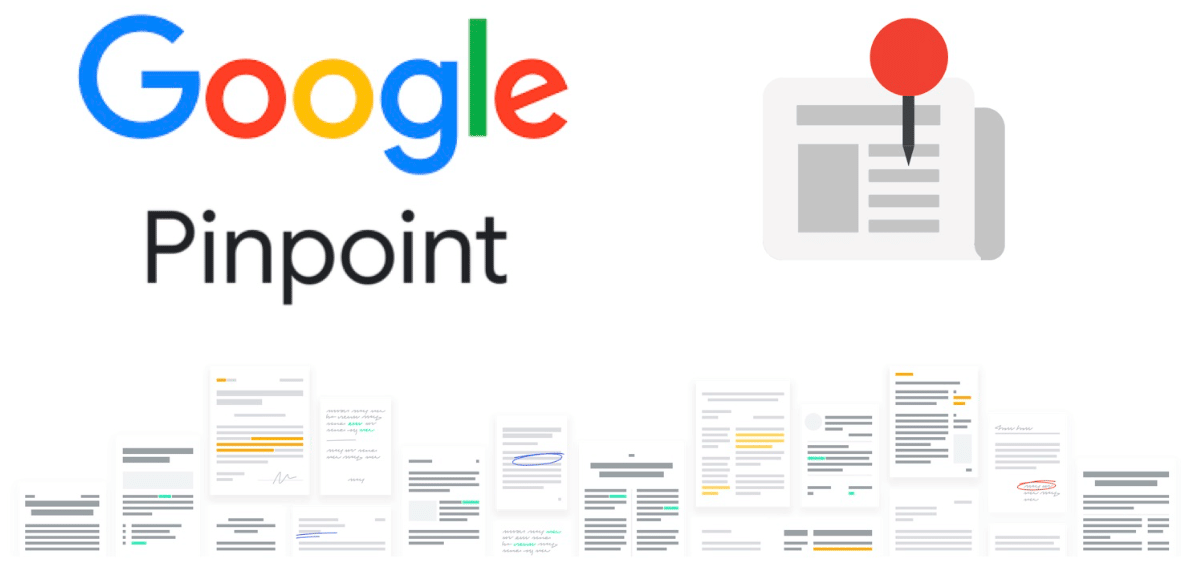
Nothing else here does what Pinpoint does. Part of Google's Journalist Studio, it ingests messy collections of documents, images and audio, transcribes recordings, reads handwriting and flags the people, organisations and places that recur across thousands of pages.
For FOIA responses, court filings or leaked records, it's the most valuable tool on the list. It writes nothing, and that's the point. It's also free, which feels almost radical in a subscription market.
5. Gemini: the easy choice for Google Workspace teams
Gemini's advantage is fit. If your newsroom already lives in Google Workspace, adding it is close to frictionless. Its multimodal skills matter when a story breaks as a video clip on social media long before it reaches the wires.
Gems, its custom personas, let you set up a separate assistant for each beat, and NotebookLM adds another layer for organising research. The paid tier runs $20 a month, though freelancers can get real work done on the free version.
6. Jasper AI: a style guide that types
Jasper isn't a research engine and doesn't pretend to be. Its Brand Voice feature learns a publication's tone and terminology, then applies it everywhere. At $39 a month for Creator and $69 for Pro, it's hard to justify for a reporter filing the odd story. For a content team publishing several posts a week, the consistency pays off.
7. Notion AI: smart, but stays in its lane
At $10 per member per month on top of a Notion plan, this is AI that comes to your editorial calendar rather than the other way round. Summaries, brainstorming and rough drafts happen right beside your pipeline. Don't expect citations or SEO scoring. It's a helpful layer on a good organiser, and for many small teams that's enough.
8. Surfer SEO: built for bloggers, not reporters
Surfer scores your draft against top-ranking pages for a keyword, covering headings, length and term coverage. The 2026 version also produces outlines and drafts that arrive already optimised. At $79 a month and up, print and broadcast journalists can skip it. Bloggers who depend on organic traffic may find it pays for itself.
9. Frase: a cheap check on what you've missed
Frase builds research briefs from the content already ranking for a topic, pulling out the common questions, subtopics and statistics. Its editor scores drafts much like Surfer's does, with a lighter hand. At $15 a month for Solo, it's the friendliest paid option for independent writers who know their subject and just want to avoid obvious gaps.
10. Elephas: privacy first, Mac only
Elephas can run locally, which matters if you're handling sensitive sources or embargoed material. Its Super Brain feature turns your own documents and notes into a searchable knowledge base. It starts at $4.99 a month, the cheapest entry here, but it only runs on Macs and does less than the big assistants.
A sensible stack without five subscriptions
Most writers need two tools, not ten. Pair one sourced research engine with one strong drafter, and add Pinpoint free whenever a document dump lands. Buy SEO software only if search traffic is your business model. Whatever you choose, the verification is still your job.
Got a site you couldn't work without? Add it to our vote on the world's most useful websites.
Can AI tools replace fact-checking?
No. Even the best-performing tool in the Tow Center audit got citations wrong 37 percent of the time. Treat AI output as a lead, not a source.
Which tool is best on a zero budget?
Google Pinpoint is completely free, and Perplexity, Claude, ChatGPT and Gemini all offer usable free tiers.